What is The 4th House?
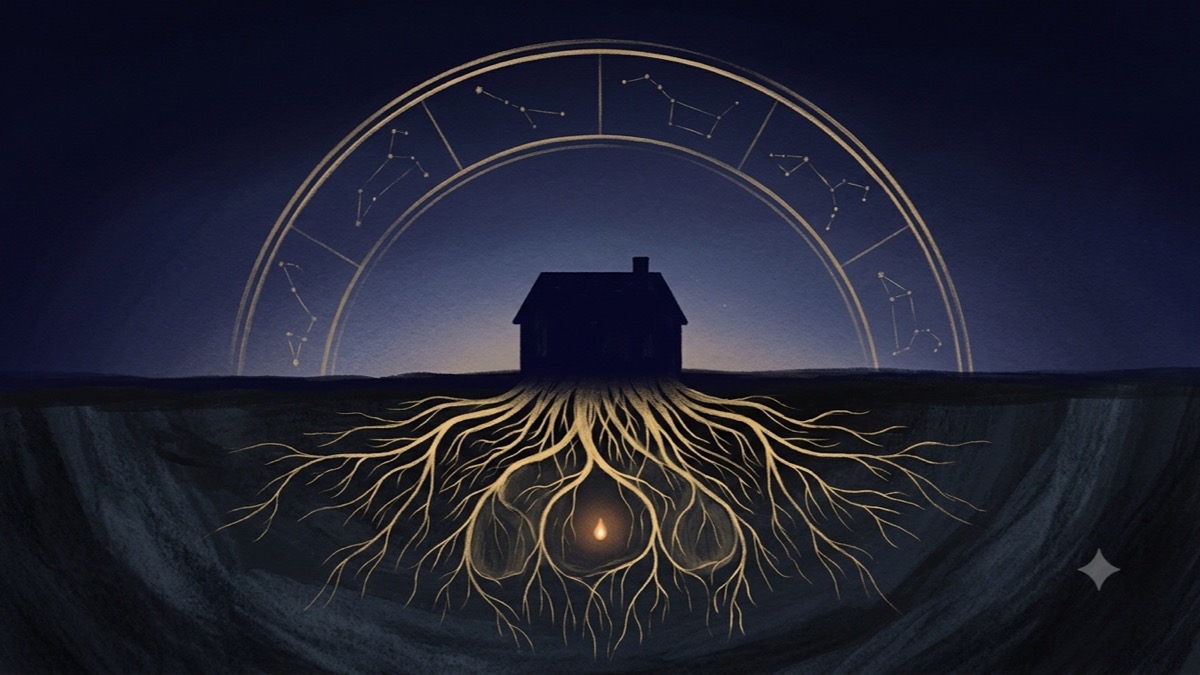
The 4th House is the base of the birth chart, the point directly beneath the horizon known as the Imum Coeli, or IC. Read through a psychological lens, the 4th house meaning maps your emotional foundation and inherited family patterns, not the literal place you happen to live.
- Anchors your earliest sense of safety, belonging, and home
- Carries family conditioning and emotional patterns absorbed in childhood
- Often misread as physical property when it really describes inner roots
This house sits within the broader pillar guide to the astrological houses, where each house builds on the foundation the one before it sets. Astrologers in the developmental tradition, including Howard Sasportas, treat the 4th house as the soul's underground structure, the quiet layer beneath everything you show the world. It describes where you come from emotionally long before it describes where you keep your belongings.
Why It Matters for Self-Awareness
Understanding 4th house meaning matters because most popular write-ups stop at a single word: home. That reading is not wrong, only shallow, and it leaves people stuck at the surface. In my twelve years integrating psychological frameworks with evolutionary astrology, through community counseling and thousands of hours of chart consultation, the same confusion surfaces again and again. It usually shows up in three ways:
- The literal trap. Readers picture real estate, family dinners, and where they sleep, and miss that this house maps an inner blueprint for safety.
- The inherited blind spot. Family patterns absorbed before you could name them keep running quietly, shaping how you reach for comfort as an adult.
- The polarity gap. People read the 4th house alone and overlook how it balances the explainer on the 10th house and public ambition at the top of the chart.
Self-awareness begins where the literal reading ends. When you treat the IC as the emotional foundation you carry rather than a description of your living room, you can see why certain situations make you feel unsafe long before you can explain the feeling. A guarded family, a parent who was physically present yet emotionally hard to reach, a childhood of frequent moves: each leaves a signature here that tends to repeat until it is noticed.
That is the practical value of this house. It does not predict your future; it reveals the ground you are building everything else on, so you can choose with open eyes what to keep and what to outgrow.
The 4th House vs Adjacent Concepts: How It Works + Trade-offs
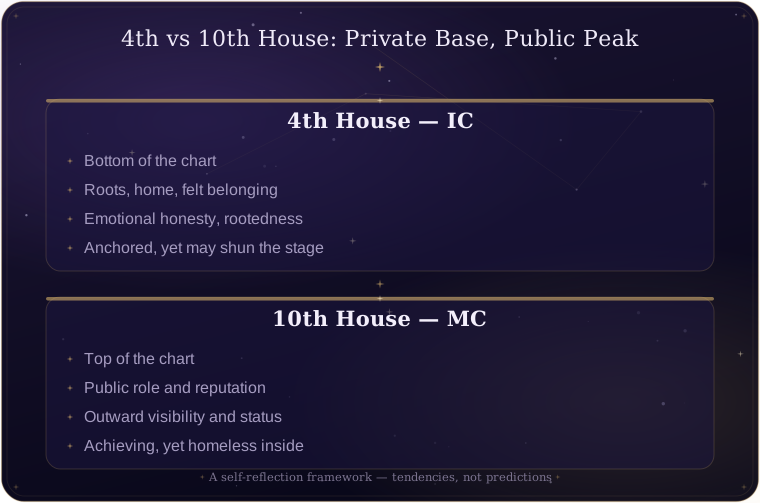
The 4th house meaning becomes clearer when you set it beside the placements it is most often confused with, because each comparison shows how the house works and what you trade off by leaning one way. Take the 10th house first: the 4th sits at the very bottom of the chart while the 10th sits at the top, so the 4th describes your private base and the 10th your public role and reputation. To get the rootedness and emotional honesty of a strong 4th-house focus, you often sacrifice some of the outward visibility the 10th rewards. People who pour everything into status can feel strangely homeless inside, while those deeply anchored at home may hesitate to claim a public stage.
The Moon offers a subtler contrast: field versus function. The Moon is the instinct that seeks comfort and reacts emotionally; the 4th house is the ground where that instinct gets planted, your family line and your earliest sense of home. To read the Moon on its own is to know the appetite but not the kitchen it grew up in. You gain a clean picture of emotional needs, but you trade away the family context that explains where those needs began.
The literal idea of a house gives the most important contrast of all. The 4th house is not the building you own; it is the felt structure of belonging underneath it. Treating it as property gets you a tidy keyword, but you sacrifice the very thing the house was built to describe: the conditioning you carry with you no matter where you live.
How to Read The 4th House in Your Chart
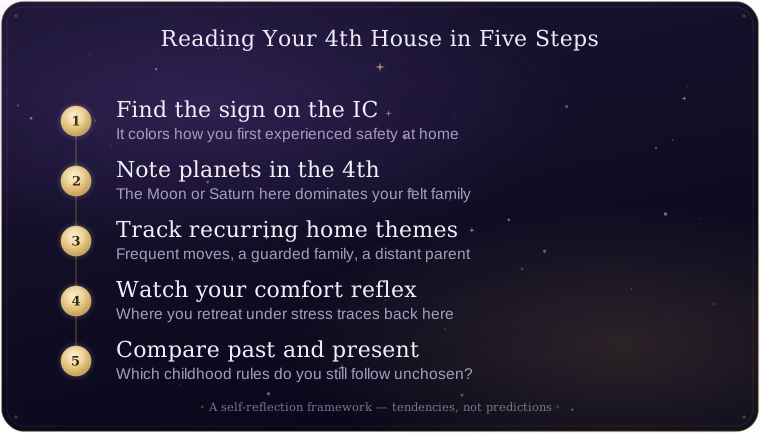
Reading the 4th house meaning in your own chart starts with observation, not prediction. Before interpreting anything, look for these concrete signals:
- Find the sign on the IC. The sign at the very bottom of your chart colors how you first experienced safety and belonging at home.
- Note any planets in the 4th. A planet here, such as the Moon or Saturn, tends to dominate your felt sense of family.
- Track recurring home themes. Look for patterns like frequent moves, a guarded family, or a parent who was present yet hard to reach.
- Watch your comfort reflex. Notice where you retreat under stress, because that instinct often traces straight back to this house.
- Compare past and present. Ask which childhood rules about home and belonging you still follow without ever deciding to.
None of these signals is a verdict on its own. Read together, they sketch the foundation you started from, which is the first step toward changing how you live on it.
Common Misreadings
Most popular content flattens the 4th house meaning into a few tidy clichés, partly because literal answers are easier to optimize for search. These are the misreadings worth correcting:
- "It just means home." The physical house matters least; the real territory is your emotional foundation and the family patterns you absorbed before you had words for them.
- "It only describes your mother." It maps your inner experience of being nurtured, which may or may not match your actual parent, a distinction Liz Greene drew with great care.
- "A hard placement here dooms your home life." Difficult placements describe tension to work with, not a fixed sentence, and they often mark where the deepest growth happens.
- "It's about the past, so it's fixed." The past sets the blueprint, but adult awareness can renovate how you live inside it rather than leaving it untouched.
The thread running through all four is the same. People search for a label and walk away with a stereotype, when the house is actually asking a growth question: what did belonging cost you, and what do you want it to mean now?
The 4th House at a Glance
| Property | How It Works | Natural Ruler & Sign | How to Observe |
|---|---|---|---|
| Emotional foundation | Sets your baseline sense of safety and trust | Cancer / the Moon (Water) | Notice where you instinctively retreat under stress |
| Family inheritance | Carries patterns and conditioning from early life | IC / base of the chart | Spot habits that quietly echo a parent's |
| Roots and belonging | Anchors where you feel you are "from" | Water element | Track what makes a place finally feel like home |
| Private self | Holds the self that lives beneath public roles | Lower hemisphere of the chart | Compare who you are at home versus in public |
Questions People Ask About The 4th House
What does the 4th house meaning really cover?
It covers your emotional foundation, your roots, and the family patterns you carry into adult life. It points to your inner sense of home far more than to any physical address or property.
Is the 4th house about my mother or my father?
Traditionally it links to the nurturing parent, often the mother, but modern psychological astrology reads it as your internal experience of being cared for. Two siblings can read the same parent very differently through this house.
What does it mean to have no planets in my 4th house?
An empty 4th house is completely normal and does not weaken the area at all. You simply read the sign on the cusp and its ruling planet to understand the theme instead.
How is the 4th house different from the 10th house?
The 4th house holds your private roots while the 10th holds your public role and reputation. Together they form the vertical axis between where you come from and where you are heading.
Reflection Prompts
- Think of a recent moment you felt instantly at home somewhere; what specific detail created that sense of safety?
- Recall a family habit around comfort or food that you still repeat today without ever choosing to.
- Picture the home you grew up in and name one belief about belonging it quietly left you with.
Related Reading
- explainer on the Imum Coeli and the chart angles — goes deeper on the IC point that anchors this house.
- guide to the Moon in the birth chart — connects the emotional instincts that the 4th house gives a home to.
Take Action
Begin by finding the sign on your IC and any planet sitting in your 4th house, then read them as your emotional foundation rather than your address. Read the full Astrological Houses guide to see how the 4th house anchors the chart to place this single house inside the full twelve-house map. Done with care, this turns a vague feeling of where you come from into a clear, usable sense of the belonging you want to build next.
Sources
- Howard Sasportas — shaped the developmental reading of the houses, treating the 4th house as the chart's emotional and ancestral foundation.
- Liz Greene — distinguished the inner parental archetype from the literal parent, clarifying how the 4th house reflects perceived rather than factual family experience.