
What is Ardra?
Ardra is the sixth nakshatra of the Vedic zodiac, ruled by Rahu and presided over by the storm-god Rudra, where emotional and intellectual intensity becomes the gateway to transformation rather than the obstacle to it. The ardra nakshatra sits entirely within sidereal Gemini, from 6°40' to 20°00', and its name translates as "the moist one" or "the green one" — the freshness of a landscape after a cloudburst. Read this way, pillar page on the Vedic nakshatra system places Ardra in the moment where pressure breaks into clarity, not where grief simply lingers.
- Symbolized by a teardrop, a diamond, and a human head — the mind under pressure that either crystallizes into insight or washes clean
- Presided over by Rudra, the fierce, storm-bearing aspect of Shiva whose function is dissolution that precedes renewal
- Ruled by Rahu, the north lunar node, which amplifies and intensifies whatever it touches — here, Gemini's restless mental bandwidth
This is an interpretive framework for reading a birth placement, not a diagnosis of mood or temperament.
Why It Matters for Self-Awareness
Understanding Ardra matters because most descriptions stop at the teardrop and read it as sadness, missing the way the storm actually clears the ground. When someone with an Ardra moon recognizes only "you feel things deeply and it hurts," they get a portrait of suffering with no exit. The actual structure is different: Rudra's storm is the part that clears, and the teardrop is the rain that washes the ground clean, not a permanent state of mourning.
The confusion surfaces in recognizable ways. People with strong Ardra placements often describe cycles of mental and emotional buildup that feel destabilizing, then conclude something is wrong with them for experiencing intensity at all. Read through Rudra's logic, that buildup is the pressure phase of a cycle whose second half is renewal — the breakthrough, the reframed problem, the idea that arrives only after the discomfort. Naming that arc is what turns the experience from a flaw to be managed into a process to be worked with, which is the whole point of reading a placement honestly rather than fearfully.
Ardra vs Adjacent Concepts: How It Works + Trade-offs
It helps to set Ardra against its neighbors in Gemini and the wider zodiac, because the ardra nakshatra is easily flattened into "the difficult one." Against Mrigashira, the nakshatra that precedes it, the difference is direction of motion. Mrigashira searches — it is the gentle seeking of the deer, curious and exploratory. Ardra does not search; it confronts. Rahu's amplification turns Gemini's parallel-processing mind toward whatever has been avoided, and the storm arrives precisely because the seeking phase has ended and the reckoning has begun.
Against the storm-imagery people assume it shares with other fierce placements, Ardra trades comfort for catharsis. Rudra is not destruction for its own sake; in the Vedic frame his roar dissolves what has grown stagnant so that something living can replace it. The trade-off is explicit: an Ardra placement gains an unusual capacity to break through fixed patterns and see a problem freshly, but accepts that the breakthrough is reached through emotional weather rather than around it. You do not get the renewal without the storm that drives it.
This is also where the honest reading of astrology lives. Liz Greene treated the chart as a language of symbol rather than a literal forecast, and Robert Hand framed it as a vocabulary of meaning rather than a predictive machine, so neither would read Ardra as a sentence of hardship. Taken that way, the ardra nakshatra describes a temperament that processes through intensity — the human head holding the diamond-hard clarity that only pressure produces — and that framing is far more useful than a flattering or a fearful label.
How to Read Ardra in Your Chart
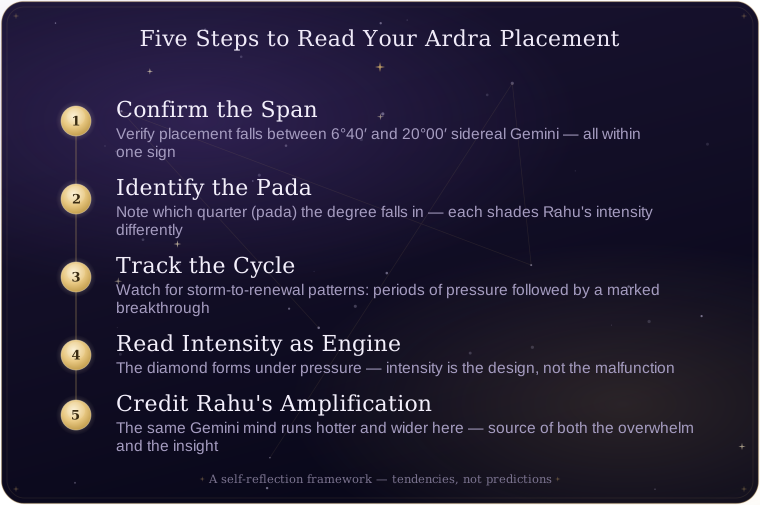
You can locate the ardra nakshatra by finding the exact degree and sign of the moon, ascendant, or a key planet in a sidereal chart, and the reading rewards a few honest steps rather than a single verdict.
- Confirm the placement falls between 6°40' and 20°00' sidereal Gemini — the full span of Ardra, all within one sign.
- Note which pada (quarter) the degree falls in, since each shades Rahu's intensity differently across the same Gemini ground.
- Watch for the storm-to-renewal cycle in lived patterns: periods of mental and emotional pressure followed by a marked breakthrough or reframe.
- Read intensity as the engine, not the symptom — the diamond is formed under pressure, and that is the design, not the malfunction.
- Credit Rahu for the amplification: the same Gemini mind runs hotter and wider here, which is the source of both the overwhelm and the insight.
Common Misreadings
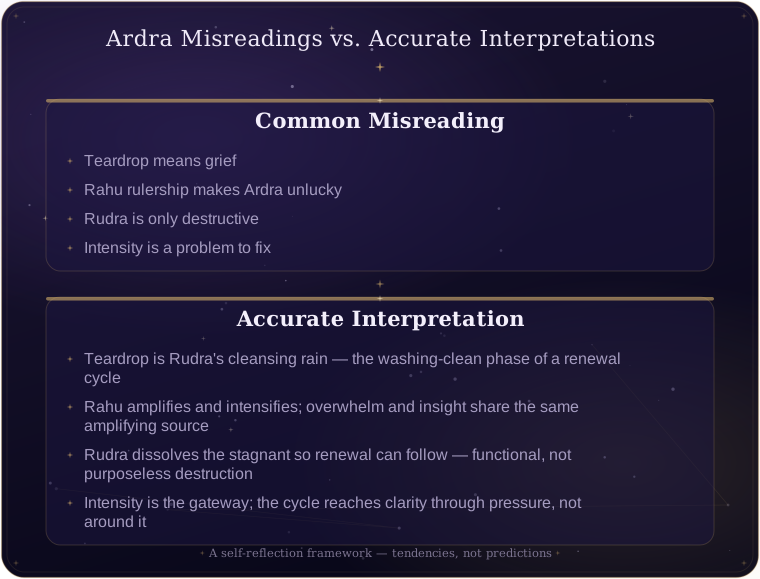
The most persistent misreadings of the ardra nakshatra trace to reading its symbols literally instead of structurally, almost always treating the teardrop as the whole story.
- The teardrop means grief. The teardrop is the cleansing rain of Rudra's storm, not permanent sorrow. It marks the washing-clean phase of a cycle whose purpose is renewal, and reading it as mere sadness removes the transformation that gives the symbol its point.
- Rahu rulership makes Ardra unlucky. Rahu amplifies and intensifies; it does not condemn. The same amplification that makes Gemini's mind feel overloaded is what gives an Ardra placement its exceptional capacity for insight under pressure.
- Rudra is only destructive. In the Vedic frame, Rudra's fierceness dissolves the stagnant so the living can emerge. The destruction is functional and precedes renewal — it is the storm that ends a drought, not chaos for its own sake.
- Intensity is a problem to fix. The emotional and intellectual intensity is the gateway, not the obstacle. The Ardra cycle reaches clarity through pressure, so trying to eliminate the intensity would also eliminate the breakthrough it produces.
Ardra Nakshatra at a Glance
| Property | How It Works | Energy Source | How to Observe |
|---|---|---|---|
| Span | Sixth nakshatra, 6°40'–20°00' entirely within sidereal Gemini | Gemini's restless, parallel-processing mind | Confirm the placement sits within one sign, not across a boundary |
| Symbol | Teardrop, diamond, human head — pressure that cleanses or crystallizes | Rudra's storm as cleansing, not lingering grief | Watch for clarity that arrives after a pressure phase, not before |
| Ruling planet | Rahu amplifies and intensifies whatever it touches | North lunar node turning Gemini's bandwidth hotter | Notice intensity as the engine of insight, not a malfunction |
| Deity | Rudra dissolves the stagnant so renewal can follow | Storm-aspect of Shiva, destruction before renewal | Track the storm-to-renewal cycle across lived periods |
Common Questions About Ardra
What sign is the ardra nakshatra in?
Ardra falls entirely within sidereal Gemini, spanning 6°40' to 20°00'. Unlike some nakshatras that cross a sign boundary, all four padas of Ardra sit in the same rashi, so the Gemini quality — a quick, wide-ranging, parallel-processing mind — runs underneath every Ardra placement, amplified by Rahu.
Which planet rules Ardra and why does it matter?
Rahu, the north lunar node, rules Ardra. Rahu's function is amplification and intensification, so it heightens Gemini's mental bandwidth and turns the nakshatra's emotional and intellectual weather up rather than down. That ruling is what makes intensity central to the placement — both the overwhelm and the insight come from the same amplifying source.
Who is the deity of Ardra and what does Rudra represent?
Rudra, the fierce storm-bearing aspect of Shiva, presides over Ardra. Rudra governs the dissolution that precedes renewal — the cosmic storm that clears stagnation so something living can replace it. This is why the Ardra theme is storm-to-renewal rather than simple hardship: the destruction is the first half of a transformation, not the end of one.
Is Ardra a difficult nakshatra to have?
It is an intense placement, but intensity here is the gateway, not a curse. The same pressure that can feel destabilizing is what drives Ardra's characteristic breakthroughs — clarity reached through emotional and intellectual weather rather than around it. Read as a process with two halves, the storm and the renewal, the placement is workable rather than simply hard.
Reflection Prompts
- Recall a breakthrough that arrived only after a period of pressure — what would you have lost if you had managed the pressure away entirely?
- Think of an intensity you have treated as a flaw; what does it look like if you read it as an engine instead?
- Notice the moment in a hard cycle when something shifts from breaking down to clearing — how do you know when the storm has turned into renewal?
Related Reading
- overview of all 27 nakshatras in Vedic astrology — for placing Ardra in the full sequence and seeing how Rahu-ruled mansions sit within the sidereal zodiac
- Ardra (Wikipedia)
Take Action
Generate your free birth chart to explore your Ardra placement. Once the chart loads, check whether your moon or ascendant falls between 6°40' and 20°00' sidereal Gemini — that single span tells you whether Rahu's amplification is running through your Gemini mind. Knowing the placement gives you a clearer framework for recognizing the storm-to-renewal cycle in your own decisions, and a reminder that the intensity is the gateway to the insight, not the obstacle in front of it.
Sources
- Liz Greene — grounded the reading of astrology as symbol rather than a literal forecast, the interpretive stance this entry takes
- Robert Hand — known for treating astrology as a language of meaning rather than a predictive machine