What is bharani nakshatra?
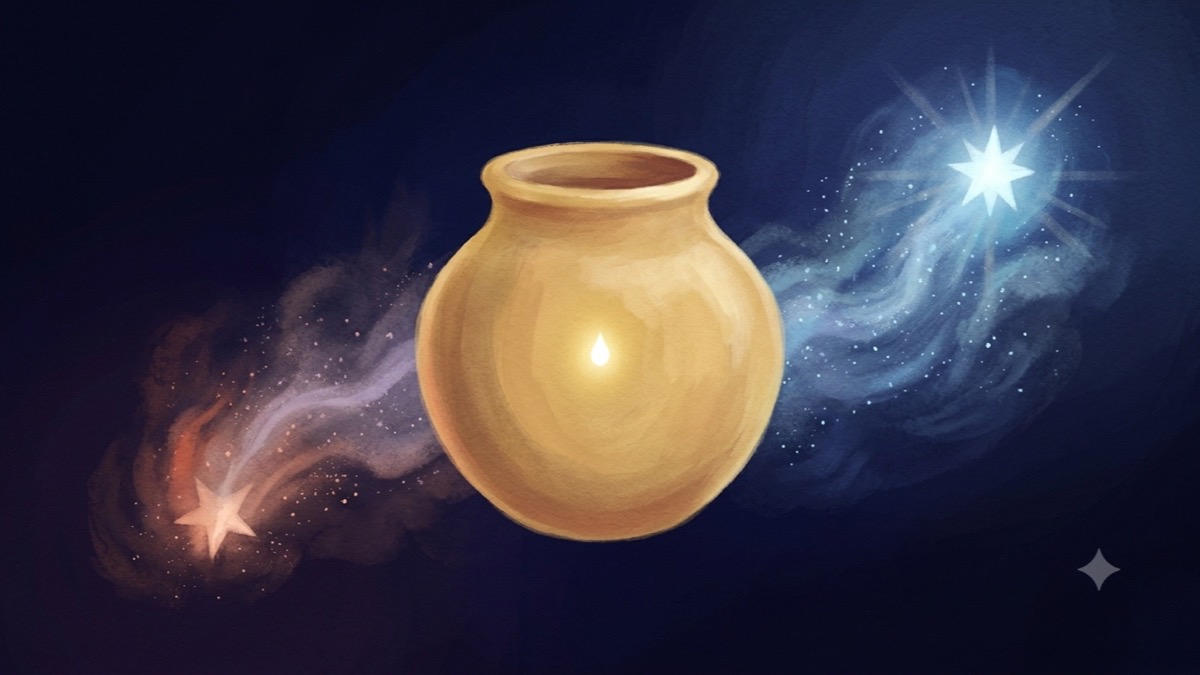
Bharani nakshatra is the second lunar mansion in Vedic astrology, spanning 13°20′ to 26°40′ of Aries, ruled by Venus and presided over by Yama, the deity of death and dharma. Its name means "the bearer," and it works as the sacred container that holds birth, death, and renewal. The symbol is the yoni, the womb-vessel that gestates new life and then releases it. That blend of Venusian desire with Yama's authority over endings gives the placement its reputation for intensity, along with its real strength: staying steady while something is being created or completed. People who study Bharani usually want to understand why a position tied to death and restraint also carries so much creative pull. It sits within the wider pillar guide to all 27 nakshatras, the lunar mansions that chart the Moon's path through the zodiac.
- Ruled by Venus and presided over by Yama — desire and mortality held in one placement
- Symbolized by the yoni, the container that gestates life and then lets it go
- Often misread as a "dark" position when it really points to steadiness with endings
Why It Matters for Self-Awareness
Understanding bharani nakshatra matters because the fear attached to it usually causes more trouble than the placement ever does. Many readers, and even some practitioners, see Yama, the lord of death, sitting behind a Venus-ruled position and decide it must be heavy, ominous, or unlucky. That snap judgment is exactly what sends people looking for a clearer answer. A person-centered reading, in the lineage of Dane Rudhyar, treats this differently: less as a fixed fate and more as a capacity that can be understood and used well. The discomfort it stirs is real, but it tends to cluster around a few predictable worries:
- The "dark placement" label. People see the death deity and assume the position means loss or punishment, rather than honest responsibility for endings.
- Mistaking weight for suffering. The ability to hold endings can feel like a burden, so natives brace against it instead of recognizing it as quiet authority.
- Fearing what they carry. Many describe sensing an intensity they can't name, then trying to shut it down — which is precisely when the placement feels heaviest.
The shift that changes the whole reading is small. This is a position that asks a person to hold change on purpose, not one that condemns them to be crushed by it. When the fear drops, the same energy that felt like a weight starts to read as steadiness, follow-through, and a rare comfort with the parts of life most people avoid. You can see it in the friend everyone calls during a crisis, the editor who carries a messy project to a clean finish, or the person who sits with a dying relative without flinching. None of that is suffering for its own sake; it is creative authority earned by staying present through endings that frighten other people.
bharani nakshatra vs Adjacent Concepts: How It Works + Trade-offs
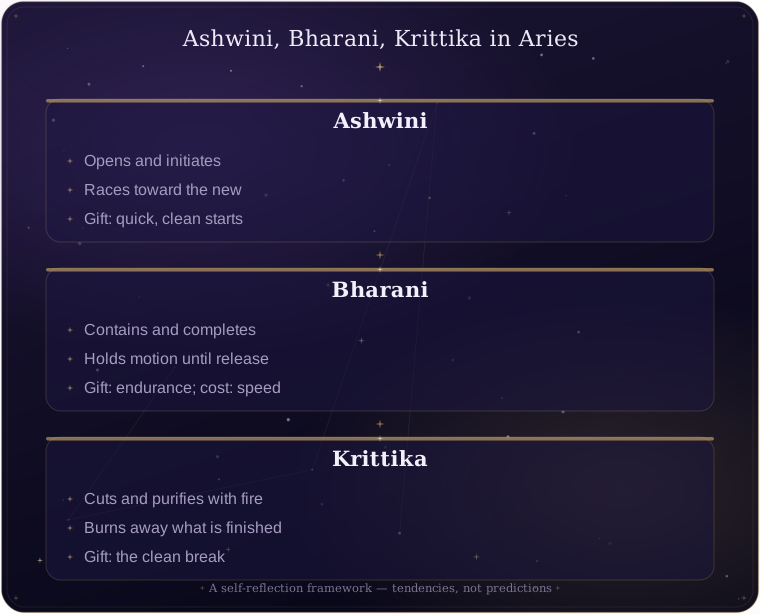
bharani nakshatra differs from its Aries neighbors mainly in what it does with raw energy, and the contrast is the fastest way to understand how it works. Ashwini, the nakshatra just before it, opens and initiates — it races toward the new. This placement slows down to contain and complete, holding what is already in motion until it is ready to be released. To get Bharani's depth of follow-through, you give up Ashwini's quick, clean starts; the gift is endurance, and the cost is speed.
Krittika, the nakshatra that follows, cuts and purifies with fire, burning away what is finished. This placement functions in the opposite direction: instead of severing, it gestates and bears a process all the way to its end. Choosing Bharani's patient containment over Krittika's sharp cut gets you the power to sit with a slow ending, but you lose the relief of a clean break. The way it works traces back to the classical Vedic tradition descending from Parashara, which frames each nakshatra as a distinct stage in how the Moon's energy ripens.
It also helps to separate this placement from the generic idea of a "malefic" or simply intense position. A Mars-driven intensity tends to push outward and confront; here the intensity turns inward and holds. To gain that capacity for containment, you trade away the easy release of acting on impulse — the energy is meant to be carried, not discharged. In practice that can look like someone who absorbs a tense situation and quietly stabilizes it instead of reacting and escalating it. You can see the contrast more clearly alongside explainer on Ashwini nakshatra, the initiating placement right before it.
How to Read Bharani in Your Chart
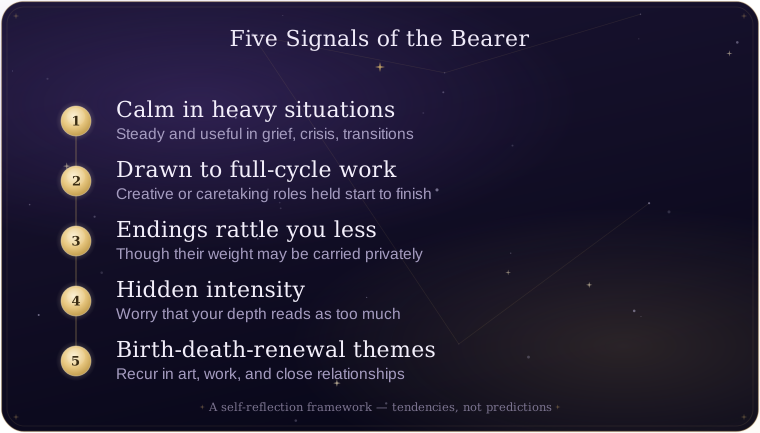
Bharani shows up less as obvious drama and more as a particular relationship with intensity and endings. A handful of signals tend to point to it when it sits on your Moon, Ascendant, or another sensitive point:
- You stay calm and useful in situations others find too heavy — grief, crisis, or major life transitions.
- You feel pulled toward creative or caretaking work that means holding something through a full cycle.
- Endings rattle you less than they rattle most people, though you may carry their weight privately.
- You sense your own intensity and sometimes hide it, worried that it reads as "too much."
- You're drawn to themes of birth, death, and renewal in your art, work, or close relationships.
None of these confirms the placement on its own, but together they sketch the bearer's signature fairly well.
Common Misreadings
Most popular write-ups flatten bharani nakshatra into a few clichés, and those clichés are usually what push people to look for something more accurate. The ones worth correcting:
- "It's a dark, unlucky placement." The Yama connection points to honest contact with limits and endings, not bad luck. Its real signature is responsibility, not doom.
- "Venus here just means indulgence." Venus does bring desire and creativity, but paired with Yama it learns restraint and timing. The pleasure is genuine; so is the discipline.
- "Intensity equals instability." The depth this placement carries feels overwhelming only when it is resisted. Held on purpose, it shows up as steadiness, not chaos.
- "The death symbolism is literal." Yama's presence is about endings, boundaries, and what is fair, not about physical death or danger. It describes a relationship with change, not a forecast of loss.
Bharani at a Glance
| Property | How It Works | Energy Center | How to Observe |
|---|---|---|---|
| Ruling planet — Venus | Adds desire, creativity, and a sense of value to the placement | Venus, within Aries | A strong pull toward beauty, creation, and meaningful attachment |
| Presiding deity — Yama | Sets boundaries and governs endings with fairness rather than fear | Yama, lord of death and dharma | Calm, almost dutiful steadiness around loss and limits |
| Symbol — the yoni | Acts as a container that holds and gestates before releasing | Aries, 13°20′–26°40′ | Comfort with carrying a process through its full cycle |
| Core theme — bearing | Holds the birth–death–renewal cycle without flinching | Venus–Yama pairing | Drawn to work involving transitions, caretaking, or creation |
Questions People Ask About Bharani
Is Bharani a good or bad placement?
Neither label fits it well. In the classical tradition it signals responsibility for endings and creative endurance, which reads as difficult only when a native fears their own depth.
Why is Bharani connected to both Venus and death?
Venus rules the nakshatra while Yama, the deity of death and dharma, presides over it. The pairing links desire and creation with an honest acceptance of limits and endings.
What does the yoni symbol of Bharani mean?
The yoni represents the womb as a container that gestates life and then releases it. It frames the placement around bearing something through a full cycle, not around sexuality alone.
Does Bharani make someone intense?
Many people with this placement describe carrying a quiet intensity, especially around themes of loss and renewal. It tends to feel heavy only when it is resisted instead of consciously held.
Reflection Prompts
- Think back to a recent ending you handled with unexpected calm — what did you draw on to stay steady?
- Recall a moment when your intensity felt "too much" — what would change if you saw it as capacity instead?
- Name a creative or caretaking project you carried through a full cycle — what did bearing it teach you?
Related Reading
- explainer on Krittika nakshatra — the nakshatra that follows Bharani in Aries, useful for seeing how the energy shifts from bearing to cutting and purifying.
- guide to the planet Venus in Vedic astrology — the ruling planet behind Bharani's creative pull and its sense of value and attachment.
- overview of the Aries zodiac sign — the sign Bharani occupies, which shapes how its bearer energy actually expresses itself.
- deep dive into reading your Vedic Moon sign — helpful if you want to place Bharani inside the bigger picture of your Moon's story.
- Bharani (Wikipedia) — encyclopedic context for the placement's astronomy and lore.
Take Action
Generate your free birth chart to explore bharani nakshatra and find exactly where this lunar mansion falls in your placements. You can see whether the bearer's energy touches your Moon, Ascendant, or another point, and how Venus and Yama color it. Reading your own chart turns Bharani from an abstract idea into a working lens for how you hold change across your life.
Sources
- Parashara — the classical sage whose tradition systematized the nakshatra framework this reading draws on
- Dane Rudhyar — pioneered the person-centered, psychological reading of astrological placements