
What is the Cancer Ascendant?
The Cancer Ascendant is a chart in which the sign Cancer was rising on the eastern horizon at birth, which places the Moon as the ruler of the whole chart and gives the outer self a tidal, mood-responsive quality often labeled cancer rising. The mask worn when meeting the world is governed not by a fixed planet but by the most changeable body in astrology, so the impression made seems to move with an inner weather. Read alongside the twelve houses and life areas, the placement makes more sense as a doorway shaped by which house its ruling Moon happens to occupy.
- The first house sits in Cancer, the sign of home, memory, and protective care
- The Moon becomes the chart ruler, so its sign, house, and phase color how you come across
- The outer self reads as soft, watchful, and easily warmed or guarded
This is an interpretive framework for reading symbolism, not a fixed verdict about anyone's personality.
Why It Matters for Self-Awareness
Most descriptions of this placement borrow the traits of the Cancer Sun and stop there, which is where readers get a slightly wrong picture. A Sun in Cancer describes a steady inner identity; an Ascendant in Cancer describes a doorway, and the Moon stands at that door deciding how open it is on a given day. Because the Moon governs the chart, the entire reading bends toward feeling, rootedness, and the rhythm of retreat and return.
That is also why this placement can feel hard to pin down, even to the person living it. The same individual may seem tender at one meeting and reserved at the next, not from inconsistency but because the chart's ruler is genuinely a body of cycles, waxing toward openness and waning toward retreat. The lunar phase at birth and the Moon's current transits both leave a trace on the outer manner, which is why a reading that ignores the Moon tends to flatten a living, breathing surface into a single static trait. Reading the Ascendant well means asking where the Moon actually sits in that chart, rather than assuming a single Cancer flavor will explain everything you observe.
the Cancer Ascendant vs Adjacent Concepts: How It Works + Trade-offs
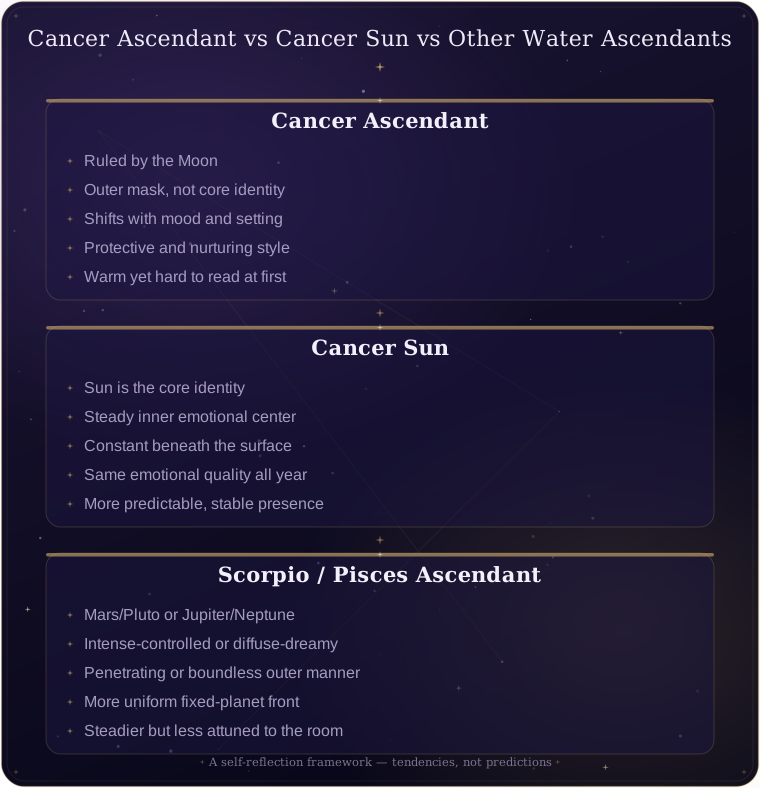
It helps to set the Cancer Ascendant against two close neighbors. Against the Cancer Sun, the contrast clarifies how it works: the Sun is the core identity that stays lit through the year, while the Ascendant is the surface the world meets first. Cancer on that surface, ruled by a moving Moon, gives a first impression that adjusts to mood and setting, where a Cancer Sun keeps a more constant emotional center underneath. The trade-off is real warmth at the cost of legibility; people may find such a person caring yet a little hard to read at first.
Against the other water Ascendants, the difference is the planet in charge. A Scorpio Ascendant answers to Mars and Pluto and reads as intense and controlled; a Pisces Ascendant answers to Jupiter and Neptune and reads as diffuse and dreamy. The Cancer Ascendant answers to the Moon alone, so its outer manner is protective rather than penetrating, nurturing rather than boundless. You gain a gift for making others feel held; you give up the steadier, more uniform front that a fixed-planet ruler would supply.
This is also where the honest reading of astrology lives. Liz Greene treated the rising sign as a developing mask the psyche grows into rather than a fixed label, and Steven Forrest reads the Ascendant as a style of engaging life rather than a destiny. Neither would freeze the Cancer Ascendant into one stereotype, because both leave room for the Moon's placement and the person's own growth to shape how the mask is actually worn.
How to Read the Cancer Ascendant in Your Chart
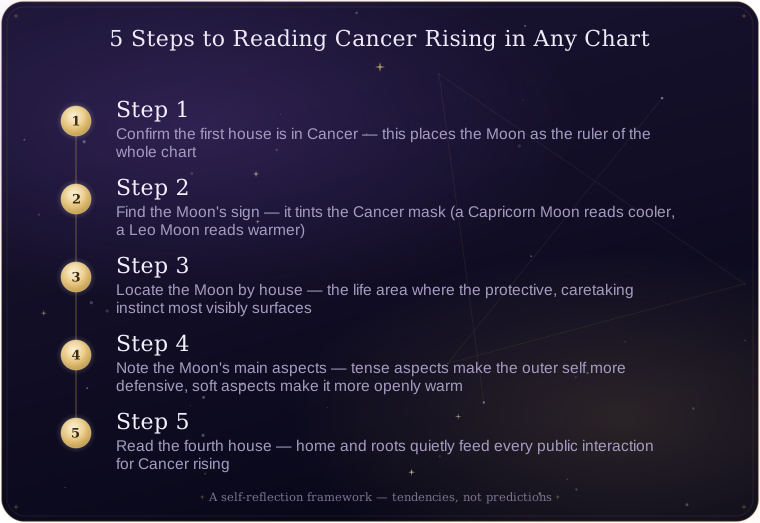
You can read this placement yourself with a few steps, and the method works for any Ascendant once you know which planet rules the sign on the first house. The aim is to move from a generic label to the specific Moon that actually governs the chart in front of you.
- Confirm the first house is in Cancer, which marks the Moon as the chart ruler for the whole reading.
- Find the Moon's sign — it tints the Cancer mask, so a Capricorn Moon reads cooler and more reserved than a Leo Moon.
- Locate the Moon by house, since the life area it occupies is where the protective, caretaking instinct most visibly surfaces.
- Note the Moon's main aspects, because tense aspects can make the outer self more defensive and soft aspects make it more openly warm.
- Read the fourth house, the natural counterweight to a Cancer first house, where home and roots quietly feed every public interaction.
Common Misreadings
- Cancer rising equals a Cancer personality. The Ascendant is the outer style, not the core self; the Moon's own sign and house can make two Cancer-rising charts read quite differently.
- The mask is moody and therefore unreliable. A first impression that shifts with mood reflects the Moon's nature, not a flaw of character, and it often signals genuine emotional attunement to a room.
- The Ascendant predicts how the person will turn out. A rising sign describes a starting style of engagement, not a fixed fate; growth and the rest of the chart matter more.
- You read someone else's Ascendant differently from your own. The method is identical for anyone: name the sign on the first house, then follow its ruling planet to the specifics.
the Cancer Ascendant at a Glance
| Property | What It Governs | What Modifies It | How It Shows Up |
|---|---|---|---|
| First house in Cancer | The mask and outer manner | The Moon's sign | A caring, watchful first impression |
| Moon as chart ruler | The tone of the whole chart | The Moon's house | Self-presentation that shifts with mood |
| Fourth house emphasis | Home, roots, private self | Planets in the fourth | Domestic security woven into public life |
| Lunar phase at birth | Emotional rhythm of the mask | Aspects to the Moon | Warmer or more guarded depending on the day |
Common Questions About the Cancer Ascendant
What does Cancer rising mean in simple terms?
It means Cancer was on the horizon at your birth, so your outward style carries the sign's protective, caring, home-oriented quality. Because the Moon rules Cancer, the Moon becomes your chart ruler and quietly shapes how that outer self comes across from one day to the next.
Why does Cancer rising seem inconsistent to people who meet it?
Because its ruler is the Moon, the fastest-moving and most cyclical body in the chart. The outer manner naturally responds to mood and setting, so the same person can feel openly warm in one moment and more shielded in another without any real contradiction in who they are.
How is Cancer rising different from a Cancer Sun?
The Sun is the inner identity that stays constant; the Ascendant is the surface others meet first. A Cancer Sun keeps a steady emotional core, while a Cancer Ascendant presents a more changeable, mood-colored front, which is why the two should not be read as the same thing.
Does the Moon's placement really change how Cancer rising looks?
Yes. The Moon's sign, house, and aspects all modify the Cancer mask, so a chart with a reserved Capricorn Moon will present quite differently from one with an expressive Leo Moon, even though both share the same Ascendant.
Reflection Prompts
- Recall a moment when your first impression on someone shifted with your mood — what did that reveal about how you protect yourself?
- Think about where you feel most at home; how does that private security show up in the way you meet new people?
- Notice when you read a label like a sign as a verdict rather than a starting point — what changes when you treat it as a doorway instead?
Related Reading
- the Moon as chart ruler and its placements — how the Moon's sign and house tune the Cancer mask from the inside
Take Action
Generate your free birth chart to find your own Ascendant and the exact sign and house of your Moon, the chart ruler that does the real work behind a Cancer rising. With the placement in front of you, the shifting first impression stops looking like inconsistency and starts reading as a clear, traceable signature you can follow back to a single moving planet.
Sources
- Liz Greene — read the rising sign as a developing mask the psyche grows into rather than a fixed label
- Steven Forrest — treats the Ascendant as a chosen style of engaging life rather than a fixed destiny