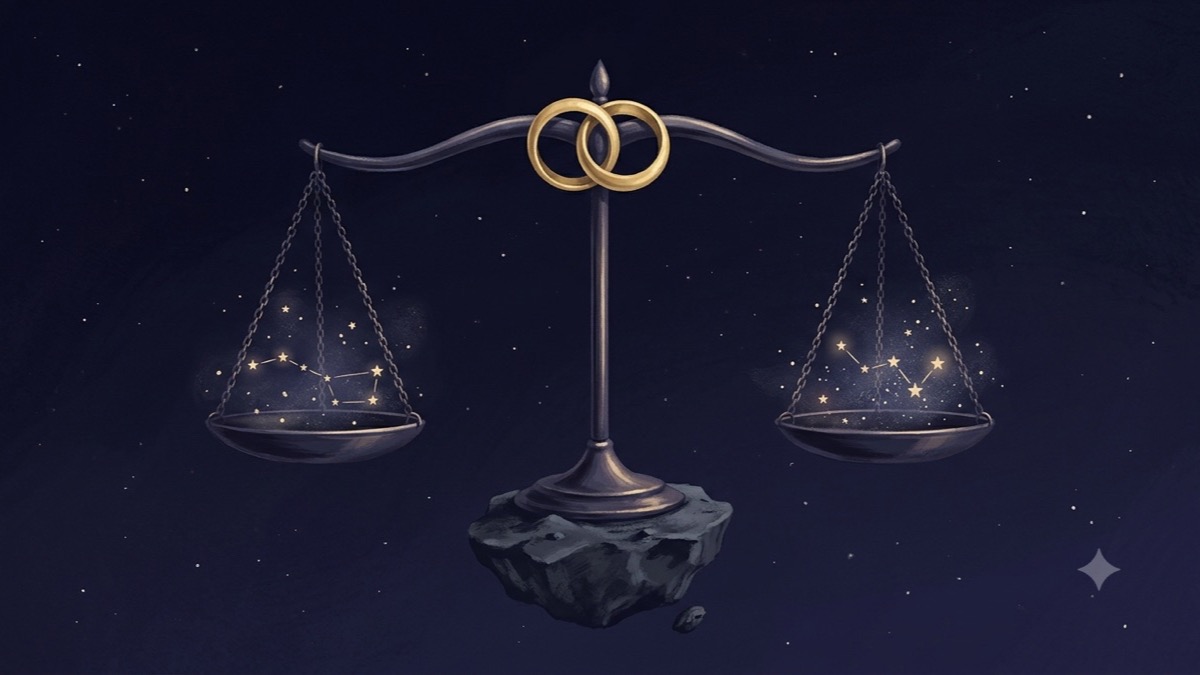
What is juno astrology?
Juno astrology is the study of the asteroid Juno in your birth chart, read as a signal of commitment, power balance, and long-term partnership viability rather than romantic chemistry. In chart work it functions as the asteroid that tracks commitment, power balance, and partnership justice.
- Marks what you need to feel secure and treated fairly inside a committed bond
- Tracks loyalty, control, and how equity is renegotiated over time
- Often mistaken for Venus — which covers attraction, values, pleasure, affection, and relational style, not just endurance
It sits naturally inside the broader pillar guide to asteroids in the birth chart, which maps how these smaller bodies fill the gaps the planets miss. Juno itself is asteroid 3 Juno, one of the four major asteroid goddesses, named for the Roman goddess of marriage; through the 20th century, astrologers increasingly incorporated Ceres, Pallas, Juno, and Vesta to expand symbolic readings beyond the traditional planets. Where Venus describes how a connection begins, Juno describes whether it can hold once the early spark settles into ordinary life.
Why It Matters for Self-Awareness
Understanding juno astrology matters because most popular write-ups quietly swap it for Venus. Search the asteroid and the first page promises a "soulmate" or "ideal partner" — language that really belongs to Venus, the planet of attraction and taste. That framing buries what Juno actually measures: whether a committed bond stays fair once the early excitement cools. The confusion tends to surface in a few predictable ways:
- The Venus swap. Readers treat the asteroid as a second love planet, hunting for who they are drawn to instead of how a bond stays balanced.
- The soulmate trap. Top results promise a perfect match, so people wait for the right person to arrive rather than examining the equity they quietly need.
- The blind spot. The same power imbalance repeats across very different partners, yet gets blamed on bad luck instead of read as a pattern worth naming.
The self-awareness payoff sits in that gap. Juno points to your private blueprint for equity — what you expect around loyalty, shared decisions, and being treated as an equal. Psychological and person-centered astrology reads placements like this as mirrors for inner patterns rather than fixed forecasts, and as prompts for growth rather than fate. Once you can name that blueprint, you may notice the moments you hand away power, or the times a fair-sounding compromise quietly leaves you short.
Picture someone whose chart leans hard on chemistry — strong Venus, easy charm — but whose Juno sits in a sign that needs total honesty. The attraction lands fast, then the same fight keeps returning: one partner wants transparency, the other reads the request as control. Venus explained the spark; only Juno explains why the bond keeps stalling at the same wall. Reading that placement gives the recurring fight a name, and a named pattern is one you can work with instead of repeat.
juno astrology vs Adjacent Concepts: How It Works + Trade-offs
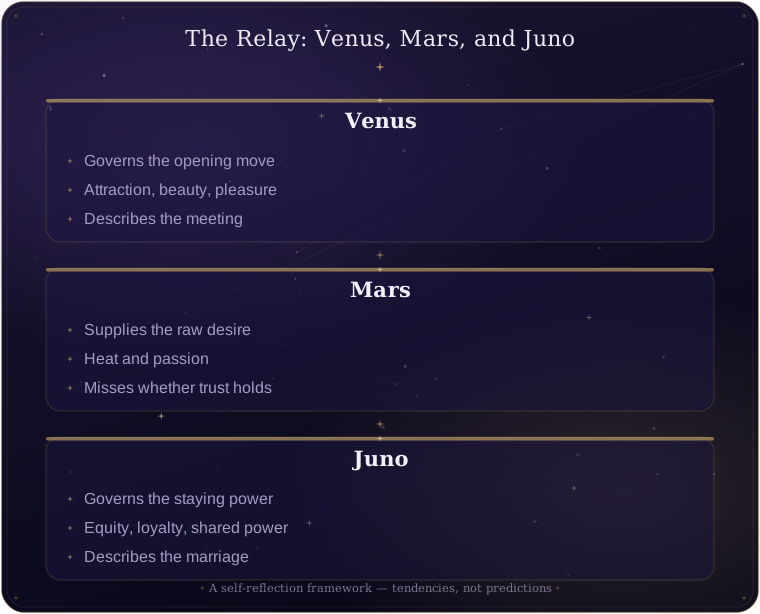
juno astrology differs from Venus because the two answer different questions about the same relationship. Venus governs the opening move — what draws you in, what feels beautiful or pleasurable. Juno governs the staying power — whether the bond can carry weight after attraction cools. The way it works is a relay: Venus initiates the spark and Mars supplies the raw desire, while Juno describes commitment needs and recurring partnership dynamics, but cannot determine outcomes alone. Reading a explainer on the Venus sign and attraction alongside Juno shows the contrast cleanly: one describes the meeting, the other describes the marriage.
The trade-off is worth saying out loud, because each lens costs you something. Lead with Venus and you get chemistry and ease, but you sacrifice a clear read on whether the partnership is actually fair. Lead with Juno and you get an honest view of power and loyalty, but you sacrifice some of the romance and spontaneity Venus prizes. The same holds against Mars: choose its heat and you get passion, yet you lose the slower signal of whether trust can hold under pressure. Picture two charts with identical Venus placements but opposite Juno signs — one needs total transparency to feel secure, the other needs space and autonomy. Same attraction, completely different terms for staying together.
None of this makes Venus less important — it just refuses to let attraction stand in for compatibility. A chart can show dazzling Venus contacts and still flag a setup where power never quite settles, where loyalty gets tested until someone names the imbalance out loud. That long-game view is the asteroid's whole contribution: it shows where equity is negotiated, where betrayal patterns surface, and where a couple has to rewrite the rules to stay together.
How to Read Juno in Your Chart
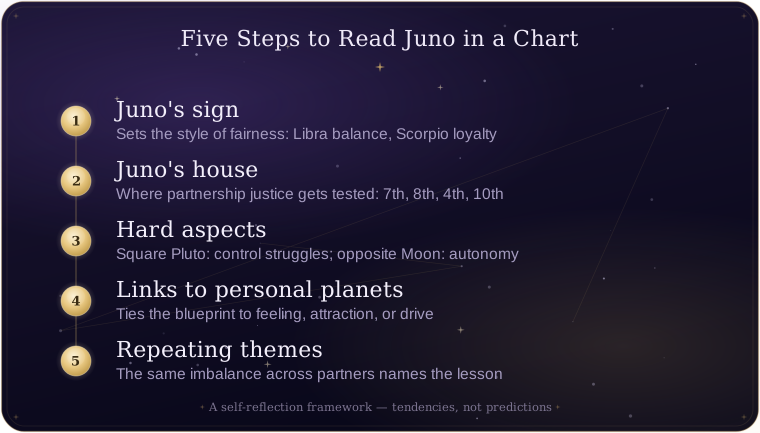
Reading juno astrology starts with locating the asteroid: most chart calculators hide it by default, so enable the asteroids option or add Juno — often listed as asteroid 3 or shown with the ⚵ glyph — then read its sign, house, and aspects. Each gives a concrete clue about how you handle commitment.
- Juno's sign sets the style of fairness you need: Juno in Libra wants balance and equal say, Juno in Scorpio needs depth and unwavering loyalty, Juno in Aquarius needs freedom and honesty, and Juno in Cancer needs emotional safety.
- Juno's house points to where partnership justice gets tested: the 7th centers formal commitment, the 8th brings shared resources and intimacy, the 4th ties it to home and family, and the 10th to status and public roles.
- Hard aspects to Juno mark recurring friction — Juno square Pluto can surface control struggles, Juno opposite the Moon can pit security against autonomy, and Juno conjunct Venus can blur attraction with commitment.
- Juno touching personal planets links your commitment blueprint to the Moon, Venus, or Mars — to feeling, attraction, or drive.
- Repeating relationship themes confirm the placement: when the same imbalance returns across partners, Juno usually names the lesson you keep being handed.
Read together, these signals describe how you negotiate fairness, not who you are meant to meet. Track them across a few past relationships and the placement stops feeling abstract — you start to see the exact terms you keep asking for, and the ones you keep conceding. The point is not to predict a partner but to recognize the deal you tend to strike, so you can renegotiate it on purpose instead of by accident.
Common Misreadings
The biggest errors in reading Juno all trace back to treating the asteroid as a romance oracle. A few keep tripping people up:
- "Juno is my soulmate indicator." It describes the conditions a bond needs to last over time, not a specific person the chart promises to deliver.
- "Juno equals attraction." Attraction is Venus's department; Juno measures whether commitment stays balanced once that attraction settles into everyday routine.
- "A strong Juno promises marriage." A prominent placement shows the theme you work with, not an outcome you are owed — many people with a strong Juno simply feel partnership lessons more keenly.
- "Juno only matters for women." Its themes of loyalty, equity, and shared power apply to anyone in a committed bond, whatever their gender or orientation.
Juno at a Glance
| Property | How It Works | Energy Center | How to Observe |
|---|---|---|---|
| Commitment style | Sets the terms a bond needs to feel secure | Natal sign of Juno | Notice what makes staying feel safe |
| Power balance | Flags where equity is negotiated or contested | Natal house of Juno | Watch which life area sparks fairness fights |
| Loyalty pattern | Tracks how trust is held and tested | Aspects to Juno | Spot recurring trust themes across partners |
| Relational justice | Surfaces betrayal and renegotiation themes | Juno–personal planet links | See when "this is unfair" feelings repeat |
Questions People Ask About Juno
What does Juno reveal in a birth chart?
Juno points to your standards for commitment, fairness, and loyalty inside a lasting bond, and the conditions you quietly need to keep showing up. It reads less like a romance forecast and more like a blueprint for what keeps a partnership feeling equal over the long run.
Is Juno the same as my Venus sign?
No — Venus shows attraction and taste, while Juno shows whether a committed relationship stays balanced after the early spark settles. They often work together in a chart, but they answer two genuinely different questions about the same bond.
Which placement of Juno matters most?
Sign and house usually carry the clearest signal, with aspects adding the nuance. The sign describes the style of fairness you need, and the house shows the life area where that need gets tested first.
Can Juno point to relationship problems?
It can highlight where power or loyalty tends to get strained, especially under hard aspects that pull the placement off balance. These read as patterns to notice and renegotiate over time, not fixed outcomes you are stuck with.
Reflection Prompts
- Think of a recent moment a partnership felt unfair — what kind of equity were you quietly missing?
- Recall a time loyalty got tested; how did you respond when power shifted between you and someone else?
- Notice a theme that repeats across your relationships — what is it asking you to renegotiate?
Related Reading
These pages go deeper on the themes Juno touches:
- guide to reading houses in a birth chart — to locate where Juno's partnership themes actually play out
- overview of the four asteroid goddesses — to see Juno beside Ceres, Pallas, and Vesta
- Juno (mythology) (Wikipedia) — for the myth the symbolism draws on
Take Action
Start by mapping Juno in your own chart. Learn how to read your birth chart and find your Juno, then read its sign and house to see exactly where your commitment blueprint lives. Once you can name where you need fairness and loyalty, you stop reading relationships as luck and start recognizing the equity you have been quietly asking for all along.
Sources
- Liz Greene — psychological astrology; this reading of relationship and power dynamics draws on that interpretive approach
- Dane Rudhyar — person-centered astrology; the growth-focused, non-deterministic framing here follows that approach