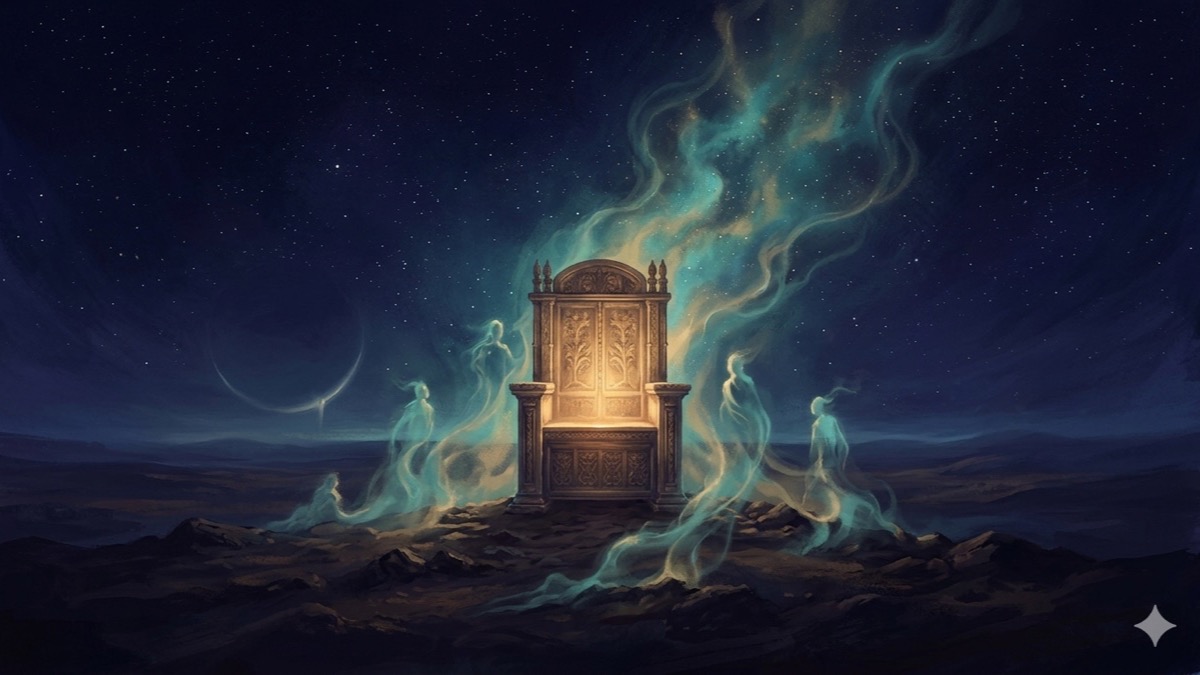
What is Magha?
The magha nakshatra is the tenth lunar mansion of Vedic astrology, spanning the first 13°20' of Leo, ruled by Ketu and presided over by the Pitrs, the ancestral spirits — making it the star of inherited royal authority rather than achieved status. Where most of Leo radiates the Sun's earned kingship, Magha carries a throne handed down through bloodline and karma. Reading the nakshatras series hub in order helps, because Magha only makes sense once you see why a fiery royal sign answers to Ketu, the planet of the past.
- Magha is the tenth of the twenty-seven nakshatras
- Its symbol is the royal throne or palanquin, and its deity is the Pitrs, the ancestors
- Ketu, the south lunar node, rules it — pointing authority backward into lineage, not forward into ambition
This is an interpretive framework drawn from Vedic tradition, not a prediction of your fortune or a measure of your worth.
Why It Matters for Self-Awareness
Most introductions to Magha stop at the word "royal" and leave the reader picturing a confident Leo who craves the spotlight. That misses the real lesson, because the authority Magha carries was never personally earned — it arrives through ancestry, and that changes everything about how it feels to hold it. The discipline here is to separate inheritance from achievement: a Magha placement points to a dignity received from those who came before, a seat at a table set generations ago.
That distinction is what makes the magha nakshatra a useful mirror. People with strong Magha energy often report a quiet sense of obligation to family legacy alongside a strange detachment from it, and that pairing is not a contradiction but the signature of the star. Ketu, the moksha karaka, loosens the grip on the very throne the Pitrs hand over, so the work of Magha is learning to honor a lineage without being owned by it — a question of belonging that reaches far past any one birth chart.
Seen this way, the throne becomes less a possession than a responsibility. The standing was set in place by the Pitrs long before the native arrived, which is why Magha so often shows up as a felt duty to carry a family name well rather than a hunger to be seen. Ketu keeps that duty from hardening into pride, and the reading that respects both forces — the inheritance and the detachment — is the one that actually fits the people who live under this star.
Magha vs Adjacent Concepts: How It Works + Trade-offs
It helps to set Magha against the assumption most students bring to it. Against the earned-authority reading — the idea that Leo's royalty is won through effort and charisma — the lineage view explains how Magha actually works: the throne is given, not built. The Pitrs confer standing through bloodline and accumulated family dharma, so a Magha native steps into a role that predates them. To gain that clarity you give up the flattering story of self-made greatness; this is borrowed light, not generated heat.
Against a purely psychological reading of Leo confidence, the magha nakshatra trades surface ego for ancestral weight. Ketu's rulership pulls the focus away from "look at me" and toward "I carry something older than me," which is why Magha can feel less like ambition and more like duty. The trade-off stays honest: naming an inherited dignity is not the same as promising worldly power, and it explains why Magha natives can hold real authority while feeling oddly unattached to it.
This is also where Ketu's deeper logic lives. As the south node and indicator of past-life accumulation, Ketu suggests the standing was earned in another lifetime and merely collected in this one, which is why effort and entitlement feel uncoupled here. The "reluctant royalty" profile so often described in Magha — comfortable with respect yet detached from the chase for it — follows directly from this pairing of a solar throne with a planet that points toward release.
How to Read Magha in a Chart
You can work with Magha placements through a few honest steps, and the method holds whether you are reading your own chart or someone else's.
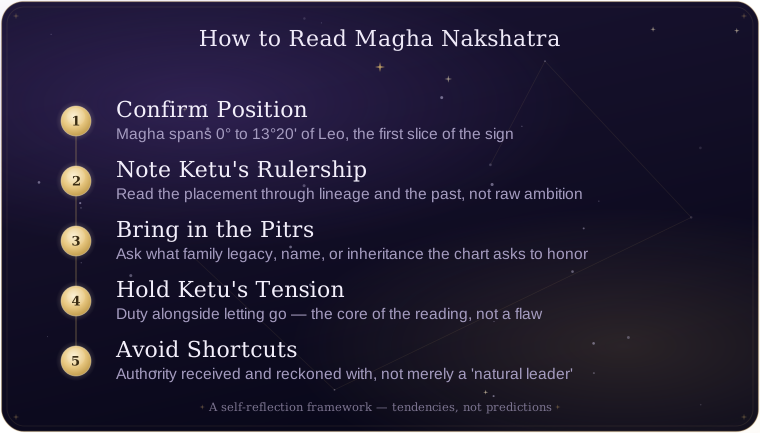
- Confirm the position: Magha occupies 0° to 13°20' of Leo, the first slice of the sign.
- Note that Ketu rules it — read the placement through lineage and the past, not raw ambition.
- Bring in the Pitrs: ask what family legacy, name, or inheritance the chart is asking the person to honor.
- Hold the tension Ketu adds — a pull toward duty alongside a pull toward letting go — as the core of the reading, not a flaw.
- Treat any "Magha makes you a natural leader" shortcut as half the picture; the fuller read is authority received, then reckoned with.
Common Misreadings
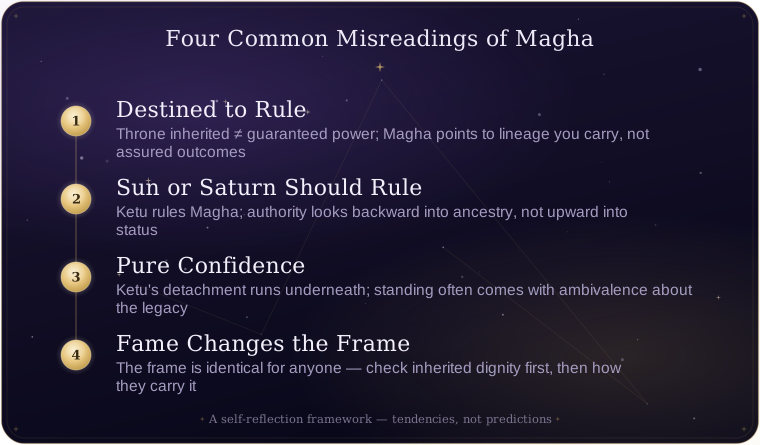
- Magha means you are destined to rule. The throne is inherited, not guaranteed power; Magha points to a lineage you carry, and what you do with it is a separate question entirely.
- The Sun or Saturn must rule Leo's royal star. Ketu rules Magha, and that surprise is the whole point — authority here looks backward into ancestry rather than upward into status.
- Magha is pure confidence. Ketu's detachment runs underneath, so the standing often comes with ambivalence about the very legacy it confers.
- You read Magha differently for someone famous. The frame is identical for anyone — check the inherited dignity first, then read how the person carries it.
Magha at a Glance
| Property | Detail | What It Points To | How to Read It |
|---|---|---|---|
| Position | First 13°20' of Leo | Tenth nakshatra of twenty-seven | The opening, solar slice of the royal sign |
| Ruling planet | Ketu, the south node | Past-life accumulation, lineage | Authority received, not personally earned |
| Deity | The Pitrs, the ancestors | Family dharma and legacy | A throne set by those who came before |
| Core tension | Inheritance vs detachment | "Reluctant royalty" profile | Honor the lineage without being owned by it |
Common Questions About Magha
Why does Ketu rule Magha when Leo is so solar?
Because Magha's royalty is inherited rather than radiated. Ketu, the south lunar node, points to past-life accumulation and ancestral lineage, so it rules the star where authority arrives through bloodline and family dharma instead of being generated by the self. The pairing of Leo's throne with Ketu's backward gaze is exactly what gives Magha its distinctive inherited-not-earned character.
Who are the Pitrs, and why do they matter here?
The Pitrs are the ancestral spirits — the patriarchs and forebears of a lineage — and they are the presiding deity of the magha nakshatra. Their role explains why Magha is so bound up with family legacy, names, and the dignity passed down a bloodline. To honor the Pitrs is to honor the inheritance Magha confers, which is why this star so often carries a felt obligation to those who came before.
Does Magha guarantee success or power?
No. Magha points to inherited standing and ancestral dignity, not to assured worldly success. What a person does with that inheritance is open, and Ketu's detachment can even loosen the drive to convert the throne into achievement. The placement describes a relationship to legacy, not a forecast of outcomes.
Where does Magha sit among the nakshatras?
It is the tenth of the twenty-seven nakshatras and the first to fall in Leo, occupying 0° to 13°20' of the sign. Sitting at the start of Leo, it opens the sign's royal sequence while answering to Ketu rather than the Sun, which is what sets its tone apart from the placements that follow it.
Reflection Prompts
- What dignity, name, or legacy did you inherit rather than earn — and how does it feel to carry it?
- Where in your life do you sense an obligation to family that you also quietly want to set down?
- When have you held real standing yet felt strangely detached from it, the way Magha's throne is given rather than chased?
Related Reading
- nakshatras series hub — the pillar that frames all twenty-seven lunar mansions
- Ketu, the south lunar node — the planet whose past-life logic rules Magha and turns its authority backward into lineage
Take Action
Generate your free birth chart to find your own Moon and nakshatra placement, and read your chart as an interpretive map rather than a verdict. You get a clear view of where the planets fell at your birth and, more usefully for Magha's lesson, a starting point for asking what you inherited versus what you built — the same question this star asks of anyone who carries it.
Sources
- Dennis Harness, The Nakshatras: The Lunar Mansions of Vedic Astrology — a standard reference for the meaning, ruler, and deity of each nakshatra including Magha
- David Frawley, The Astrology of the Seers — grounds the Vedic reading of Ketu and the lunar mansions as a language of karma and lineage rather than fixed fate