
What is the Moon and Ascendant?
The moon rising sign question is really two questions, because the Moon and Ascendant are two different points in a birth chart: the Moon sign describes the inner emotional self, while the rising sign (Ascendant) describes the outer identity and the first impression others meet. People search for a single "moon rising sign" as if it were one placement, yet these are separate members of the big three, and reading them together is what explains why someone can feel like one person inside and read as another on first meeting. To see how both fit alongside the Sun, the pillar page on the big three Sun Moon and rising signs frames the whole trio in one place.
- The Moon sign governs emotional needs, instincts, and inner security
- The rising sign governs the outer personality, appearance, and first impressions
- Together they form two thirds of the big three, alongside the Sun
- They interact rather than replace one another, which is the part most lists miss
This is an interpretive framework for self-reflection, not a personality test or a fixed verdict about who you are.
Why It Matters for Self-Awareness
Most "moon rising sign" content treats the pair as one label and stops there. That is where readers get misled, because collapsing two points into one hides the very gap that makes the combination interesting. The discipline here is to keep the inner and the outer separate: the Moon is the private weather, the felt response that runs before thought, while the Ascendant is the doorway people walk through to reach you. Held that way, the moon rising sign pairing becomes a small map of the distance between how you feel and how you first appear.
That distance is not a flaw to fix; it is information. A composed, easy-to-read Ascendant can sit over a Moon that needs far more reassurance than the surface suggests, which is one reason people often say they only understood a friend "once they knew them." Reading the two placements side by side gives language to that experience instead of leaving it as a vague sense that someone is more, or different, than they first seemed. The point is not to score yourself but to notice where your outer interface and your inner needs ask for different things.
the Moon and Ascendant vs Adjacent Concepts: How It Works + Trade-offs
It helps to set the Moon and Ascendant against their nearest neighbors in the chart. Against the Sun sign, the contrast is one of register: the Sun is the conscious sense of self and purpose, the Moon is the emotional undercurrent beneath it, and the rising sign is the outward style that frames both. Treating any one of them as the whole picture trades nuance for a tidy headline, which is exactly the trade a single moon rising sign label makes.
Against personality typing in general, the pairing trades a fixed verdict for a working tension. The Moon sign points to what soothes or unsettles you, the felt baseline you return to under stress, while the rising sign points to the manner others meet first, the cues they read before any depth shows. The trade-off is honest: naming two interacting placements is less catchy than one neat type, and far more useful for understanding why the same person can register as cool on arrival and warm on closer acquaintance.
This is also where a grounded reading of astrology lives. Liz Greene treated the chart as a language of symbol and inner meaning rather than a fixed label, and Robert Hand framed placements as patterns to interpret rather than scripts that decide behavior, so neither would read the Moon or the Ascendant as a sentence. The moon rising sign pairing, taken that way, becomes a prompt for reflection: a way to ask where your inner needs and your outer presentation pull in the same direction, and where they diverge. For the public-facing half of the picture, the guide to what the rising sign means goes deeper on the Ascendant alone.
How to Read the Moon and Ascendant in Your Chart
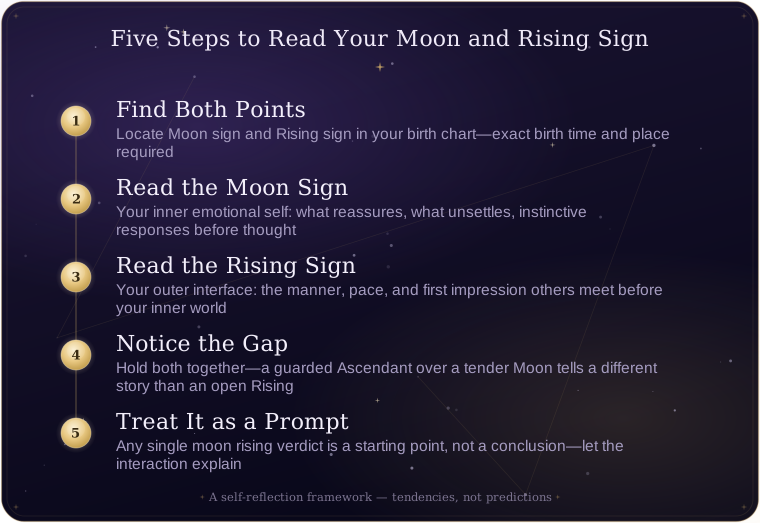
You can read your own Moon and Ascendant in a few honest steps, and the method is the same whether the placements feel aligned or at odds.
- Find both points in your birth chart — the Moon sign and the rising sign (Ascendant), each set by your exact birth time and place, which is why the time matters so much.
- Read the Moon sign as your inner emotional self: what reassures you, what unsettles you, and the instinctive response that arrives before you decide anything.
- Read the rising sign as your outer interface: the manner, pace, and first impression others meet before they reach your inner world.
- Hold the two together and notice the gap — a more guarded Ascendant over a tender Moon, or an open rising sign over a private one, each tells a different story.
- Treat any single "moon rising sign" verdict as a starting prompt, not a conclusion, and let the interaction between the two points do the real explaining.
Common Misreadings
- "Moon rising" is one sign. It is two placements — the Moon sign and the rising sign — and reading them as a single label erases the very gap between inner self and outer mask that makes the pairing worth knowing.
- The rising sign is the "real" you. The Ascendant is the outer interface and first impression; the inner emotional self lives in the Moon, and neither is more genuine than the other.
- The Moon and the Sun say the same thing. The Sun is the conscious sense of self; the Moon is the emotional undercurrent beneath it, which is why people can act from purpose and feel something quite different.
- A calm Ascendant means a calm interior. A composed rising sign can sit over a Moon that needs far more reassurance than the surface shows, which is the classic "warmer once you know them" effect.
the Moon and Ascendant at a Glance
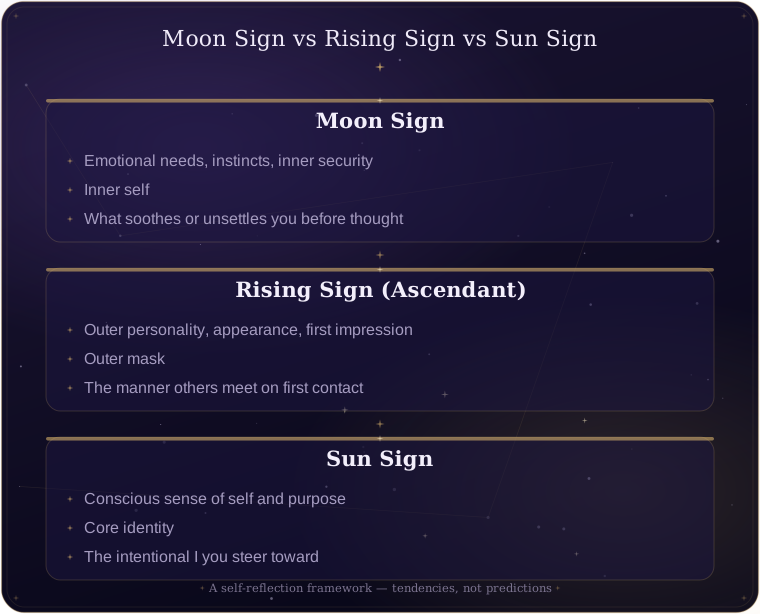
| Placement | What It Describes | Inner or Outer | How to Read It |
|---|---|---|---|
| Moon sign | Emotional needs, instincts, inner security | Inner self | What soothes or unsettles you before thought |
| Rising sign (Ascendant) | Outer personality, appearance, first impression | Outer mask | The manner others meet on first contact |
| Sun sign | Conscious sense of self and purpose | Core identity | The intentional "I" you steer toward |
| Moon-rising interaction | The gap between inner needs and outer presentation | Both at once | Where felt self and first impression diverge |
Common Questions About the Moon and Ascendant
Is "moon rising" one sign or two?
Two. The Moon sign and the rising sign (Ascendant) are separate points in the birth chart, and a moon rising sign label that treats them as one placement hides the interaction between your inner emotional self and your outer first impression. Reading them apart, then together, is what gives the pairing its meaning.
What does the Moon sign say that the rising sign does not?
The Moon sign points inward to emotional needs, instinctive reactions, and what restores your sense of security, none of which others see directly. The rising sign points outward to the personality and appearance people meet first. One is the private weather; the other is the doorway, and they often ask for different things.
Why do people seem different once you know them?
Often because the Ascendant they show first differs from the Moon they live with inside. A guarded or composed rising sign can sit over a tender, reassurance-seeking Moon, so the warmth registers only after the outer interface relaxes. That gap between presentation and interior is exactly what reading both placements explains.
Which matters more, the Moon or the rising sign?
Neither outranks the other; they answer different questions. The rising sign shapes how a connection begins and how others first read you, while the Moon shapes how you feel and what you need underneath. The most useful reading holds both at once rather than crowning one as the real self.
Reflection Prompts
- Recall a time someone said you seemed different "once they knew you" — which placement was talking on first contact, and which one emerged later?
- Think about what genuinely settles you under stress; does that inner need match the outer manner you tend to lead with?
- Notice where your first impression and your private response pull apart — what would it change to honor both rather than picking one as the real you?
Related Reading
- pillar page on the big three Sun Moon and rising signs — the hub that frames the whole trio together
- guide to what the rising sign means — a closer look at the Ascendant as your outer mask
- how rising signs map to the houses and life areas — where the Ascendant sets the chart's life-domain map
- pillar page on houses and life areas in astrology — the wider framework the rising sign opens onto
Take Action
Generate your free birth chart to find your own Moon and rising sign, then read them side by side rather than as one label. You get a clear view of your inner emotional self and your outer first impression, and, more usefully, a habit of asking where the two agree and where they diverge before deciding which one is "really" you.
Sources
- Liz Greene — grounded the reading of the chart as a language of symbol and inner meaning rather than a fixed label
- Robert Hand — known for treating placements as patterns to interpret rather than scripts that decide behavior