
What is Purva Bhadrapada?
Purva Bhadrapada is the 25th nakshatra of the Vedic zodiac, a Jupiter-ruled lunar mansion that stretches from 20° Aquarius into the first 3°20' of Pisces and carries the symbolism of spiritual fire, fierce conviction, and transformation that can illuminate or consume. Most descriptions of the purva bhadrapada nakshatra reach for the word "transformative" and stop there, which leaves out the harder truth: this is one of the chart's more combustible placements, where idealism and intensity are structural rather than decorative. To read it well, you set the symbolism beside the nakshatras pillar overview so the wider lunar-mansion map gives the fire some context.
- The 25th of 27 nakshatras, ruled by Jupiter (Guru/Brihaspati)
- Spans the Aquarius-Pisces crossing, from idealism into dissolution
- Presided over by Aja Ekapada, the one-footed deity of fierce spiritual fire
This is an interpretive framework drawn from Jyotish tradition, not a prediction of fixed outcomes or a verdict on anyone's character.
Why It Matters for Self-Awareness
Plenty of nakshatra writing treats Jupiter as a guarantee of benevolence, so a Jupiter-ruled placement gets read as automatically gentle. That is where the purva bhadrapada nakshatra gets flattened, because Jupiter here does not soften the deity it serves. Aja Ekapada is a figure of storms and cathartic fire, and Jupiter's wisdom channels that fire rather than neutralizing it. Held honestly, this placement becomes a study in what to do with conviction that runs hot, which is more useful than any flattering trait list.
The intensity is not a flaw to be edited out; it is the raw material. Vedic tradition links this nakshatra to the kind of zeal that builds reformers and mystics, and to the same zeal turned brittle when it has no outlet. Classical compilations such as the Brihat Samhita of Varahamihira record these lunar mansions and their presiding deities precisely because the older astrologers wanted the symbolism preserved with care rather than guessed at. The Aquarius portion supplies the visionary, humanitarian impulse, while the short Pisces crossing pulls toward transcendence or toward dissolution depending on how the energy is integrated. A native who learns to aim that drive at a cause or a craft tends to read as principled and magnetic; the same drive with nowhere to go can curdle into rigidity. Reading purva bhadrapada this way keeps the symbol and the self-knowledge in separate boxes: the chart names a tendency, and the person decides what to do with it.
Purva Bhadrapada vs Adjacent Concepts: How It Works + Trade-offs
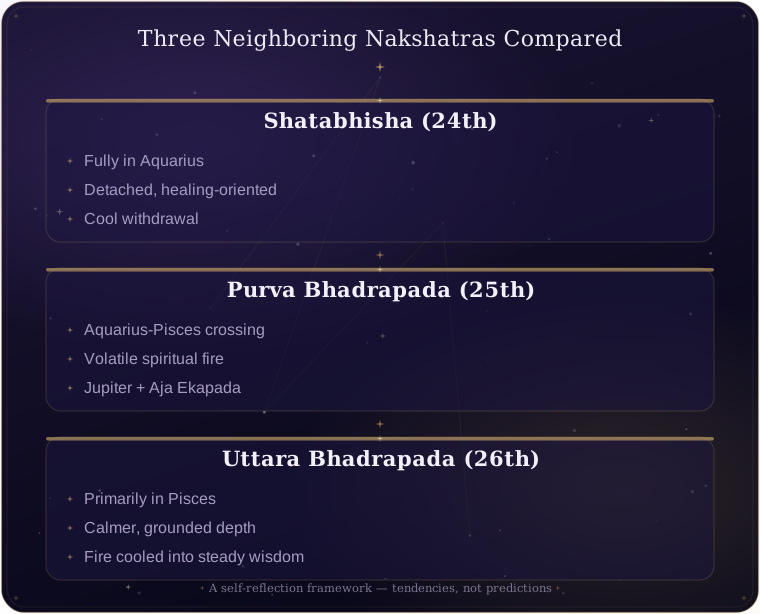
It helps to set the purva bhadrapada nakshatra against its near-twin. The two share the "Bhadrapada" root and sit at adjacent degrees, which is exactly why students mix them up. Purva Bhadrapada (the 25th) is the prior, more volatile half, ruled by Jupiter and governed by Aja Ekapada — spiritual fire that has not yet settled. Uttara Bhadrapada (the 26th) is the calmer continuation, where that fire cools into grounded depth. To gain Purva Bhadrapada's visionary heat, you trade the steadiness its successor offers.
Against a generically "lucky Jupiter" reading, this placement trades comfort for honesty. Prokerala and other Jyotish sources note that Purva Bhadrapada carries a destructive potential alongside its mysticism, something a feel-good interpretation quietly drops. The trade-off stays honest: naming the fire's two directions — illumination and consumption — is far more useful than crowning the nakshatra benign, because it tells the native what the work actually is.
This is also where the interpretive, non-deterministic reading of astrology lives. Treating the chart as a language of symbol rather than a fixed sentence means the purva bhadrapada nakshatra describes a charged disposition, not a destiny. Aja Ekapada's storm is a metaphor for transformation that precedes renewal, and Jupiter's role is to lend that transformation meaning and direction. The one-footed posture of the deity is itself instructive: it suggests a being balanced on a single point, committed and unwavering, which is the very quality that makes this placement both formidable and demanding. Read that way, the placement points toward channeled conviction rather than either blind faith or burnout, and that distinction is the whole point of reading it well.
How to Read Purva Bhadrapada in a Chart
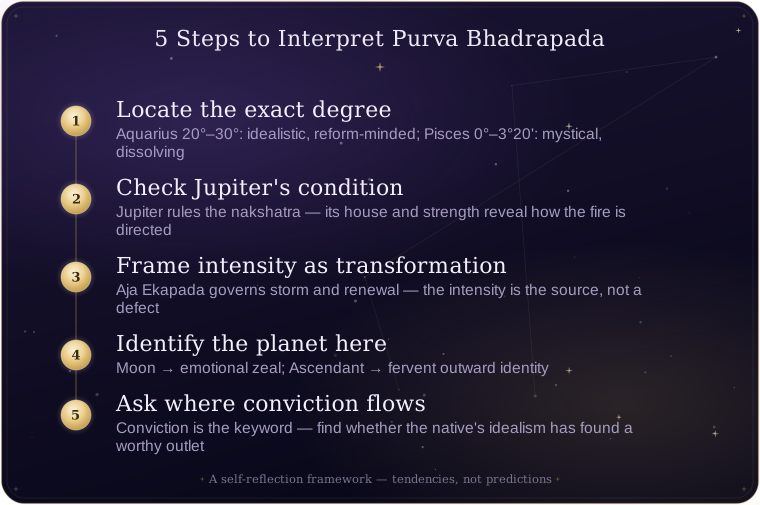
You can interpret the purva bhadrapada nakshatra yourself with a few grounded steps, and the method works whether the placement holds the Moon, Ascendant, or another planet.
- Locate the exact degree — the Aquarius portion (20°-30°) reads more idealistic and reform-minded; the Pisces portion (0°-3°20') reads more mystical and dissolving.
- Note that Jupiter is the ruler, so look to Jupiter's own house and condition for how the fire is being directed.
- Remember Aja Ekapada governs storm and renewal, so frame intensity as a transformation theme, not a defect.
- Watch which planet sits here — the Moon emphasizes emotional zeal, the Ascendant a fervent outward identity.
- Hold conviction as the keyword and ask where this person's idealism is finding (or failing to find) an outlet.
Common Misreadings
- Jupiter rulership makes it gentle. Jupiter directs the fire but does not extinguish it; Aja Ekapada's stormy, transformative nature stays central to the placement's character.
- Purva and Uttara Bhadrapada are interchangeable. They are distinct nakshatras — the 25th is the volatile fire, the 26th the grounded depth, and the shared name hides a real difference.
- The intensity is a problem to fix. In this framework the intensity is the source of the placement's drive; the interpretive question is direction, not removal.
- You read your own placement differently from someone else's. The method is identical for anyone — find the degree, check Jupiter, name the fire's direction.
Purva Bhadrapada at a Glance
| Property | Detail | Symbolic Range | How to Observe |
|---|---|---|---|
| Position | 25th nakshatra | 20° Aquarius to 3°20' Pisces | Sits at the Aquarius-Pisces crossing |
| Ruling planet | Jupiter (Guru) | Wisdom directing the fire | Read Jupiter's house and condition |
| Deity | Aja Ekapada | One-footed bringer of spiritual fire | Frame intensity as storm-and-renewal |
| Core theme | Transformation | Idealism into transcendence or dissolution | Ask where conviction finds an outlet |
Common Questions About Purva Bhadrapada
What planet rules Purva Bhadrapada nakshatra?
Jupiter (Guru or Brihaspati) rules the purva bhadrapada nakshatra. That rulership lends the placement a philosophical, meaning-seeking quality, but Jupiter channels the fire of the deity Aja Ekapada rather than calming it, which is why the nakshatra reads as conviction-driven rather than simply benevolent.
What is the deity and symbol of Purva Bhadrapada?
The presiding deity is Aja Ekapada, often described as the one-footed serpent or goat — a figure of spiritual fire, storms, and the cathartic destruction that clears the way for renewal. The symbolism centers on intense transformation, which is why the nakshatra is associated with mystics, reformers, and fierce idealists.
Where is Purva Bhadrapada located in the zodiac?
It spans from 20° Aquarius to 3°20' Pisces, making it one of the nakshatras that crosses a sign boundary. The Aquarius section emphasizes visionary, humanitarian idealism, while the short Pisces crossing leans toward transcendence and dissolution.
Is Purva Bhadrapada a good or bad nakshatra?
Neither label fits. The framework describes a charged, transformative placement whose intensity can express as genuine mysticism and principled reform or, without integration, as rigidity and burnout. The interpretive task is to read where the conviction is being directed, not to grade the nakshatra. A native who has found a worthy outlet for the fire tends to read as a builder of movements, ideas, or spiritual depth, while the same chart without an outlet can read as restless or stubbornly fixed on a single belief.
How does Purva Bhadrapada differ from the nakshatra before and after it?
The nakshatra just before, Shatabhisha, sits fully in Aquarius and carries a more detached, healing-oriented quality. Purva Bhadrapada then ignites that Aquarian idealism into spiritual fire across the Aquarius-Pisces line. Uttara Bhadrapada, the one after, settles that same fire into grounded, enduring depth — so the three together trace a movement from cool detachment, through volatile zeal, into steady wisdom.
Reflection Prompts
- Recall a moment when your conviction ran hot — did it build something, or did it scorch the ground around it, and what made the difference?
- Think of an ideal you hold fiercely; what would channeling it look like, versus simply defending it?
- Notice when intensity feels like identity — what opens up if you treat it as energy to direct rather than a fixed self?
Related Reading
- Uttara Bhadrapada nakshatra — the grounded successor that cools Purva Bhadrapada's fire
Take Action
Generate your free birth chart to see which nakshatra holds your Moon and how its symbolism reads in your own placements. You get a clear view of your lunar mansion and a reminder that the chart names a disposition rather than a fate, and, more usefully, a way to ask where your own conviction is finding an outlet before you credit or blame the stars for the fire.
Sources
- Prokerala — Jyotish reference documenting Purva Bhadrapada's Jupiter rulership, Aja Ekapada deity, and its dual mystical-destructive symbolism
- Brihat Samhita (Varahamihira) — classical Sanskrit treatise that records the lunar mansions including Purva Bhadrapada and their presiding deities