What is rohini nakshatra?
Rohini nakshatra is the fourth of the 27 nakshatras, or lunar mansions, in Vedic astrology — a slice of the zodiac that sits entirely within Taurus, from 10° to 23°20′, and is ruled by the Moon itself. Its name carries the sense of "the red one" or "the growing one," and its presiding deity is Prajapati, the creator also named Brahma. Its shakti is Rohana Shakti, the power to make things grow, and it belongs to the manushya (human) gana. For the wider picture, it is one station on the pillar guide to all 27 nakshatras.
The Moon is exalted in Taurus, but the exact point of exaltation falls near 3° of the sign — inside neighboring Krittika, not Rohini. Rohini's strength rests on a different stack: the Moon rules the star, it sits in the Moon-friendly earth of Taurus, and classical myth names Rohini as the favorite among Chandra's (the Moon god's) wives. Put simply, Rohini reads as the Moon's most favored station of growth and abundance.
- Ruled by the Moon and seated in Taurus, the sign of the Moon's exaltation
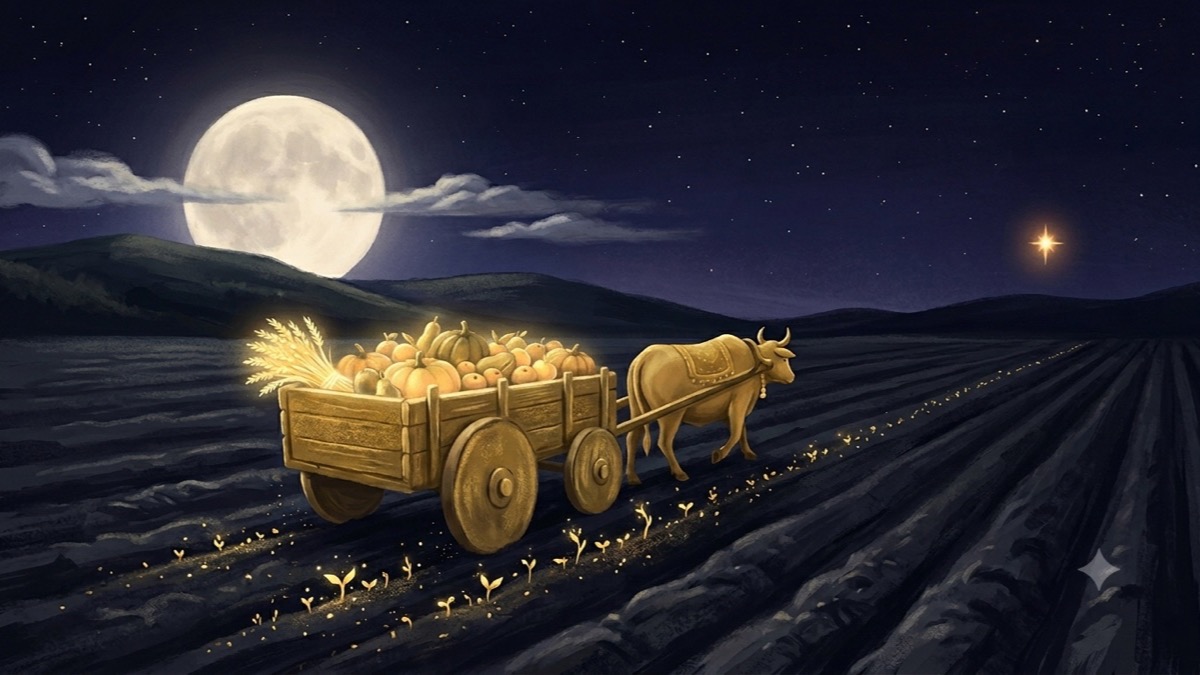
- Symbolized by the ox-cart or chariot, with the shakti of growth (Rohana)
- Most often misread as materialistic when it is really emotionally and creatively attuned
Why It Matters for Self-Awareness
Understanding rohini nakshatra matters because popular write-ups pull it in one flat direction — luxury, good taste, a weakness for nice things — so people born under it read their own chart as a character defect. The deeper picture is the opposite: this is the Moon at full dignity, seated in the sign where it is exalted, which traditional readings treat as peak emotional and creative power rather than peak indulgence. That single correction — abundance as the outward face of emotional fullness, not greed — is the core of the placement, and it sits close to the broader idea of the explainer on the Moon's exaltation in Taurus.
Read this way, the sensory richness becomes an instrument rather than a distraction, and that has practical payoff. In work, Rohini favors building tangible value over time — design, food, agriculture, finance, the arts, caregiving, anything that grows or beautifies a real resource. In relationships, it is loyal, nourishing, and magnetic, drawing people in and tending them patiently. A modern, psychologically-minded reading (the lineage Dane Rudhyar popularized in the West) frames the same traits as instincts to be channeled, not policed — though that lens is a 20th-century overlay, not classical Jyotisha.
rohini nakshatra vs Adjacent Concepts: How It Works + Trade-offs
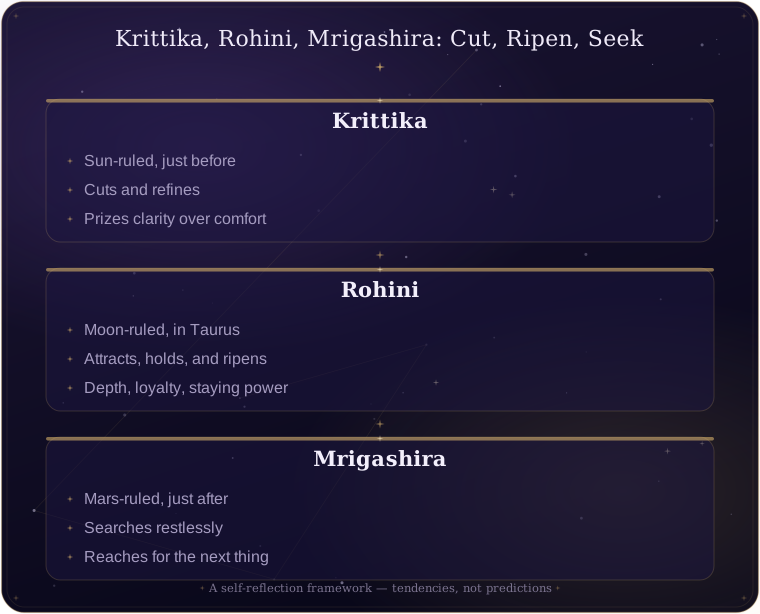
Rohini works by pulling the Moon's feeling-nature into earthy Taurus and aiming it at growth — it attracts, holds, and ripens whatever it touches, which is why it reads as magnetic rather than merely comfortable. Set it beside its neighbors and the trade-offs sharpen. Krittika, the station just before, is ruled by the Sun and works by cutting and refining: it burns off what doesn't serve and prizes clarity over comfort. To gain Krittika's edge you give up Rohini's patience; to keep Rohini's slow-building pull you give up some willingness to cut and move on.
Mrigashira, the station just after, is ruled by Mars and works by searching — restless, curious, always reaching for the next thing worth wanting. Rohini settles in and savors instead. Choosing its rooted contentment over Mrigashira's hunger buys depth, loyalty, and staying power at the cost of some momentum. In practice it is the difference between someone who remodels the same home for twenty years and someone already mapping the next move. How Rohini works, in short, is by deepening attachment until attachment becomes either devotion or inertia — the same gravity that builds a rich, well-tended life can harden into a refusal to change.
How to Read Rohini in Your Chart
Rohini is most often read from the Moon, but any planet or the Ascendant can fall here, and each tells a different story:
- Moon in Rohini is the birth star (janma nakshatra): emotional instinct, what soothes you, and the magnetic, growth-oriented core of the personality.
- Ascendant in Rohini shapes outward demeanor — an attractive, settled, sensual presence and a body-aware way of moving through the world.
- Venus in Rohini intensifies beauty, romance, and aesthetic talent, but can over-attach to comfort and pleasure.
- Mars in Rohini channels drive into building and providing, with a possessive, slow-to-anger streak.
- Saturn in Rohini can delay or burden the things Rohini loves, teaching patience through material lessons.
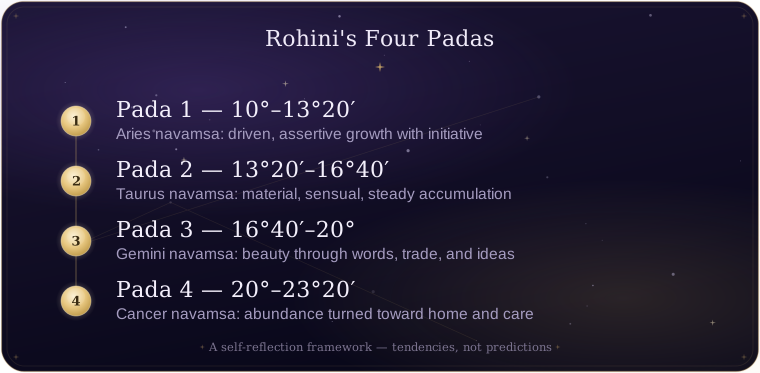
The placement is also refined by its four padas (quarters), each mapped to a navamsa sign that colors the expression:
- Pada 1 (10°–13°20′, Aries navamsa): the most driven and assertive — growth pursued with initiative.
- Pada 2 (13°20′–16°40′, Taurus navamsa): the most material and sensual — wealth, comfort, and steady accumulation.
- Pada 3 (16°40′–20°, Gemini navamsa): the most communicative and curious — beauty expressed through words, trade, and ideas.
- Pada 4 (20°–23°20′, Cancer navamsa): the most nurturing and emotional — abundance turned toward home and care.
Common Misreadings
The most useful correction — that Rohini's pull toward comfort is emotional fullness expressed through the senses, not greed — is covered above. The remaining misreadings cluster around the same blind spot:
- "It's only about vanity." The magnetism is relational and generative — a capacity to attract, hold, and nourish — not self-absorption or a hunger to be admired.
- "Abundance equals indulgence." Traditional readings frame Rohini as fertility and the power to bring things into form, not an excuse for excess; one is a gift to use, the other a flaw to police.
- "The stubbornness is the whole story." Rootedness is what gives the placement its follow-through. It curdles into stagnation only when there is no creative or relational outlet — which points to the shadow work below.
Shadow and balance. The shadow of Rohini is comfort-driven inertia: clinging to what feels safe, delaying change, and confusing possession with security. The balance is to put the gravity to work — create value through steady aesthetics and resource management, watch for procrastinating necessary change because it is comfortable, and channel sensory and emotional needs into creation, caregiving, or long-term projects rather than mere accumulation.
Rohini at a Glance
| Property | How It Works | Traditional Basis | How to Observe |
|---|---|---|---|
| Ruling planet | The Moon governs the station, lending emotional depth and a drawing-in quality | Moon (nakshatra lord) | A feeling-led temperament that reads people and rooms quickly |
| Sign placement | Sits inside Taurus, the Moon's sign of exaltation, grounding the energy in the senses | Taurus / Vrishabha rashi | Earthy steadiness and a love of tangible, sensory comfort |
| Presiding deity | Prajapati (Brahma), the creator, drives its generative, world-building pull | Prajapati / Brahma | A steady urge to grow, make, and bring things into finished form |
| Core power | The Rohana Shakti — the power of growth — makes things rise and ripen | Rohana Shakti | Projects, relationships, and resources that quietly compound over years |
| Symbol & star | The ox-cart points the energy toward harvest; tied to the bright star Aldebaran | Cart / chariot; Aldebaran | Patient forward movement, and a presence hard to ignore even in silence |
Common Questions About Rohini
What is the Rohini birth star best known for?
It is best known as the Moon's most favored lunar mansion, tied to growth, beauty, fertility, and the Rohana Shakti — the power to make things rise. Traditional readings link it to abundance and a magnetic, creative presence.
Which planet rules Rohini, and is the Moon exalted there?
The Moon rules Rohini, and the star sits in Taurus, the Moon's sign of exaltation — though the exact exaltation degree (about 3°) lies in Krittika, just before it. The Moon is still strong and content across Rohini.
Is Rohini an auspicious star to be born under?
It is widely regarded as one of the most fortunate, especially for creativity, relationships, and material stability. The common caution is its pull toward comfort, which can tip into stubbornness or holding on too tightly.
What is the symbol of this nakshatra, and what does it mean?
Its classic symbol is the ox-cart or chariot, a sign of steady movement toward harvest. Some traditions also use a banyan tree for its themes of growth, shelter, and deep roots.
Reflection Prompts
- Recall a time when surrounding yourself with beauty or comfort actually fueled your best work rather than distracting you.
- Recall a moment you dismissed your love of pleasure as shallow — what were you really creating or nourishing underneath it?
- Notice where you root and resist being rushed: when does that steadiness serve you, and when has comfort kept you from a change you knew you needed?
Related Reading
- comparison with Krittika nakshatra — the neighboring station with the opposite, Sun-ruled temperament, useful for feeling the contrast.
- guide to reading your moon sign — because this placement is ultimately a concentrated flavor of the Moon.
- Rohini (nakshatra) (Wikipedia)
Take Action
Generate your free birth chart to explore rohini nakshatra. In a few minutes you can see exactly where the Moon — or your Ascendant, Venus, Mars, or Saturn — falls, and whether this fertile, magnetic station shapes how you create and connect. From there you can start reading your pull toward beauty not as a weakness, but as the instrument it was always meant to be. Begin with the step-by-step walkthrough on how to read your birth chart.
Sources
- Parashara — the foundational sage of the Vedic (Jyotisha) lineage these nakshatra readings descend from
- Dane Rudhyar — a 20th-century source for the modern, psychological reading of the Moon, distinct from classical Vedic texts