
What is Uttara Phalguni?
Uttara Phalguni is the twelfth nakshatra of the Vedic zodiac, ruled by the Sun and presided over by Aryaman, the deity of contracts, patronage, and the bonds that turn warmth into committed service. People searching the uttara phalguni nakshatra usually arrive with a vague sense of "the generous star," but the deeper picture is sharper than that. This is where solar vitality stops shining for its own sake and starts underwriting other people — the moment radiance accepts an obligation. To see how this nakshatra threads into the wider sky, nakshatras pillar overview frames where Uttara Phalguni sits among the twenty-seven lunar mansions.
- Twelfth in sequence, carrying solar authority into a steadier register
- Ruled by the Sun, with Aryaman governing its contracts and patronage
- An archetype of organized generosity rather than spontaneous giving
This is an interpretive framework for self-reflection, not a verdict on character or destiny.
Why It Matters for Self-Awareness
Most descriptions of the uttara phalguni nakshatra list traits — kind, reliable, leaderly — and leave it there. That flattening hides the one thing worth knowing: this nakshatra is about the gap between feeling generous and being bound to someone. The Sun here does not want to be admired; it wants to be depended upon. Read that way, Uttara Phalguni becomes a mirror for how you handle the weight of a promise, which is a more useful question than any trait list can answer.
The reason this matters is that warmth and commitment are not the same impulse, and Uttara Phalguni sits exactly on their seam. Many people give freely when it costs nothing and retreat when generosity hardens into duty. Aryaman's signature is the opposite: he is the god of the formal bond, the patron who keeps the contract after the enthusiasm fades. So the uttara phalguni nakshatra invites a pointed self-check — where do you offer warmth, and where do you actually stay? Held honestly, that distinction tells you more about your reliability than your sun sign ever will.
Uttara Phalguni vs Adjacent Concepts: How It Works + Trade-offs
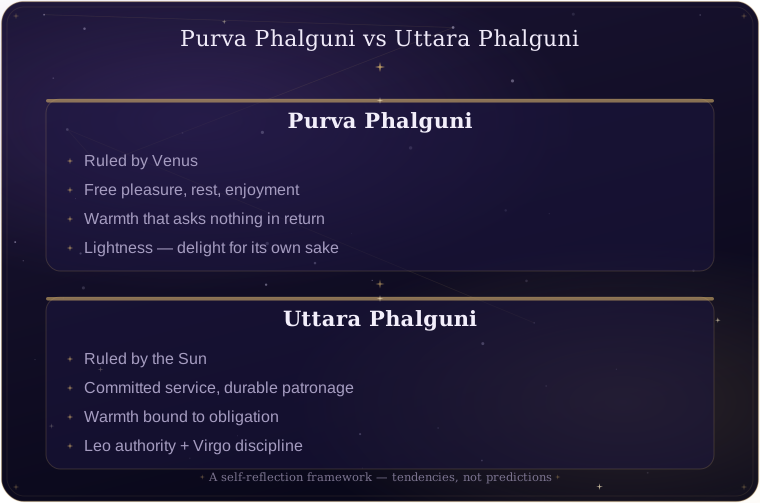
It helps to set Uttara Phalguni against its twin, Purva Phalguni, because the two are constantly confused. They share a name and the symbol of a bed, but they pull in opposite directions. Purva Phalguni, ruled by Venus, is the star of free pleasure — rest, enjoyment, the delight that asks for nothing in return. Uttara Phalguni takes that same vitality and converts it into durable commitment. To gain the steadiness of patronage, this nakshatra trades away the lightness of pleasure for its own sake.
The split is also literal in the sky. Uttara Phalguni spans the late degrees of Leo into the early degrees of Virgo, crossing the Leo-Virgo cusp. The Leo portion anchors solar authority — the confident, leading energy of the Sun in its own sign — while the Virgo portion channels that authority into structured, exacting service. That crossing is what makes the nakshatra distinctive: it carries Leo's warmth and Virgo's discipline in a single band, which is why it reads so naturally into roles like medicine, law, community governance, and education, where leadership only counts if it serves.
This is also where an honest reading of the uttara phalguni nakshatra lives. Aryaman governs contracts and the social obligations of formalized hospitality, so this is generosity with terms attached — a patron's giving, not a benefactor's whim. Where Purva Phalguni explores warmth freely, Uttara Phalguni asks what you will commit to once the warmth has to hold weight. Liz Greene treated such placements as a language of symbol rather than a fixed verdict, and Robert Hand framed them as meaning to reflect on rather than a script, so neither would read this nakshatra as a label stamped on a person. Taken that way, reading the two stars as a pair, rather than collapsing them into one "Phalguni," is what keeps the distinction between free pleasure and committed service intact, and it lets you hold the patronage archetype as a mirror rather than a measure.
How to Read Uttara Phalguni in a Chart
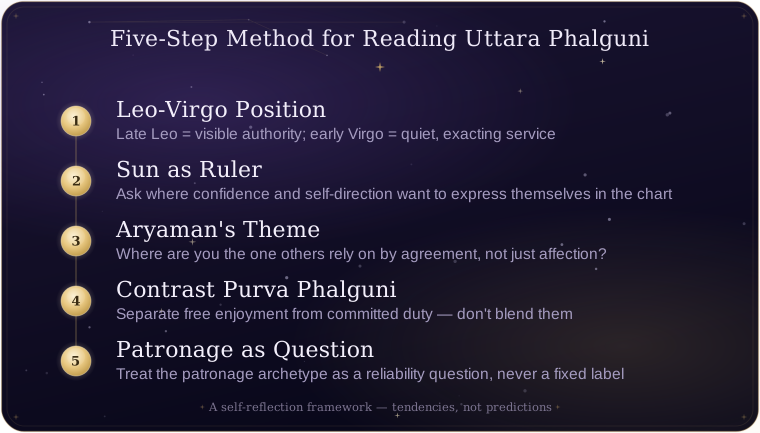
You can work with this nakshatra honestly using a few steps, and the same method applies whether you are reading your own placement or someone else's.
- Note the Leo-Virgo position first — late Leo leans toward visible authority, early Virgo toward quiet, exacting service.
- Read the Sun as the ruler, asking where confidence and self-direction want to express themselves in the chart.
- Bring in Aryaman's theme of contracts and patronage: where are you the one others rely on by agreement, not just affection?
- Contrast it with any Purva Phalguni placement to separate free enjoyment from committed duty rather than blending them.
- Treat the patronage archetype as a question about reliability, never as a fixed label on the person.
Common Misreadings of Uttara Phalguni
- It is just "the generous nakshatra." The generosity is contractual, not spontaneous — Aryaman's patronage keeps the bond after the warmth fades, which is a different and more demanding quality than open-handedness.
- It is the same as Purva Phalguni. They share a name and a bed symbol but split between Venusian free pleasure and the Sun's committed service; collapsing them loses the whole distinction.
- The Leo and Virgo halves mean the same thing. The Leo portion anchors solar authority while the Virgo portion turns it into structured service, so where a placement falls in the band genuinely changes the reading.
- You read your own placement differently from someone else's. The honest method is identical — position, ruler, deity theme, contrast — for anyone you study.
Uttara Phalguni at a Glance
| Property | What It Means | Where It Sits | How to Observe |
|---|---|---|---|
| Sequence | The twelfth lunar mansion | Late Leo into early Virgo | Carries solar warmth into a steadier register |
| Ruling planet | The Sun, source of authority and vitality | Strongest in the Leo portion | Confidence that wants to be depended upon |
| Presiding deity | Aryaman, god of contracts and patronage | Across the whole nakshatra | Generosity bound by commitment, not whim |
| Leo-Virgo split | Authority converted into service | Leo anchors, Virgo structures | Leadership that counts only when it serves |
Common Questions About Uttara Phalguni
What is the uttara phalguni nakshatra known for?
It is the twelfth nakshatra, ruled by the Sun and overseen by Aryaman, the deity of contracts and patronage. Its signature is committed service — taking solar warmth and binding it to an obligation, so the giving is the kind a patron sustains rather than a one-off act of kindness.
Why is Uttara Phalguni confused with Purva Phalguni?
They share a name and the symbol of a bed, which makes them easy to merge. The difference is the ruler and the impulse: Venus-ruled Purva Phalguni is about free pleasure, while Sun-ruled Uttara Phalguni converts that vitality into durable commitment and public duty.
What does the Leo-Virgo placement mean?
Uttara Phalguni crosses the cusp from late Leo into early Virgo. The Leo portion anchors solar authority and confidence, and the Virgo portion channels that authority into structured, exacting service, which is why the nakshatra reads so strongly into leadership-through-service roles.
How should I treat the patronage theme in a reading?
As a question about reliability, not a fixed trait. Aryaman's contracts and patronage point to where you are depended upon by agreement, so the useful self-check is where you actually stay committed once warmth turns into duty.
Reflection Prompts
- Recall a promise you kept after the initial warmth had faded — what did staying committed reveal about you?
- Notice where you give freely and where you give by obligation; which feels more like who you want to be?
- Think of someone who relied on you by agreement rather than affection — how did carrying that bond change you?
Related Reading
- nakshatras pillar overview — the hub that frames all twenty-seven lunar mansions
- Purva Phalguni — the Venus-ruled twin of free pleasure, the natural companion to this committed-service reading
- The Sun in Vedic astrology — the ruler whose authority Uttara Phalguni channels into service
Take Action
Generate your free birth chart to find your own nakshatra and see where the Sun and its patrons sit in your own sky. You get a clear view of your lunar mansion and a reminder that an archetype is a mirror, not a label — and, more usefully, a habit of asking where your warmth turns into commitment before you call yourself generous.
Sources
- Liz Greene — grounded the reading of nakshatras and signs as a language of symbol rather than a fixed verdict on character
- Robert Hand — known for treating astrological placements as meaning to reflect on rather than a predictive machine