
What is 3 gunas?
The 3 gunas are the three qualities — sattva, rajas, and tamas — that, in classical Samkhya philosophy, make up prakriti, the primordial nature underlying both mind and matter. The word guna literally means "strand" or "thread," and the three weave together in shifting proportions in every person and every passing mood: clear and steady, restless and driven, or heavy and dull. They are not fixed types you get sorted into for life but proportions you can influence through diet, action, and attention. That places them next to the broader pillar guide to the chakra healing system, a separate map of subtle-energy qualities readers often meet in the same corner of yoga — though the two shouldn't be collapsed into one. So, at the simplest, the 3 gunas are sattva (clarity), rajas (drive), and tamas (inertia): three qualities of nature that shift moment to moment.
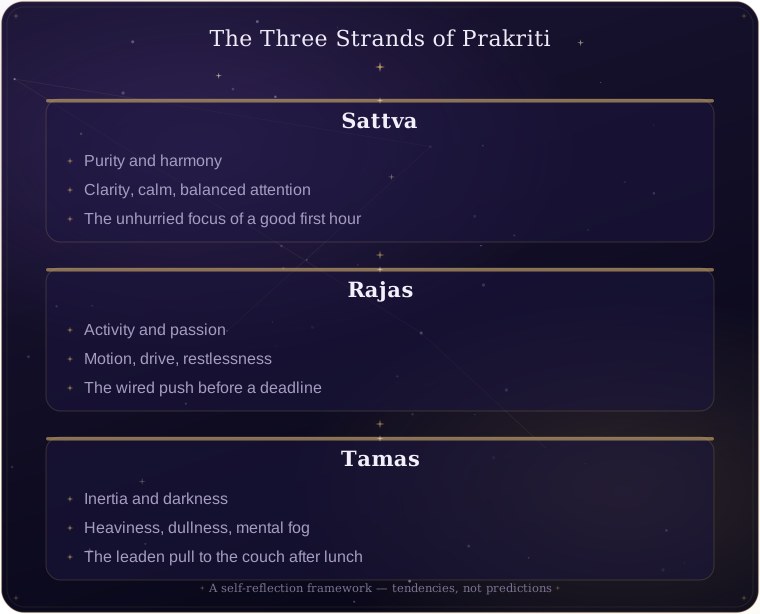
- Sattva (sattva, "purity, harmony") — clarity, calm, balanced attention; the unhurried focus of a good first hour.
- Rajas (rajas, "activity, passion") — motion, drive, restlessness; the wired push before a deadline.
- Tamas (tamas, "inertia, darkness") — heaviness, dullness, mental fog; the leaden pull to the couch after a heavy lunch.
Why It Matters for Self-Awareness
The most common way the gunas get taught quietly breaks them. Wellness content loves a clean category — the "sattvic person," the "rajasic type," the "tamasic friend" — and that framing turns a moving signal into a sticker you wear all year. Once you've decided you are rajasic, you stop noticing the calm, clear hours you genuinely have, and you stop using the model for what it does best: showing where your state sits right now and which way to steer it. People usually meet this framework when they already feel stuck — scattered at the desk by ten, foggy after lunch, wired past midnight. They came for a way to shift, and a fixed label hands them the opposite: it answers who you supposedly are instead of what your attention is doing today, and only the second question points at something you can act on.
3 gunas vs Adjacent Concepts: How It Works + Trade-offs
The gunas rarely show up alone. They get lumped in with two neighbors — the Ayurvedic doshas and Western personality typing — and in a feed all three look like versions of one self-test. They overlap enough to blur, yet work differently, and the difference decides which tool fits which job.
The doshas — vata, pitta, kapha — split into two layers the gunas don't have. Your prakriti is the stable constitution you're born with; your vikriti is its current state, which genuinely moves with season, diet, age, and stress. So a dosha map is steadier than the gunas but not frozen — vikriti shifts over days and weeks. The gunas run faster still, turning over the quality of consciousness from one hour to the next, between breakfast and a heavy lunch. The trade-off is plain: the doshas hand you a durable read on your body; the gunas hand you a live read on your right-now state. Many readers first meet both inside the same explainer comparing chakra energy centers and Ayurvedic body types, which is exactly where they get tangled.
Set against fixed personality typing, the contrast is sharper. A type sorts you once and keeps you there for life; the gunas sample your state again and again and expect the reading to move — a clear morning and a sluggish evening are not a contradiction but two honest readings of one person on one day. Changing that balance, through what you eat, how you breathe, and how you practice, is the entire point of the teaching: a box tells you where to file yourself and closes, a dial tells you where you are and trusts you to turn it.
How to Read the Gunas in Yourself
Reading the 3 gunas in yourself starts with watching your state instead of reaching for your type. You don't need a quiz; a few everyday signals tell you which quality is running things now:
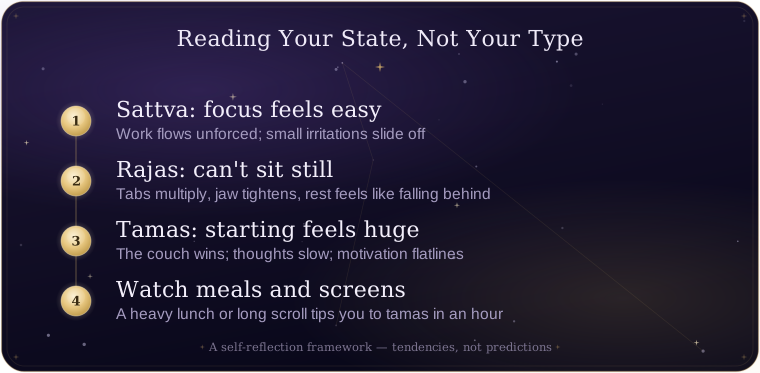
- Sattva is online when focus feels easy. You work without forcing it, and small irritations slide off instead of catching.
- Rajas is up when you can't sit still. Tabs multiply, your jaw tightens, and rest feels like falling behind.
- Tamas is heavy when starting anything feels enormous. The couch wins, thoughts move slowly, motivation reads as a flat line.
- Watch the swing after meals and screens. A heavy lunch or a long scroll often tips you toward tamas within the hour.
Once you've named the quality, the adjustment is specific. If tamas is heavy, move first — a short walk beats more analysis. If rajas is high, slow first — one task, one longer exhale, before you add anything. If sattva is present, don't chase more of it; protect the conditions that produced it, since that clarity is the easiest of the three to spend carelessly.
Common Misreadings
Most confusion around the 3 gunas comes from a handful of misreadings that wellness content repeats until they sound like fact. Here's what each gets wrong:
- You are one fixed guna. All three are present in everyone at all times; only the proportions move, and for most people that mix shifts noticeably between morning, afternoon, and night.
- Sattva is "good," tamas is "bad." The yoga tradition does encourage cultivating sattva, because clarity makes practice possible — but the Bhagavad Gita (ch. 14) frames the real aim as becoming gunatita, going beyond all three rather than collecting the flattering label. Tamas is also rest and sleep; you need it.
- Your type is set at birth. The teaching stresses the opposite: you can consciously shift the balance through repeatable choices about how you eat, breathe, move, and rest.
- Naming your dominant guna is the goal. The name changes nothing on its own; the practice that matters is using the reading to adjust your next hour.
The Gunas at a Glance
| Quality | What It Does | Classical marker (Bhagavad Gita 14) | How to Observe |
|---|---|---|---|
| Sattva | Lifts attention toward clarity and steadiness | Illumination and knowledge; binds through attachment to ease and clarity (14.6, 14.11) | Focus feels effortless and small irritations don't stick |
| Rajas | Pushes energy outward into motion and drive | Craving and activity; binds through attachment to action (14.7, 14.12) | Restless body, racing tabs, tight jaw, hard to sit still |
| Tamas | Pulls energy down into rest, weight, inertia | Heedlessness and sleep; binds through inertia and delusion (14.8, 14.13) | Heaviness, slow thoughts, starting anything feels huge |
Common Questions About the Gunas
Can your gunas really change during the day?
Yes — that movement is the whole idea, not a flaw. The same person can run clear in the morning and turn heavy after a large lunch, because the balance answers directly to what you eat, how you rest, and how much you move. The Bhagavad Gita's seventeenth chapter even sorts food, effort, and mood into sattvic, rajasic, and tamasic kinds on exactly this logic.
Is one guna simply better than the others?
Not on its own. Sattva supports clarity, rajas drives the action that gets real things done, and tamas allows the rest and sleep you can't skip, so a workable life leans on all three at the right times. The tradition encourages raising sattva as a foundation — but treats the final move as understanding and outgrowing the gunas, not wearing one as a badge.
How do the gunas show up in a birth chart?
In Jyotish (Vedic astrology), the gunas are read from the chart's makeup rather than your mood. Classical texts give each planet a dominant guna — the Sun, Moon, and Jupiter sattvic; Mercury and Venus rajasic; Mars and Saturn tamasic — so the condition of the Moon (the mind, manas), the rising sign and its ruler, and which planets dominate sketch your prakriti's baseline blend of clarity, drive, and inertia. The chart gives the starting point; the daily dial is how you work with it.
How do you shift toward more sattva?
Practice points to lighter food, steadier breathing, and a regular rhythm of sleep and movement — the same sattvic-diet and disciplined-action themes the Gita takes up in chapters 17 and 18. These raise the share of clarity over days and weeks, not in a single sitting.
Reflection Prompts
- Think back to a recent hour when your mind felt unusually clear — what had you eaten, and how had you slept?
- Recall a restless evening this week; what were you doing in the hour right before the agitation set in?
- Pick one small change for tomorrow — a lighter meal or a short walk — and notice which quality rises in the hour afterward.
Related Reading
- explainer on sattva, rajas, and tamas individually — a closer look at each quality on its own and how it surfaces day to day.
- beginner guide to the gunas in yoga practice — how breath, posture, diet, and daily rhythm shift the balance over time.
- overview of Ayurvedic body types and the doshas — the stable-constitution model that sits next to this moment-to-moment one and is easy to confuse with it.
Take Action
Ready to put this into practice? Generate your free birth chart to explore 3 gunas and see how the sattvic, rajasic, and tamasic planets are weighted across your chart. The result gives you a personal starting point for reading your own state — and a working reminder that the balance you notice today is something you can keep turning, one choice at a time.
Sources
- Samkhya Karika (Ishvarakrishna) — the foundational Samkhya text that sets out the three gunas as the constituent qualities of prakriti, the ground of nature and mind.
- Bhagavad Gita, chapters 14, 17, and 18 — describes how the gunas bind and can be transcended, and ties them to specific kinds of food, action, and mental state.