
What is anuradha nakshatra?
Anuradha Nakshatra is the seventeenth lunar mansion in Vedic astrology, sitting in the heart of Scorpio and ruled by Saturn, with the deity Mitra as its guiding power. It belongs to the broader map of pillar page on the 27 nakshatras, where each lunar mansion colors the Moon differently, and its name points to following devotion through rather than only feeling it. Where some placements chase intensity for its own sake, this one tends to build slow, durable bonds that serve a shared purpose instead of personal ego. The seventeenth nakshatra has long been linked to friendship that honors a vow — the kind of bond that outlasts mood and circumstance. In plain terms, it reads as a star of disciplined devotion and loyal, mission-driven alliance.
- Leads with steady loyalty and follow-through rather than dramatic emotion
- Traditionally tied to Saturn's discipline working through Scorpio's emotional depth
- Easily mistaken for clinginess when it is really committed, purposeful partnership
Why It Matters for Self-Awareness
Understanding Anuradha Nakshatra matters because the most popular write-ups pull readers in two opposite directions, and most people cannot tell which one describes them. It sits one step along the zodiac from comparison with Vishakha nakshatra, yet the two handle Scorpio's energy very differently. The confusion tends to show up in a few specific ways:
- Loyalty read as possessiveness. Devotion gets framed as gripping tightly, when the older meaning points to commitment in the service of something shared.
- The deity gets dropped. Mitra governs friendship and cooperative alliance, so the bond is built to serve a collective aim rather than feed ego needs.
- The boundary disappears. Loyalty without discernment is where the difficulty starts; loyalty that keeps its judgment is where the real strength lives.
A few everyday scenes make the split obvious. Picture the friend who organizes meals for a sick neighbor for months, asking nothing back — that is loyalty pointed at a shared good. Now picture the partner who reads every text as a loyalty test and quietly counts who called whom; the steadiness has turned inward and started to grip. Same raw devotion, two very different outcomes. People with this Moon often recognize both versions in themselves, sometimes in the same week, which is exactly why a clear definition is more useful than another list of personality adjectives.
This is the gap that sends people searching in the first place. They are rarely confused about the word loyalty itself — they are trying to work out whether their own steadiness is a strength they can lean on or an attachment they should question. Naming that difference, and tracing it back to Mitra's emphasis on cooperative alliance, is the first honest step toward reading the pattern instead of judging it.
anuradha nakshatra vs Adjacent Concepts: How It Works + Trade-offs
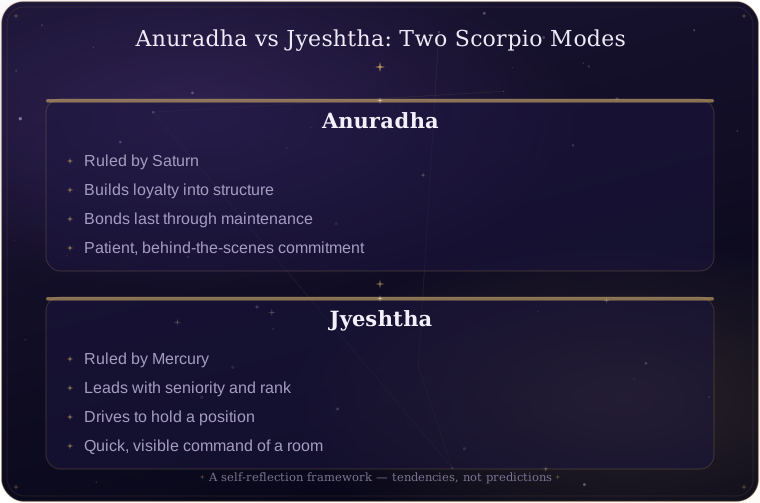
Anuradha Nakshatra differs from the lunar mansion that follows it, Jyeshtha, mainly in where it puts its energy. Anuradha works by building loyalty into structure — Saturn's discipline gives devotion a backbone, so bonds last because they are maintained over time, not just because they are felt strongly. Jyeshtha, ruled by Mercury, leads instead with seniority and the drive to hold a position. To get Anuradha's durable, mission-serving alliance, you give up Jyeshtha's quick command of a room; to get Jyeshtha's visible authority, you trade away some of Anuradha's patient, behind-the-scenes commitment.
The same trade-off runs inside the placement itself. The way it functions, loyalty is an asset only while discernment stays switched on. To get the deep, dependable commitment this star is known for, you sacrifice the easy exit — and when loyalty loses its boundary, the strength curdles into the very possessiveness people mistake it for. That structural integrity, Saturn's devotion routed through Scorpio toward a higher purpose, sits at the center of the classical Jyotish lineage descending from Parashara, and it is the part most quick takes leave out.
The trade-off is easy to see in practice. In a workplace, the Anuradha-flavored colleague is the one who quietly keeps a project alive long after the excitement fades, holding the team together through the dull middle stretch — but may struggle to claim credit or push for a promotion the way a more status-driven placement would. In friendship, the same person remembers the anniversary of a loss and shows up a year later; the cost is that they can stay loyal to a draining relationship past the point where discernment would say to step back. Strength and shadow share the same root.
How to Read Anuradha in Your Chart
In a birth chart, the Moon's placement is what sets someone in this lunar mansion, and a handful of signals tend to stand out:
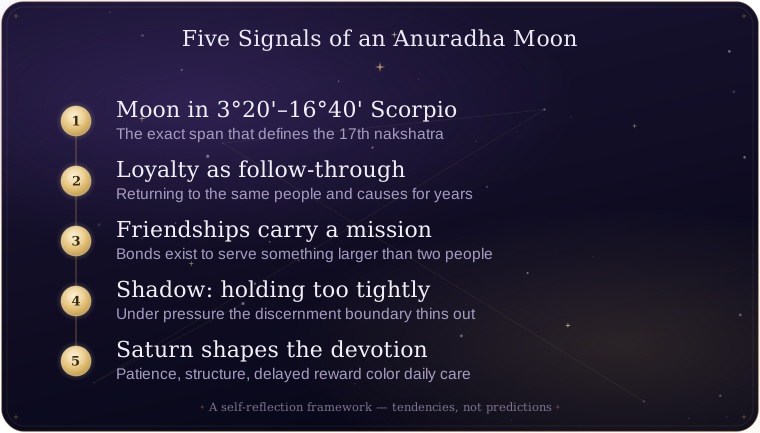
- The Moon falls between 3°20' and 16°40' of Scorpio — the exact span that defines this seventeenth nakshatra.
- Loyalty shows up as follow-through: returning to the same people and causes over years, not weeks.
- Friendships often carry a sense of mission, as if the bond exists to serve something larger than the two people.
- Under pressure, the shadow reads as holding on too tightly, with the discernment boundary thinning out.
- Saturn's themes — patience, structure, delayed reward — shape how devotion gets expressed day to day.
None of these signals work in isolation. Read together, they describe someone whose care is steady, structured, and aimed at something beyond themselves — and whose growth edge is learning when devotion has stopped serving that larger aim. The chart shows the placement; honest reflection shows how it is actually being used.
Common Misreadings
Most surface-level takes on Anuradha Nakshatra get a few things backward, and the corrections matter because readers usually arrive already stuck on them:
- Misread: it means clingy attachment. In practice the loyalty is meant to serve a shared purpose; possessiveness is the shadow that surfaces when discernment drops, not the core trait.
- Misread: devotion equals self-erasure. Saturn gives this devotion a backbone, so a healthy expression keeps its boundaries instead of dissolving into another person.
- Misread: it is just intense Scorpio energy. The friendship deity Mitra steers it toward cooperation and alliance, which is steadier and more relational than raw Scorpio drive.
What ties these corrections together is the boundary. Each misreading collapses once you remember that this star is not about how hard you hold on, but about what the holding is in service of. Loyalty with discernment is the gift; loyalty without it is the wound the older texts kept pointing to.
Anuradha at a Glance
| Property | How It Works | Energy Center | How to Observe |
|---|---|---|---|
| Disciplined loyalty | Saturn gives devotion structure and staying power | Saturn (ruling planet) | Notice who keeps showing up for the same people across years |
| Mission-driven friendship | Bonds form to serve a shared aim, not the ego | Mitra (presiding deity) | Look for relationships framed around a common cause |
| Emotional depth | Scorpio's intensity is steadied into commitment | Scorpio (sign placement) | Watch for slow-building, hard-to-shake attachments |
| Devotion with a boundary | Loyalty holds only while discernment stays active | 3°20'–16°40' Scorpio (chart span) | See whether commitment keeps its judgment under stress |
Common Questions About Anuradha
What zodiac sign is Anuradha placed in?
Anuradha falls entirely within Scorpio, spanning 3°20' to 16°40'. That puts it under Mars's sign rulership while Saturn rules the nakshatra itself.
Which planet rules Anuradha?
Saturn is the ruling planet, lending patience, structure, and staying power. Its presiding deity is Mitra, associated with friendship and cooperative alliance.
Is Anuradha a good placement for relationships?
Tradition links it to deep, loyal partnerships built to last. The caution is that the same loyalty can tip into possessiveness when its discernment boundary slips.
What is the symbol of Anuradha?
It is usually shown as a lotus or a triumphal archway. Both images point to devotion that opens into shared purpose rather than solo ambition.
Reflection Prompts
- Think of a recent moment when your loyalty to someone clearly served a shared purpose rather than your own need to hold on.
- Recall a friendship that cost you something to stay in — what did your sense of discernment tell you at the time?
- Notice a time your devotion lost its boundary; what early signal showed you the line had been crossed?
Related Reading
- guide to the Scorpio moon sign — because this lunar mansion sits inside Scorpio and shares its emotional depth.
- explainer on Saturn in Vedic astrology — since Saturn rules the star and shapes its patience and discipline.
- comparison with Jyeshtha nakshatra — the neighboring lunar mansion it is most often confused with.
- Anuradha (nakshatra) (Wikipedia) — for the traditional source material behind the symbolism.
- Nakshatra (Wikipedia) — for the wider framework.
Take Action
Generate your free birth chart to explore anuradha nakshatra and find where your Moon lands in Scorpio. The chart shows whether this lunar mansion shapes your loyalty patterns and how Saturn's discipline tends to color them. Seeing that clearly is what lets you tell devotion in the service of a shared purpose apart from attachment that has lost its boundary — and that distinction is where steadier self-awareness in your closest relationships begins.
Sources
- Parashara — the foundational sage of the classical Vedic astrology lineage these nakshatra readings descend from