
What is hasta nakshatra?
Hasta nakshatra is the thirteenth lunar mansion in Vedic astrology, spanning 10°00′ to 23°20′ of Virgo, with the Moon as its ruling planet and Savitar as its presiding deity.
- Falls entirely within Virgo, routing the Moon's emotional attunement through a field organized around analysis, precision, and critical discernment
- Its symbol is the open hand — encoding technical skill, healing touch, and the capacity to grasp both practical material realities and subtler dimensions of experience
- Savitar, the solar deity associated with worldly artistry and dexterous craft, presides here, establishing a pattern where creative expression demands disciplined effort rather than spontaneous impulse
Within the system of 27 nakshatras as recorded in the classical Parashari tradition, Hasta occupies a structurally distinctive position as the only lunar mansion falling entirely within Virgo. The broader landscape of lunar mansion symbolism is mapped in overview of all 27 nakshatras in Vedic astrology. The Moon's governance of Hasta is significant not just as a rulership label but as a structural feature: the planet most associated with emotional sensitivity is placed within a sign organized around discernment and methodical critique. That pairing doesn't neutralize either quality — it creates a calibration loop where emotional experience gets filtered, examined, and refined before it surfaces as behavior. Understanding that loop is essential to any serious reading of this nakshatra.
Why It Matters for Self-Awareness
Most descriptions of hasta nakshatra stop at the hand symbol. They note manual dexterity, a gift for craft, practical intelligence — and leave it there. What that reading misses is the self-critical loop running underneath: the ongoing internal negotiation between wanting to do something well and the fear that well is never quite good enough.
This matters because the loop is not incidental — it shapes how Hasta placements approach care, creativity, and service. The same Moon-in-Virgo attunement that makes someone with this placement a careful and precise helper can also lead them to delay offering that help until they feel adequate enough to give it. The internal standard keeps shifting upward. The result is not emotional distance but something more specific: a kind of held-back generosity, waiting on clearance from an internal critic that rarely issues a final sign-off.
There is also a relational layer. People around a strong Hasta influence often experience them as dependable, observant, and quietly excellent at whatever they do. What may be invisible from the outside is the internal cost — the ongoing self-assessment, the effort required to clear the bar before help or creative work gets released. Recognizing that pattern as a structural feature of the nakshatra, rather than a personal failing, is where self-awareness around this placement actually begins. Deeper context on how Moon sign placement shapes these relational patterns is in Moon in Virgo — interpretive guide for Vedic astrology.
hasta nakshatra vs Adjacent Concepts: How It Works + Trade-offs
Comparing hasta nakshatra with adjacent placements makes the functional differences immediately clearer. Three comparisons draw out what is distinct about how Hasta operates:
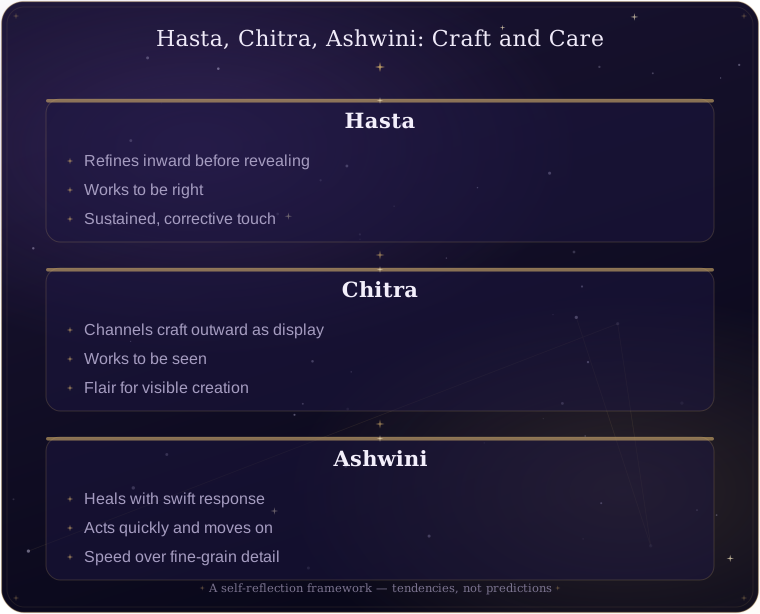
- Hasta vs. Chitra nakshatra. Both placements carry strong craft ability and aesthetic attentiveness. The difference lies in orientation: Chitra channels craftsmanship outward as display and expressive self-presentation, while Hasta turns the refinement inward first — checking and correcting the work before revealing it. To get Hasta's careful, high-standard output, you give up some of Chitra's flair for visible, announced creation. Chitra works to be seen; Hasta works to be right, and recognition may arrive later, if at all.
- Hasta vs. Ashwini nakshatra. Both nakshatras carry healing associations — Ashwini through the Ashwini Kumaras and their swift, regenerative energy; Hasta through the hand's careful, corrective touch. Choosing Hasta's approach to care gets you precision and sustained attentiveness to fine-grain detail; you give up the speed and first-response quality that Ashwini brings. Where Ashwini acts quickly and moves on, Hasta attends for longer, adjusting as it goes.
- Hasta vs. other Virgo-placed nakshatras. Hasta shares Virgo with Uttara Phalguni and Chitra, but Savitar's artisanal influence gives Hasta a specific frame that neither neighbor carries. Savitar encodes skill as something that deepens through disciplined repetition — a form of craft-as-devotion. To operate in that register means accepting that no version of the work is definitively complete. To get that depth of mastery, you give up the sense of arrival: there is always a better iteration being prepared.
How to Read hasta nakshatra in Yourself
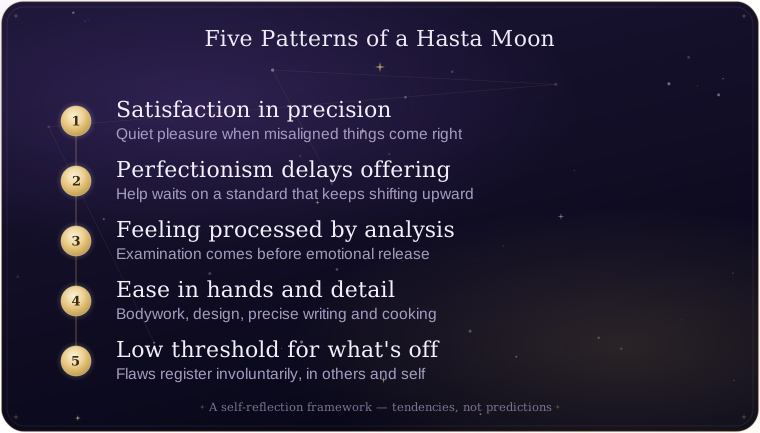
This placement shows up not in dramatic gestures or obvious markers but in the habitual texture of how someone works and cares for others. Several patterns tend to surface consistently:
- Satisfaction through precise resolution. Notice whether certain tasks produce a specific, quiet satisfaction: writing a sentence until it is exactly right, completing a careful repair, finishing a detailed piece of handwork. The pleasure comes through the precision itself — the sense that something misaligned has been brought into correct alignment.
- Perfectionism that delays offering. A recurring tendency to hold back help, creative work, or care until it meets an internal standard that keeps shifting. Watch for "I'm not ready to offer this yet" appearing across multiple contexts — creative output, service, and close relationships alike.
- Emotional processing through analysis. After a charged exchange or difficult situation, the first internal movement tends to be toward examination rather than emotional release. This is not detachment; it is the Moon-in-Virgo route to processing feeling — understanding it before expressing it.
- Ease through hands and detail work. A consistent affinity for tasks requiring fine-grained tactile or attentional engagement: physical bodywork, detailed design, writing with close attention to language, cooking with precision. These tasks tend to provide something close to ease, particularly when other areas feel uncertain or out of control.
- A low threshold for noticing what is off. The same attentional quality that produces excellent work also catches flaws, inefficiencies, and misalignments in the environment — in systems, in others' work, and in one's own output. This reads as critical from the outside while feeling like simple accurate perception from the inside.
Common Misreadings
Popular Vedic content flattens hasta nakshatra in predictable ways. Here is what gets misread and what is more accurate:
- "Hasta means manual skill." The hand symbol gets taken literally and reduced to physical dexterity. In Vedic symbolic logic, the hand is the organ of giving, receiving, healing, and grasping meaning across both practical and conceptual registers. Manual skill is one expression; the deeper pattern is about what you do with what you hold — the quality of attention brought to it.
- "Moon in Hasta means warm, freely expressed emotion." Moon here does not express freely — it filters feeling through Virgo's discernment first. The result is not emotional coldness but emotional expression that arrives after it has been checked for accuracy. The gap between experiencing something and being ready to communicate it is part of this placement's characteristic texture.
- "Savitar's presence means creativity flows naturally." Savitar governs worldly artistry, but Hasta's creativity is inseparable from sustained practice. It requires disciplined repetition and refinement rather than spontaneous output. People with this placement sometimes experience a persistent gap between their internal vision and what they manage to produce — not from lack of ability, but because Savitar's creativity demands mastery through effort.
- "Hasta is a gentle, easy placement to work with." The self-critical loop that runs through Moon-in-Virgo makes this one of the more internally demanding positions for the Moon to occupy. The generosity Hasta offers is genuine; the internal self-monitoring that precedes it is also real. Reading the nakshatra as simply gentle misses the sustained effort underneath the output.
hasta nakshatra at a Glance
| Property | How It Works | Energy Center | How to Observe |
|---|---|---|---|
| Zodiac span | Covers 10°00′–23°20′ of Virgo across all four padas | Virgo — earth sign, analytical field | Check if natal Moon falls in these Virgo degrees in your birth chart |
| Nakshatra lord | Moon governs emotional attunement; placed in Virgo, that attunement channels through critical discernment | Moon — feeling filtered through analysis | Notice the internal review reflex that follows emotionally charged events |
| Presiding deity | Savitar encodes artistry as disciplined craft mastery rather than spontaneous expression | Solar creativity principle — skill through repetition | Look for satisfaction in precise, detail-intensive work rather than expressive output |
| Symbol | The open hand — giving, receiving, correcting, and healing through careful engagement | Practical and relational exchange through skill | Watch which tasks produce a sense of quiet resolution when done with full attention |
| Psychological signature | Self-critical calibration loop between perfectionist standards and the desire to serve | Internal regulation between precision and compassion | Notice when "not ready yet" postpones generosity or delays creative output |
Common Questions About hasta nakshatra
What rashi does hasta nakshatra fall in?
Hasta nakshatra falls entirely in Kanya rashi — Virgo. All four padas of Hasta occupy Virgo degrees, which means Virgo's orientation toward service, analysis, and critical attentiveness is the consistent backdrop for this placement's expression regardless of which pada is active.
Who is the lord of hasta nakshatra?
The nakshatra lord is the Moon, which governs emotional attunement and receptivity. The presiding deity is Savitar, a solar figure associated with worldly skill, artistry, and dexterous craft. These two layers of governance combine: Moon provides the emotional register, and Savitar shapes how that emotional energy gets expressed — through disciplined effort and precise craft rather than raw spontaneous feeling.
What are the key characteristics of hasta nakshatra?
Practical intelligence, a strong orientation toward careful service, attentional precision, and an internal calibration loop between high standards and the impulse to help are the defining features. The hand symbol captures this concisely — it is simultaneously skillful, caring, and in constant corrective motion, never quite finished refining what it holds.
How does this placement relate to the broader Virgo nakshatra group?
Hasta shares Virgo with Uttara Phalguni and Chitra, but Savitar's artisanal influence and the Moon's governance give it a specific frame that neither neighbor carries. What distinguishes Hasta within the Virgo group is the internalized, service-directed quality of its skill — craft not as self-expression but as offering to others. That orientation is specific to Hasta among the Virgo nakshatras.
Reflection Prompts
- Think of a recent time when you held back help or a creative offering because it didn't feel ready — what specific standard was it failing to meet?
- Recall a task that required careful, detailed attention and left you feeling quietly satisfied when it was done — what did the precision ask of you?
- Notice the next time self-correction after an interaction lingers past the point of useful calibration — where does refining end and self-criticism begin?
Related Reading
- Savitar and presiding deities in Vedic nakshatra symbolism — background on how Savitar's artisanal quality encodes the psychological pattern of this lunar mansion
- nakshatra lord system in Vedic astrology — how Moon's role as nakshatra lord amplifies and interacts with its natal placement
- Kanya rashi meaning and characteristics — Virgo's influence across all three of its nakshatras and what that Virgo frame means for Hasta specifically
- Nakshatra (Wikipedia)
Take Action
Generate your free birth chart to explore hasta nakshatra.
Your birth chart will show the exact degree of your natal Moon — revealing whether it falls within Hasta's 10°00′–23°20′ Virgo span. That degree also places Hasta in a specific house in your chart, pointing to the life area where the calibration loop between precision and compassion tends to show up most concretely in work, relationships, and creative output.
This is not a clinical interpretation or mental health advice.
Sources
- Parashara — foundational Vedic astrology lineage whose 27-nakshatra classification system this entry draws from