
What is balance vata dosha?
Balancing Vata dosha means gently offsetting Ayurveda's air-and-space energy when it runs high, so the mind and body feel steadier instead of scattered and wired. If you do nothing else this week, start three habits and ease off three more: eat a warm, cooked breakfast at a fixed time, trade iced and raw foods for warm cooked ones, and get to bed earlier — while cutting back on cold or raw meals, afternoon caffeine, and back-to-back stimulation. This work sits inside the broader pillar page on the three Ayurvedic doshas, the framework that sorts people by their dominant energy qualities, and the part most guides rush past is sequence: Vata types tend to start big and burn out fast, so pacing matters as much as the steps. Put plainly, how to balance vata dosha comes down to adding warmth, weight, and steady rhythm to an over-light system, one small habit at a time.
- Works by countering Vata's dryness, coldness, and constant movement with their opposites
- Shows up as restlessness, irregular routines, and a fast, easily-overstimulated mind
- Easily mistaken for a one-time cleanse when it is really an ongoing, gentle correction
Why It Matters for Self-Awareness
Understanding how to balance vata dosha matters because the usual advice quietly sets Vata types up to fail. Most top results hand over a full makeover — new diet, new sleep schedule, daily oil massage, meditation, a shelf of unfamiliar herbs — all adopted the same week. For the one constitution defined by too much movement, that pile of new inputs lands as more stimulation, not less, so the plan works against the person it was meant to help. In practice it shows up as the all-or-nothing crash — every habit starts Monday, overload hits by Wednesday, the plan is gone by the weekend, then comes the self-blame — and as the wrong read on the problem: people decide they lack discipline when the plan was simply built for a steadier constitution than theirs.
Classical Ayurvedic texts such as the Charaka Samhita describe Vata as the principle of movement — how thoughts form and how the senses take in the world — and treat it as influential because, when aggravated, it is traditionally said to disturb the other doshas. That is a traditional teaching, not a clinical guarantee, but it points to one practical move: because Vata is already fast and over-active, you settle it by reducing input rather than adding more. The goal shifts from doing everything to choosing the single change that calms the system fastest, holding it until it runs on its own, then adding the next.
balance vata dosha vs Adjacent Concepts: How It Works + Trade-offs
People often confuse how to balance vata dosha with neighbouring ideas, and the distinctions change what you do day to day. Four comparisons clear most of the fog:
- Vata versus Pitta and Kapha. It works by opposites: Vata is light, cold, dry, and moving, so it settles under warmth, weight, and routine, while Pitta needs cooling and Kapha needs stirring. Balancing Vata does not mean dulling it — you keep its creativity, curiosity, and quick agility and only dial down the excess that tips into flightiness, disorder, and burnout. That is why a plan copied wholesale from a Pitta or Kapha friend misfires; the comparison of vata, pitta, and kapha body types shows how the three pull in different directions.
- Doshas versus the three gunas. Doshas describe physical and energetic tendencies; the gunas — sattva, rajas, and tamas — describe mental qualities of clarity, restless activity, and inertia. Working with doshas changes your routine and body; working with gunas changes the texture of your mind. Lean on the gunas alone and you lose the concrete handles food, warmth, and timing give you — usually where overwhelmed beginners need to start.
- Incremental stabilising versus the total overhaul. A staged approach earns habits that survive a chaotic week, at the cost of a clean-slate reset's rush. Grounding practices like the slow breath and root-focused work in this chakra healing guide for grounding the root center work best layered in one at a time; stacked on day one, they become another overwhelming list.
- Working with Vata versus forcing it. Generic self-improvement says push harder; the Ayurvedic read says match the remedy to the quality in front of you. Force a restless, over-stimulated system through grit alone and it usually spikes further before it settles.
How to Read balance vata dosha in Yourself
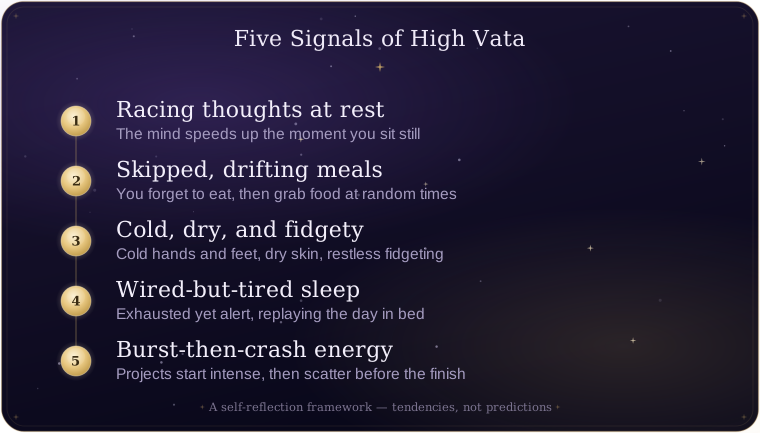
Reading high Vata in yourself is mostly about catching patterns of excess movement before you decide how to balance vata dosha for the week ahead. Watch for these signals:
- Racing thoughts at rest. Your mind speeds up the moment you sit still, jumping between tabs, plans, and half-formed worries.
- Skipped or drifting meals. You forget to eat, then grab food on the run at a different time every day.
- Cold, dry, and fidgety. Hands and feet run cold, skin feels dry, and you fidget instead of settling.
- Wired-but-tired sleep. You lie down exhausted yet alert, replaying the day rather than dropping into rest.
- Burst-then-crash energy. You launch projects with intensity, then run out of fuel and scatter before the finish.
Let the loudest signal pick your first habit: if meals are the mess, anchor breakfast first; if sleep is wired-but-tired, move the bedtime window earlier; if dryness leads, start with warm oil and warm food. None of these is a verdict on its own — it is the cluster, repeating week after week, that points to Vata running high.
One safety note: dosha self-reading is for everyday self-awareness, not diagnosis. Persistent insomnia, ongoing anxiety, unexplained weight loss, severe dryness, or real digestive problems deserve a qualified professional — not a self-interpretation that explains them away as "just high Vata."
Common Misreadings
Most popular write-ups get how to balance vata dosha wrong in the same few ways, and each misread keeps readers stuck in the loop that sent them searching:
- More discipline will fix it. Piling on rules adds stimulation to an already-overstimulated system, so structure helps only when it stays gentle and gradual.
- It is a one-time detox. Vata drifts back toward light and irregular by nature, so lasting balance is an ongoing nudge, not a finished project.
- Warm food alone is enough. Diet is one lever — rhythm, warmth, rest, and slower sensory input each pull as much weight as the menu.
- Feeling scattered means something is wrong with you. That restless feeling is a recognizable pattern of excess Vata, not a flaw in your character.
balance vata dosha at a Glance
| Property | How It Works | Counter-Habit | How to Observe |
|---|---|---|---|
| Air and movement | Steadied by weight, warmth, and a regular routine | A fixed daily rhythm — same meal and sleep times | Restlessness, fidgeting, a mind that won't slow down |
| Dryness | Offset by warm oils and cooked, hydrating foods | Sesame-oil self-massage and warm cooked meals | Dry skin, cracking joints, frequent thirst |
| Coldness | Countered with heat — warm meals, rooms, and drinks | Warm drinks over iced; fewer raw, cold foods | Cold hands and feet, a constant craving for warmth |
| Lightness and subtlety | Anchored by grounding habits and slower sensory input | An earlier bedtime and less back-to-back stimulation | Feeling spacey, ungrounded, easily overwhelmed |
Questions People Ask About balance vata dosha
How do I start balancing Vata if every plan feels overwhelming?
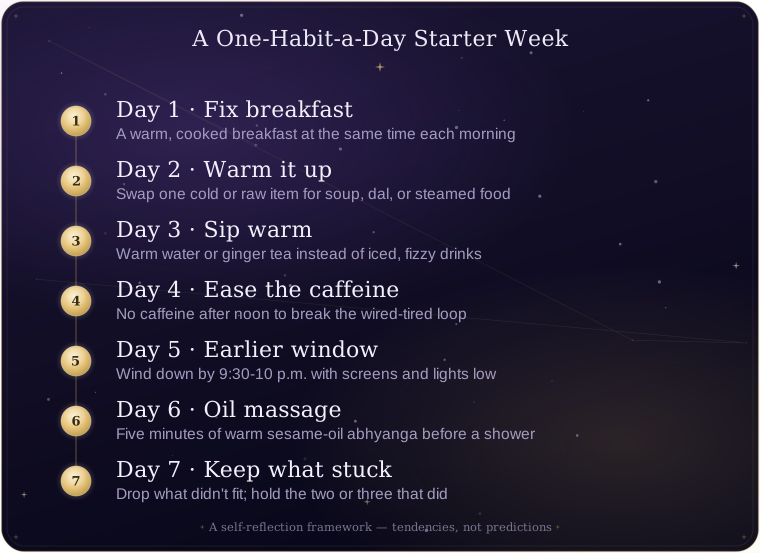
Add one small thing a day for a week, and keep whatever sticks:
- Day 1 — Fix breakfast. Eat a warm, cooked breakfast (oatmeal, congee, or stewed fruit) at the same time each morning.
- Day 2 — Warm it up. Swap one cold or raw item for something cooked — soup, dal, or steamed vegetables over a salad or smoothie.
- Day 3 — Sip warm. Replace iced and fizzy drinks with warm water or ginger tea through the day.
- Day 4 — Ease the caffeine. Stop caffeine after noon so it stops feeding the wired-but-tired loop.
- Day 5 — Earlier window. Start winding down by 9:30–10 p.m., with screens and lights low.
- Day 6 — Oil massage. Spend five minutes on a warm sesame-oil self-massage (abhyanga) before a warm shower.
- Day 7 — Keep what stuck. Drop what didn't fit and hold the two or three habits that did.
One habit you actually keep beats five you abandon by the weekend.
How long does it usually take to feel more grounded?
Many people notice a calmer baseline within a couple of weeks of steady rhythm, depending on how high Vata was running; the shift is gradual and easy to miss, so a simple log helps you see it.
Can Vata be balanced without overhauling my whole diet?
Yes — warmth, regular timing, and proper rest often do more than a full diet rewrite, because Vata responds to rhythm as much as to ingredients.
Is feeling scattered always a sign of high Vata?
Not always; stress, poor sleep, and sensory overload can produce the same surface signs, so Ayurveda reads the pattern in context rather than as a fixed label.
Reflection Prompts
- Think of a recent day your mind would not slow down — what had your routine looked like in the two days before?
- Recall the last plan you walked away from: was it too much at once, or genuinely wrong for you?
- Notice one moment today when you felt scattered — what small, warm, or steadying thing actually settled you?
Related Reading
- guide to the three gunas of sattva, rajas, and tamas — goes deeper on the mental qualities that sit alongside the doshas.
- overview of Ayurvedic daily routine basics — the rhythm-first habits that steady Vata without a full overhaul.
- Dosha (Wikipedia) — a neutral overview of where the idea comes from.
- Ayurveda (Wikipedia) — context on the wider tradition.
Take Action
This is not a clinical interpretation, an Ayurvedic diagnosis, or mental health advice. It is a framework for noticing patterns and choosing one steady change at a time. When you want a different lens for self-reflection, generate your free birth chart and look at the air and earth elements in your own astrology — as a prompt for reflection, not a dosha diagnosis or a substitute for the warm-food, steady-rhythm habits above. Let it nudge you toward one concrete change to hold first, on the same principle that runs through all of this: lasting balance grows from working with your nature, not forcing yourself against it.
Sources
- Charaka Samhita — a foundational classical Ayurvedic text that describes Vata as the principle of movement; in its traditional teaching, aggravated Vata is said to disturb the other doshas. Presented here as classical teaching, not clinical fact.