
What is the Mars-Return Cycle?
The Mars-Return Cycle is the recurring moment, roughly every two years, when transiting Mars returns to the exact degree it held in your birth chart, restarting a fresh chapter of drive, initiative, and the way you push for what you want. In the framework of mars return astrology, that conjunction is treated as a clean reset point rather than a single event, and reading the chart cast for that moment is how astrologers preview the next stretch ahead. If you want the wider sky context for the same period, the transit_events cluster on 2026 planetary transits page maps the slower outer-planet patterns that frame each Mars cycle.
- Mars orbits the Sun in about 687 days, so it laps back to its natal spot roughly every two years
- The exact-conjunction moment marks the start of a new cycle of action and assertion
- A chart cast for that moment functions like a yearly forecast, but for the Martian themes only
- Classical sources tie this period to both courage and conflict, not only momentum
This is an interpretive framework for self-reflection, not a prediction of fixed outcomes or a guarantee that any specific event will occur.
Why It Matters for Self-Awareness
Most short explanations of mars return astrology stop at one word: motivation. That is where the framework gets flattened, because a real two-year pattern of how you assert yourself gets sold as a single burst of confidence. The more useful reading separates the timing from the tone. The cycle reliably comes back roughly every two years; what it brings depends on how you have been handling drive, frustration, and direct conflict in the stretch before it.
Held that way, the return becomes a checkpoint rather than a forecast. Naming the start of a new cycle lets you ask a plain question: where did the last two years of effort actually go, and what do I want to push toward now? That is a planning habit more than a prophecy, and it is the part of mars return astrology worth keeping. The pattern is regular and observable; the meaning you attach to it is yours to define, and defining it deliberately is the whole point of reading the cycle at all.
the Mars-Return Cycle vs Adjacent Concepts: How It Works + Trade-offs
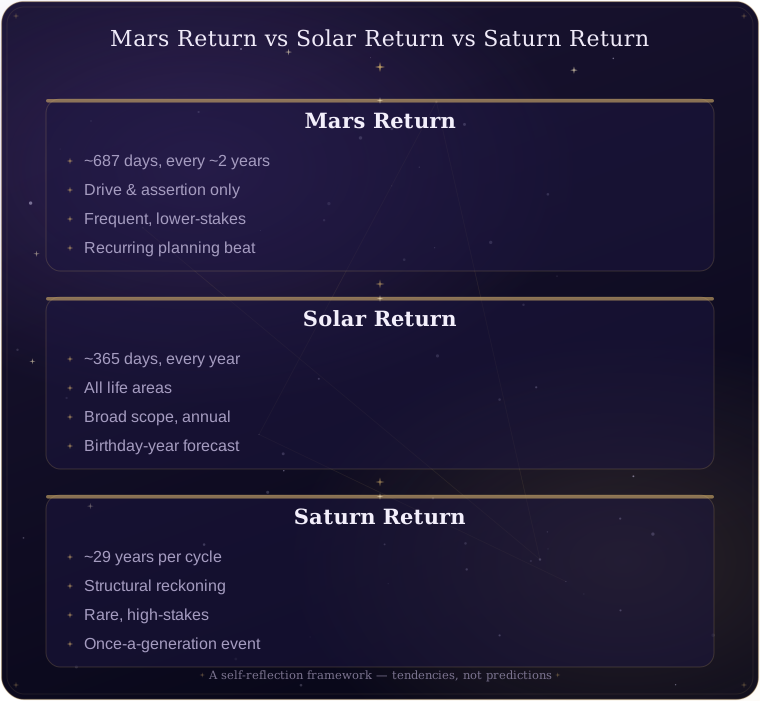
It helps to set the Mars return against two neighbors. Against the solar return, the Mars version narrows the scope: a solar return chart previews a whole birthday year across every life area, while a mars return astrology chart previews a roughly two-year window for one theme only — drive, assertion, and how you handle conflict. You trade breadth for focus. The Mars chart will not tell you about love or money in general; it tells you where your push will land and which life domain takes the surge.
Against the Saturn return, the contrast is pace and stakes. Saturn returns once near age twenty-nine and again near fifty-eight, so each one is a rare, structural reckoning. The Mars return comes back roughly every two years, which makes any single one lower-stakes but far more frequent — a rhythm you can actually track across a lifetime rather than a once-a-generation event. The trade-off is honest: the Mars cycle is too frequent to treat as fate, yet regular enough to use as a recurring planning beat.
Here the older sources matter. Classical tradition reads Mars through force, severance, and courage, not only the upbeat "fresh start" framing common online. Liz Greene treated the chart as a language of pattern rather than a fixed verdict, and Robert Hand framed astrology as meaning rather than a predictive machine. Read that way, a mars return astrology chart is a structured prompt about how you will assert yourself next, including where conflict may surface, not a promise of smooth momentum. Keeping the difficult half in view is what makes the reading useful instead of flattering.
How to Read the Mars-Return Cycle in Your Chart
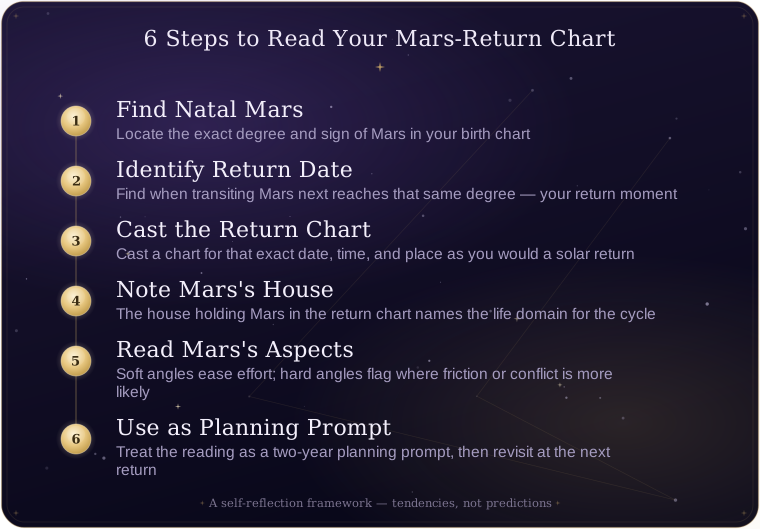
You can work through a mars return astrology chart with a few ordered steps, and the same process applies to any planetary return you want to study.
- Find the exact degree and sign of Mars in your birth chart — this is the target the transit returns to.
- Identify the date transiting Mars next reaches that same degree; that conjunction is your return moment, recurring roughly every two years.
- Cast a chart for that exact date, time, and place, the way you would a solar return chart.
- Note which house holds Mars in the return chart — that house names the life domain where drive and assertion concentrate for the cycle.
- Read the aspects Mars makes in the return chart as the tone: supportive angles point to channelled effort, hard angles flag where friction or conflict is more likely.
- Treat the whole reading as a planning prompt for the next roughly two years, then revisit it at the following return to see what actually unfolded.
Common Misreadings
- A Mars return is the same as a Saturn return. They are different returns on different clocks: Mars comes back roughly every two years, Saturn roughly every twenty-nine, so the stakes and meaning are not interchangeable.
- The return is purely a confidence boost. Classical tradition ties Mars to conflict and severance as much as to courage, so a balanced reading watches for friction, not only momentum.
- The return chart predicts fixed events. It previews where drive concentrates and how you may assert yourself; outcomes still depend on your choices, not the chart.
- It happens once a year like a birthday. Mars takes about 687 days to lap its natal spot, so the cycle runs on a roughly two-year beat, not a yearly one.
The Mars-Return Cycle at a Glance
| Property | How It Works | Typical Window | How to Observe |
|---|---|---|---|
| Cycle length | Mars laps its natal degree | About 687 days, roughly every two years | The return date repeats on a two-year beat |
| Trigger point | Transiting Mars conjoins natal Mars | Exact at the matching degree and sign | A chart cast for that moment opens the cycle |
| Active domain | Return-chart house holds Mars | Whichever house Mars occupies that cycle | Drive and assertion concentrate in that life area |
| Tone of the cycle | Return-chart aspects to Mars | Set at the moment of conjunction | Soft angles ease effort; hard angles flag conflict |
Common Questions About the Mars-Return Cycle
How often does a Mars return happen?
Roughly every two years. Mars takes about 687 days to orbit the Sun and lap back to the exact degree it held in your birth chart, so a mars return astrology cycle restarts a little less often than every twenty-four months. The precise gap shifts slightly because Mars sometimes turns retrograde and crosses the same degree more than once before settling.
What does the Mars return chart actually show?
It previews the next roughly two-year cycle for one theme: drive, initiative, and how you assert yourself. The house holding Mars in the return chart names the life domain that takes the surge, and the aspects to Mars set the tone. It does not forecast your whole year the way a solar return chart attempts to; it stays focused on the Martian themes.
Is a Mars return always positive?
No. The upbeat "fresh momentum" framing is only half the picture. Classical sources link Mars to conflict, force, and severance as readily as to courage, so the cycle can open with friction or a clean break rather than a smooth start. A balanced reading treats the difficult half as information, not a warning to fear.
Can I prepare for my Mars return?
You can plan around it rather than brace for it. Knowing the return date roughly every two years lets you choose where to direct effort and where to expect resistance before the cycle begins. Read it as a recurring checkpoint for your goals, not a fixed verdict about what must happen.
Reflection Prompts
- Look back roughly two years: where did most of your effort and assertion actually go, and was that the domain you intended?
- When friction showed up in the last cycle, did you push through, withdraw, or avoid it — and what did that choice cost or save you?
- Heading into the next cycle, which single goal deserves the bulk of your drive, and what would honest progress on it look like?
Related Reading
- transit_events cluster on 2026 planetary transits — the wider sky context that frames each Mars cycle
Take Action
Generate your free birth chart to find the exact degree and sign of your natal Mars, then note when transiting Mars next returns to it. You get the one fixed point every mars return reading starts from, and, more usefully, a recurring two-year checkpoint you can use to plan where your drive goes next rather than wonder where it went.
Sources
- Liz Greene — read the chart as a language of pattern rather than a fixed verdict, the interpretive stance this piece takes
- Robert Hand — framed astrology as meaning rather than a predictive machine, grounding the return chart as a planning prompt