What is mrigashira nakshatra?
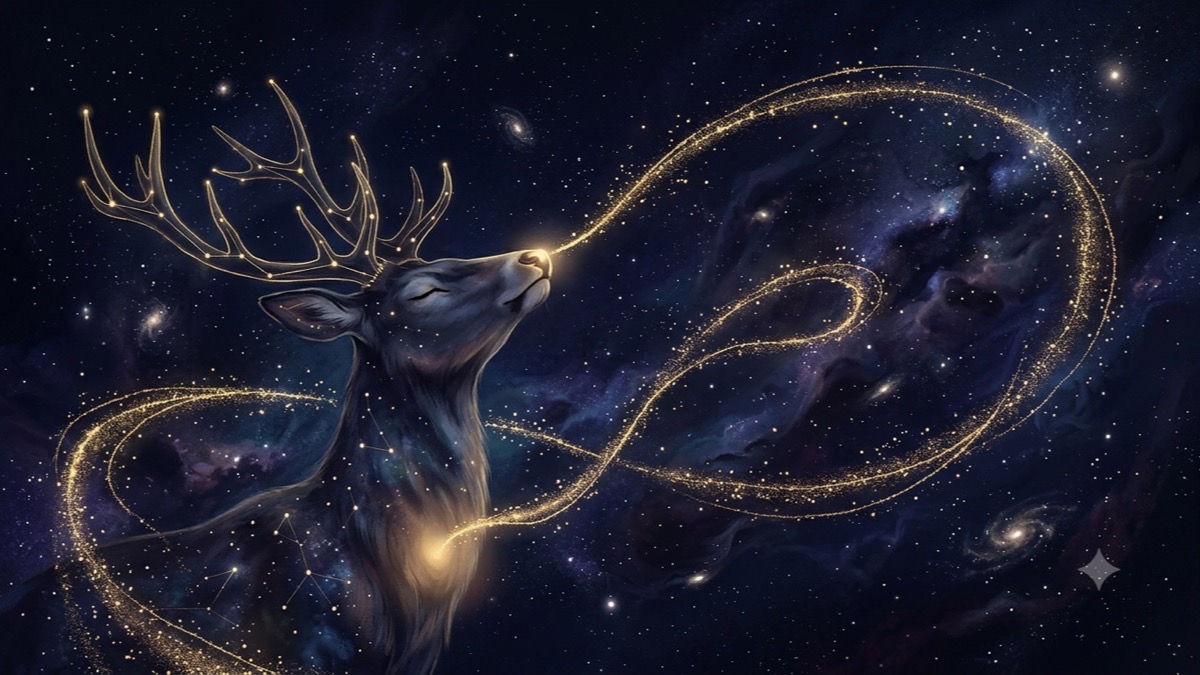
Mrigashira nakshatra is the fifth lunar mansion in Vedic astrology, spanning 23°20' Taurus through 6°40' Gemini, and is a Mars-ruled nakshatra whose core function is perpetual, purposeful seeking rather than settled arrival.
- Ruled by Mars (Mangal) and presided over by Soma, the lunar deity associated with nectar, gentleness, and subtle luminescence
- Symbolized by a deer's head, encoding the central paradox: the seeker and the source of what's sought are one and the same
- Positioned at the Taurus-Gemini cusp, where accumulated sensory knowledge transitions into intellectual inquiry and circulation
This placement is one of 27 lunar mansions that structure Vedic chart interpretation — pillar page on all 27 nakshatras in Vedic astrology covers how each mansion's deity, symbol, and ruling planet shape its interpretive range.
Why It Matters for Self-Awareness
Mrigashira nakshatra generates one of the more persistent misreadings in Vedic chart work: its structural restlessness gets flagged as a character problem rather than a functional quality. People with strong Mrigashira influence often receive the same feedback — scattered, non-committal, always chasing something new. That label stings, and it misses the placement's actual operating logic.
The misread comes from a specific failure: applying Soma's surface symbolism — gentle deer, soft lunar imagery, sensitivity — without accounting for Mars's underlying rulership. Mars doesn't produce contentment; it produces directed momentum. The deer in Mrigashira's symbol isn't wandering randomly; it's tracking a specific scent with focused attention. That distinction reframes the self-awareness question entirely. Instead of "how do I stop being so restless?" the more useful question is "what am I actually tracking, and what does that trail reveal about what I value?" Treating seeking as the placement's purpose rather than its problem changes how a person relates to the energy this nakshatra carries through a chart.
The additional layer worth holding is the deer-musk paradox itself. The deer follows a scent that originates from its own body — it pursues something it already carries. Vedic tradition encodes this not as futility but as a specific kind of self-inquiry. For self-awareness work, mrigashira nakshatra's motion ultimately points inward: the thing being sought is already present, and the seeking is how that presence becomes conscious rather than assumed.
mrigashira nakshatra vs Adjacent Concepts: How It Works + Trade-offs
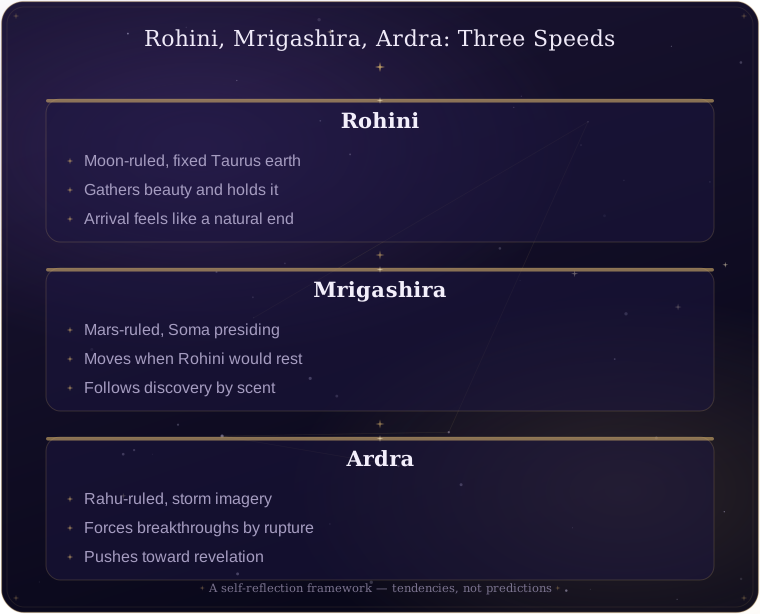
Rohini, the nakshatra immediately before Mrigashira in the lunar mansion sequence, is also located in Taurus and carries lunar associations through its Moon rulership. The way Rohini functions is accumulative and settling: it gathers beauty, holds it, and experiences arrival as a natural endpoint. Mrigashira moves at the moment Rohini would rest. To get the sustained forward pull that makes this placement generative in long-arc creative work and ongoing inquiry, you give up the stable satisfaction that Rohini's fixed earth provides. The trade-off is concrete: completion rarely feels like enough, and the appetite for the next horizon persists even after genuine achievement.
Ardra follows Mrigashira and is ruled by Rahu, the lunar north node, with storm and disruption as its core imagery. Where Ardra's seeking mode forces breakthroughs through intensity and rupture, Mrigashira follows through attunement and scent-tracking — quieter in expression, no less persistent in drive. To get Mrigashira's aesthetic sensitivity and its capacity to stay with gradual discovery, you trade away the urgency and forward force that Rahu accelerates in Ardra. From outside, both placements appear to keep moving; from inside, the experience differs sharply. Ardra pushes toward revelation; Mrigashira follows toward it.
One additional point of contrast that most surface-level write-ups miss: practitioners sometimes group Mrigashira with Rohini as a "pleasant" or gentle placement, since both carry lunar-adjacent imagery. This grouping flattens Mars's role entirely. The nakshatra's persistence is not gentle — it is Mars-driven momentum that happens to express through sensory attunement rather than aggression. Holding both Soma and Mars in the frame simultaneously — as Parashara's foundational framework requires — is what distinguishes an accurate reading of mrigashira nakshatra from one that pathologizes the placement's most productive quality.
How to Read mrigashira nakshatra in Yourself
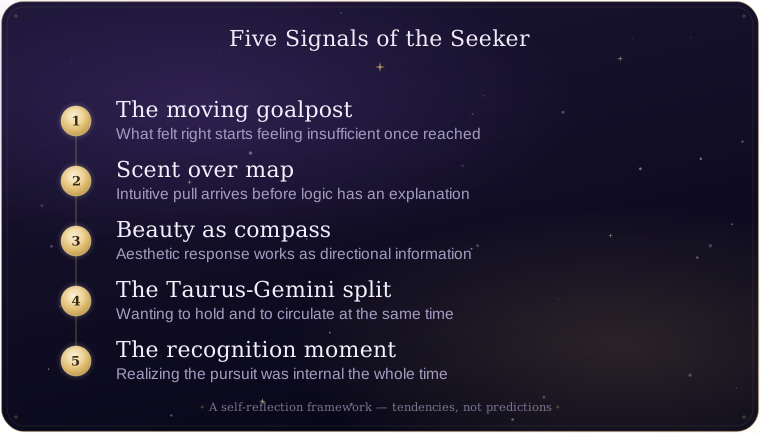
Mrigashira nakshatra's signature shows up most clearly in the quality of desire rather than its specific direction. Look for these five observable signals:
- The moving goalpost. A situation, relationship, or goal that felt exactly right starts feeling insufficient once reached — not from fickleness, but because the placement's purpose is the pursuit itself. The seeking doesn't resolve at arrival; it redirects.
- Scent over map. Decisions often arise from an intuitive pull before logic has an explanation. The right path tends to reveal itself through forward motion rather than prior planning, which can read as impulsive from outside but is experienced as following something real.
- Beauty as compass. A consistent and strong response to aesthetic quality — in people, environments, language, or ideas — marks this placement. Beauty functions as directional information, not decoration.
- The Taurus-Gemini split. A recurring experience of wanting to hold what's been found (Taurus) and wanting to circulate toward the next thing (Gemini) at the same time, without either impulse feeling wrong. This tension doesn't resolve; it characterizes the cusp.
- The recognition moment. Many people with significant Mrigashira influence describe a point where they realize that what they've been pursuing was internal the whole time. That recognition doesn't end the seeking — it reorients it from anxious to intentional.
Common Misreadings
Most misreadings of mrigashira nakshatra come from applying one planet's lens when two are in play. The three most common:
- "Restlessness signals lack of commitment." This conflates movement with inconsistency. Mrigashira's drive is persistent — it doesn't waver. The terrain being tracked changes, which from outside resembles changing goals. In practice, the placement often shows sustained pursuit across a consistent life theme, even when individual projects or relationships don't complete on a conventional timeline.
- "Soma's symbolism defines the placement." Soma governs texture, sensitivity, and approach. Mars governs underlying momentum and direction. Reading only Soma produces a soft, yielding interpretation that can't explain the placement's characteristic persistence. The deer is quiet; it is not passive. Ignoring Mars when reading this nakshatra leads to pathologizing what is actually the placement's most productive quality.
- "The cusp position creates instability." Spanning Taurus and Gemini reads as split attention in this misreading. The cusp is more accurately a function: how sensory accumulation becomes conceptual output. The bridge between fixed earth and mutable air isn't a problem that needs resolving; it is the placement's structural role in the nakshatra sequence.
Mrigashira Nakshatra at a Glance
| Property | How It Works | Energy Center | How to Observe |
|---|---|---|---|
| Zodiac span | 23°20' Taurus to 6°40' Gemini; bridges fixed and mutable modes | Taurus-Gemini cusp | Note which natal planets fall in this degree range |
| Ruling planet | Mars drives persistent forward motion beneath Soma's aesthetic texture | Mars-ruled momentum | Track where directed desire shows up without obvious external trigger |
| Presiding deity | Soma shapes sensitivity, attunement, and aesthetic reception | Lunar quality | Use aesthetic responses as navigational signals rather than decoration |
| Symbol | Deer's head; the scent trail leads back to the seeker's own body | Internal compass | Notice when what you're pursuing originates within rather than outside |
| Core function | Accumulated sensory knowledge transitions into intellectual dispersal | Cusp dynamic | Watch how gathered experience eventually converts into named insight |
Common Questions About Mrigashira Nakshatra
What does mrigashira nakshatra rashi mean?
Mrigashira spans two rashis — Vrishabha (Taurus) and Mithuna (Gemini). The rashi a natal planet occupies within Mrigashira shapes how the placement's seeking quality expresses: through Taurus's sensory depth and accumulation, Gemini's intellectual range and circulation, or — for planets near the cusp point — both simultaneously.
Is this nakshatra considered favorable in a birth chart?
Vedic astrology doesn't assign nakshatra placements a fixed positive or negative value outside of context. Mrigashira's seeking quality can show up as sustained curiosity and creative forward motion, or as difficulty settling once something has been attained — the same quality, differently experienced depending on house placement, Mars's condition in the chart, and life circumstance.
What role does Soma play here?
Soma is the presiding deity, shaping how Mars-driven momentum expresses in texture and approach. Soma's domain includes nectar, sensitivity, and response to subtle signals — which is why this placement often reads as aesthetically attuned rather than bluntly aggressive, even though the underlying driver is Mars. Both are present simultaneously, and reading only one produces a distorted picture.
How does the deer symbol connect to the placement's core dynamic?
Vedic tradition describes the deer tracking the scent of musk without knowing the musk originates from its own body. This image encodes the placement's essential paradox: the thing being sought is already present in the seeker. The symbol points not toward futility but toward the specific moment when external seeking turns inward and becomes self-inquiry — which is where this nakshatra's motion ultimately tends to lead.
Reflection Prompts
- Think of a recent moment when you arrived somewhere you'd worked toward and immediately felt the pull toward the next thing — what were you actually tracking beneath the surface goal?
- Recall a decision you made by aesthetic response before you could articulate a reason — where did that pull lead, and how accurate did it prove?
- Consider a time someone called you scattered or uncommitted — what were you in sustained pursuit of that they couldn't see from the outside?
Related Reading
- Rohini nakshatra overview — the neighboring placement that resolves Taurus's beauty into settled arrival rather than continued seeking; a useful contrast for understanding what Mrigashira keeps moving toward
- Ardra nakshatra overview — the nakshatra that follows, where Rahu's seeking takes on storm energy and disruptive breakthrough rather than scent-following
- Mars in Vedic astrology guide — how Mars as ruling planet shapes momentum and drive across different nakshatra placements
- Nakshatra (Wikipedia)
Take Action
Generate your free birth chart to explore mrigashira nakshatra.
Your chart shows exactly which planets fall in Mrigashira's degree range and how the placement activates across specific houses. That map turns the deer's symbolic motion into something concrete — a picture of where your own seeking tends to concentrate, what triggers it, and what it may actually be oriented toward beneath the surface goal.
Generate your free birth chart
Sources
- Parashara — author of the foundational Vedic astrology framework through which nakshatra lordships, deity attributions, and the traditional symbolic system are interpreted