
What Is Pride Month Astrology?
Pride Month Astrology is a symbolic way of reading June's seasonal sky—mainly the Gemini-to-Cancer shift and the changing relationship between the Sun and Venus—as a prompt for cultural and psychological reflection, not a claim about anyone's identity. Framed honestly, it is a symbolic reading of June's seasonal sky, not an identity label. It borrows the season's timing to think about visibility, self-expression, and belonging, and it sits under the broader astrology houses framework that shows where those themes live in a chart. Because June carries a strong cultural charge in the United States, this reading treats the sky as a shared backdrop for collective themes rather than a horoscope aimed at any one person.
- Anchored in June's Gemini-to-Cancer seasonal transition, not in any personal placement
- Reads the Sun–Venus relationship as a picture of expression meeting warmth
- Stays deliberately archetypal, keeping shared cultural themes separate from private identity
Why It Matters for Self-Awareness
Understanding Pride Month Astrology matters because June's sky gives people a shared, low-stakes way to reflect on how they show up and where they feel safe. The value stays personal even though the symbolism is collective, and it tends to surface in a few concrete ways:
- A cue for visibility. The Gemini stretch invites you to notice where you speak openly and where you hold back. That noticing can be useful without hardening into a fixed verdict about who you are.
- A cue for belonging. As the season tips toward Cancer, many people use the moment to reflect on chosen family, home, and who they feel held by—themes the Cancer season archetype treats in more depth.
- A cue for pacing. Reading the season as timing rather than destiny helps you separate a passing mood from a lasting pattern, which is often where people get stuck.
In my twelve years integrating psychological frameworks with evolutionary astrology—including community-counseling work and thousands of hours of chart consultation—I've found that people get the most out of these seasonal cues when they hold them as open questions instead of labels, building on the framework Liz Greene helped establish in modern psychological astrology and the archetypal, cultural reading Richard Tarnas describes. Used that way, the month becomes a mirror you can look into and then set down, rather than a script you have to follow.
Gemini Season vs Cancer Season: What the June Shift Marks
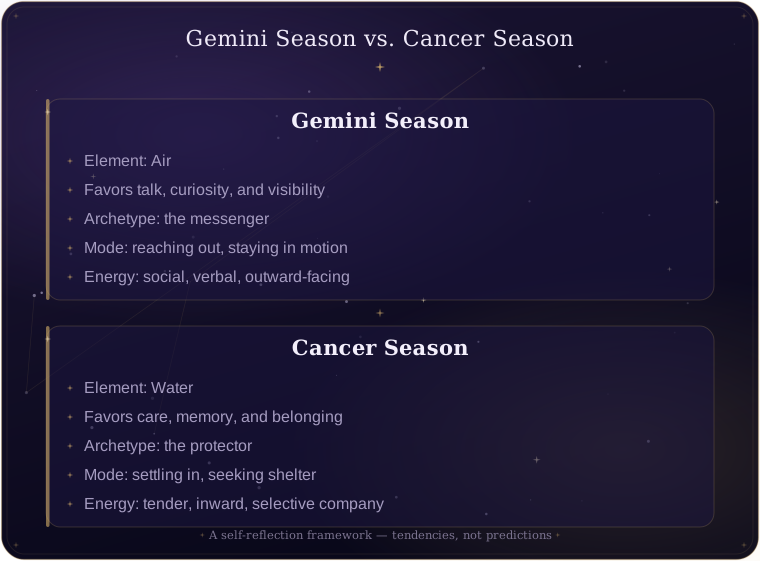
Pride Month Astrology leans on one real astronomical hinge: June begins in Gemini and ends in Cancer, so the season literally changes element mid-month. According to NASA, the June solstice falls around June 20–21, when the Sun reaches its northernmost point—close to the same window the Sun crosses from Gemini into Cancer, which is why the symbolism pivots when it does. Reading the two halves side by side is what keeps you from smearing them into one vague "summer energy."
How the Two Halves Work
Gemini season works through air. It favors talk, plurality, curiosity, and being out in public where people can see you. The archetype is the messenger who wants to connect, compare notes, and stay in motion, so early June often reads as social, verbal, and outward-facing.
Cancer season works through water. It favors care, memory, home, and being known in private by people who feel like family. The archetype is the protector who wants a shell to retreat into, so late June often reads as tender, inward, and selective about company. The two halves aren't opposites so much as a handoff from reaching out to settling in.
Where the Trade-Off Lands
The way it functions is a genuine trade, not a ranking. To get Gemini's openness and range, you tend to sacrifice some of Cancer's depth and safety; to get Cancer's belonging, you tend to sacrifice some of Gemini's freedom and exposure. Neither side is the better one—it's a swap between reach and roots, and the season simply moves the dial from one to the other.
It also helps to keep this seasonal reading separate from a personal placement like the 8th house of intimacy. The twelve-house framework is commonly traced to Hellenistic astrology in the early centuries CE and describes where themes live inside your own chart, while the June sky only describes the collective weather of the month. Blending the two is where a lot of loose coverage goes wrong.
How to Read Pride Month's Sky in Your Timing
You don't need a chart to read Pride Month Astrology as timing; you mostly need to notice how the month's two moods show up in ordinary life. A few observable signals worth tracking:
- Early June: notice whether you're talking more, texting more, or wanting to be out and visible—classic Gemini restlessness.
- Watch which conversations feel energizing versus performative; the gap often shows where being seen quietly costs you something.
- Around the solstice: look for a pull toward home, rest, or people who feel like family—Cancer's turn inward.
- Compare your appetite for crowds against your appetite for small circles; a mid-month swing is the seasonal hinge, not a personality change.
- Journal one line a day, and by month's end the pattern of "seen" versus "held" is usually easy to read back.
Read together, these cues turn a month of vague feelings into a legible arc, which is the whole point of treating the season as timing rather than fate.
Common Misreadings
Most confusion here comes from treating a seasonal symbol as a personal fact. The slips show up again and again:
- Reading it as identity. The season describes collective weather, not who anyone is; it can't confirm, reveal, or predict a person's orientation or gender, and treating it that way puts weight on it that it was never built to hold.
- Blending it with unrelated symbolism. Coverage often mixes cultural, identity, and broad cosmic claims into one blur, which leaves readers without any clear line between archetype and person.
- Turning tendencies into fate. "Gemini season" is a leaning toward expression, not a promise of constant chatter; a quiet early June doesn't mean you're doing the month wrong.
- Skipping the transition. People fixate on a single sign and miss that the month's whole meaning lives in the Gemini-to-Cancer handoff, not in either half alone.
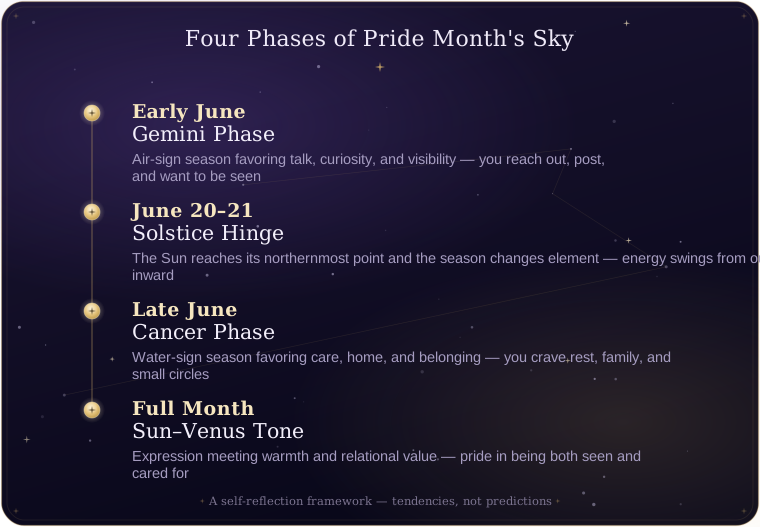
Pride Month's Seasonal Sky at a Glance
| Property | How It Works | Energy Center | How to Observe |
|---|---|---|---|
| Gemini phase | Air-sign season favoring talk, curiosity, and visibility | Early June (Sun in Gemini) | You reach out, post, and want to be seen |
| Solstice hinge | The Sun reaches its northernmost point and the season changes element | Around June 20–21 | Your energy swings from outward to inward |
| Cancer phase | Water-sign season favoring care, home, and belonging | Late June (Sun in Cancer) | You crave rest, family, and small circles |
| Sun–Venus tone | Expression meeting warmth and relational value | The full month | Pride in being both seen and cared for |
Questions People Ask About Pride Month's Sky
Is this a real branch of astrology?
No—it's an informal, symbolic framing rather than a traditional system. It reads June's ordinary seasonal sky as a cultural mirror, and careful astrologers treat it as reflection, not prediction.
Does this seasonal reading say anything about my identity?
It doesn't. The season describes shared themes of visibility and belonging, so it can support self-reflection but can never diagnose or reveal someone's orientation.
Why Gemini and Cancer specifically?
Because June's calendar overlaps those two signs, with the Sun crossing from Gemini into Cancer near the solstice. That shift from air to water is exactly what the symbolism reads.
Can I use my birth chart with it?
Yes—your chart shows where June's themes of expression and belonging actually live for you. The seasonal reading sets the backdrop, and your houses add the personal detail.
Reflection Prompts
- Think of a recent June moment when you wanted to be seen—what made it feel safe or risky?
- Recall a recent time you chose home over going out; what were you protecting?
- Notice one conversation this week where being visible cost you something—what did it cost?
Related Reading
- Gemini season archetype — expands the air-sign half of the month's symbolism.
- The Sun and Venus pairing — goes deeper on the expression-meets-warmth theme.
- The 8th house of intimacy — the personal placement people most often blend with this seasonal reading.
- Pride Month (Wikipedia) — cultural context for the month itself.
- Astrological sign (Wikipedia) — a plain reference for the two signs involved.
Take Action
This is not a clinical interpretation or mental health advice—read it as a reflective lens only. To make the season personal, Generate your free birth chart to explore Pride Month Astrology: you'll get a map of your own houses that shows where June's Gemini-to-Cancer themes actually land, so a passing seasonal mood becomes a clearer picture of where you seek visibility and where you seek belonging.
Sources
- Liz Greene — helped establish the modern psychological reading of astrological symbolism this framing draws on
- Richard Tarnas — mapped the archetypal, cultural dimension of the planets that informs this seasonal interpretation