
What is Punarvasu?
Punarvasu is the 7th lunar mansion of Vedic astrology, ruled by Jupiter and governed by the goddess Aditi, whose core theme is return, renewal, and the capacity to begin again with more wisdom than before.
- Its name translates roughly as "good again" or "the return of light," and the station spans from late Gemini into early Cancer — from 20° Gemini to 3°20' Cancer by Vedic reckoning
- Jupiter's rulership lends the station an expansive, restorative quality: setbacks are read not as losses but as the prelude to a wider, wiser return
- Aditi, the boundless sky and cosmic mother of the celestial gods, grants this station an almost inexhaustible renewal potential — a capacity to recover baseline after adversity rather than simply repeat the past
This is an interpretive framework drawn from classical Jyotish — the lineage that runs from Parashara's foundational texts through modern systematizers such as David Frawley — not a prediction of results or a fixed personality verdict. In the broader guide to all 27 lunar mansions, Punarvasu is the one most associated with second chances — but read carefully, its real signature is restoration with growth, not a tidy reset to where you started.
Why It Matters for Self-Awareness
The most useful thing this station offers is a frame for how you metabolize setbacks. Where one reading treats a hard season as damage to be undone, Punarvasu's lens treats it as material — something that returns you to your footing carrying more than you left with. That reframe is the difference between bracing against change and learning to ride its cycles.
Students often conflate Punarvasu's renewal with a Cancer-Moon emotional softness, because the station ends inside Cancer and Cancer is the Moon's home. That collapse misses the engine. The renewal here is governed by Jupiter, not the Moon, and Jupiter's gift is perspective and expansion rather than nurture for its own sake. The emotional depth Cancer adds is real, but it sits downstream of a more structural promise: that adversity, held with patience, tends to return as wisdom rather than scar tissue. Reading the station that way turns it from a comfort blanket into a working theory of resilience.
Punarvasu vs Adjacent Concepts: How It Works + Trade-offs
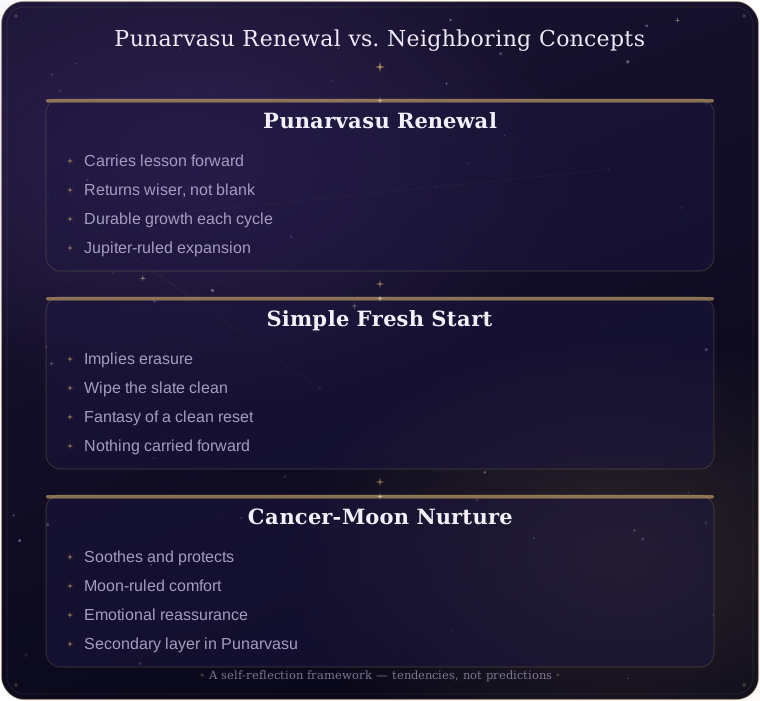
It helps to set the punarvasu nakshatra against two neighbors so the renewal claim stays precise rather than sentimental.
- Punarvasu vs. a simple fresh start. A fresh start implies erasure — wipe the slate, begin clean. Punarvasu's renewal is the opposite: it carries the lesson forward, so the "return" is to a baseline you re-enter wiser, not a blank one. You gain durable growth from each cycle, but you give up the fantasy of a clean reset, because nothing here is truly erased.
- Punarvasu vs. Cancer-Moon nurture. Both touch Cancer, so they look adjacent, but the engine differs. Cancer-Moon energy soothes and protects; Jupiter-ruled Punarvasu expands and re-frames. Leaning on the station as emotional comfort gets you reassurance, but you lose its sharper offer — a perspective that treats the setback itself as instructive rather than merely something to be survived.
- The Gemini and Cancer halves. Because the station crosses from Gemini into Cancer, its restoration runs in two registers. The Gemini portion contributes intellectual agility — the recovery happens partly through reframing, curiosity, and new ideas. The Cancer portion adds emotional depth, anchoring the recovery in felt experience rather than abstraction. Read together, the dual placement explains why Punarvasu natives tend to be resilient rather than merely reactive: they rebuild with both the mind and the heart engaged.
How to Read Punarvasu in Your Chart
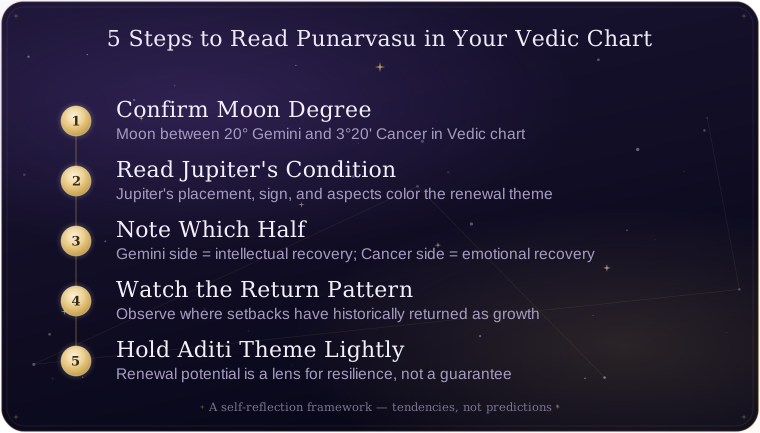
Locating Punarvasu requires a Vedic natal chart rather than a Western one, since the two systems use different zero-point references and the Moon's stated degree will differ between them. With a Vedic chart available, these are the practical signals to read:
- Confirm the Moon sits between 20° Gemini and 3°20' Cancer. That longitude band is what defines the station; a Vedic calculator will name it and display the pada, one of four 3°20' quarters that refine the placement.
- Read Jupiter's condition. Because Jupiter rules the station, its placement, sign, and aspects color how the renewal theme expresses — a well-placed Jupiter tends to amplify the expansive, restorative quality.
- Note which half the Moon falls in. A Gemini-side placement leans intellectual and adaptable in its recovery; a Cancer-side placement leans emotional and nurturing. The split is the most practical interpretive lever the station offers.
- Watch for the return pattern in lived experience. The station's signature shows up as a tendency to recover and re-expand after difficulty — observe where setbacks have historically returned as growth rather than ending in stagnation.
- Hold the Aditi theme lightly. Aditi's boundlessness suggests renewal potential, not a guarantee — the frame is a lens for resilience, not a promise that every loss reverses.
Common Misreadings
The most persistent misreading treats Punarvasu as a guarantee that everything broken will be restored. That sends readers looking for reassurance instead of the working insight the station actually carries.
- "Punarvasu means everything resets to normal." The renewal is return-with-growth, not return-to-baseline. The point is that you re-enter your footing changed and wiser, not that the setback is erased.
- "It's basically Cancer-Moon energy." The station ends in Cancer, which invites the confusion, but its ruler is Jupiter. The renewal here is expansion and perspective, with Cancer adding emotional depth downstream — not the other way around.
- "The deity is just a comforting story." Aditi as the boundless sky encodes a specific claim: that renewal potential is inexhaustible, so accumulated setbacks need not harden into permanent limits. That is the structural reason the station reads adversity as temporary.
- "The Gemini half doesn't matter much." It matters a great deal — the intellectual agility of the Gemini portion is half of why recovery here is active reframing rather than passive endurance.
Punarvasu at a Glance
| Property | How It Works | Where It Sits | How to Observe |
|---|---|---|---|
| Ruling planet | Jupiter's expansion turns recovery into wider wisdom, not mere repair | Lord of the station across both halves | Notice where setbacks return as perspective rather than scar tissue |
| Presiding deity | Aditi, the boundless sky, grants inexhaustible renewal potential | Cosmic-mother principle behind the whole station | Watch where a "second chance" arrives even after accumulated loss |
| Gemini portion | Intellectual agility drives recovery through reframing and curiosity | 20° to 30° Gemini | Recovery shows up as new ideas and adaptable thinking |
| Cancer portion | Emotional depth anchors the restoration in felt experience | 0° to 3°20' Cancer | Recovery shows up as renewed feeling and inner steadiness |
Common Questions About Punarvasu
What is the meaning of Punarvasu?
The name translates as "good again" or "the return of light." As the 7th station, its central theme is renewal — the capacity to recover after adversity and return to one's footing carrying more wisdom than before. Ruled by Jupiter, the renewal is expansive rather than a simple reset.
Which planet rules Punarvasu, and who is its deity?
Jupiter rules the station, lending it an expansive, restorative, wisdom-oriented quality. Its presiding deity is Aditi, the goddess of the boundless sky and cosmic mother of the celestial gods, whose boundlessness is read as inexhaustible renewal potential.
Why does the station cross two signs?
It spans from 20° Gemini to 3°20' Cancer, so it sits across the Gemini-Cancer boundary. The Gemini portion contributes intellectual agility to recovery; the Cancer portion adds emotional depth. The dual placement is why the renewal runs in both an intellectual and an emotional register.
Is Punarvasu the same as Cancer-Moon energy?
No. Because the station ends in Cancer, the two are easily confused, but the station's ruler is Jupiter, not the Moon. The renewal works through expansion and perspective; Cancer adds emotional depth as a secondary layer rather than as the primary driver.
Reflection Prompts
- Recall a setback that eventually returned as growth — what did you carry back into your footing that you did not have before it?
- Notice where you reach for a clean reset; would naming the setback as material to re-enter wiser change how you hold it?
- Consider whether you tend to recover through reframing or through feeling — and what the other register might add to how you rebuild.
Related Reading
- Vimshottari dasha system explainer — how Jupiter's periods unfold once you know your Moon's natal station
Take Action
Generate your free birth chart to find your Moon's exact degree and see whether it sits in Punarvasu — and which half, Gemini or Cancer, colors this Jupiter-ruled station's renewal theme. With that placement in hand, you get a concrete frame for reading your own pattern of recovery: where setbacks have tended to return as growth, and how to hold the next one as material to re-enter wiser rather than damage to undo.
Sources
- Parashara — the foundational Vedic sage whose classical texts anchor the lunar-mansion system, including the station rulerships and deity associations used in modern Jyotish
- David Frawley — known for systematizing the symbolic and deity associations of the 27 lunar mansions for contemporary practice