What is pushya nakshatra?
Pushya nakshatra is the eighth lunar mansion in Vedic astrology, spanning 3°20' to 16°40' of Cancer, and described throughout traditional Jyotish texts as the most auspicious of all 27 nakshatras in the zodiac.
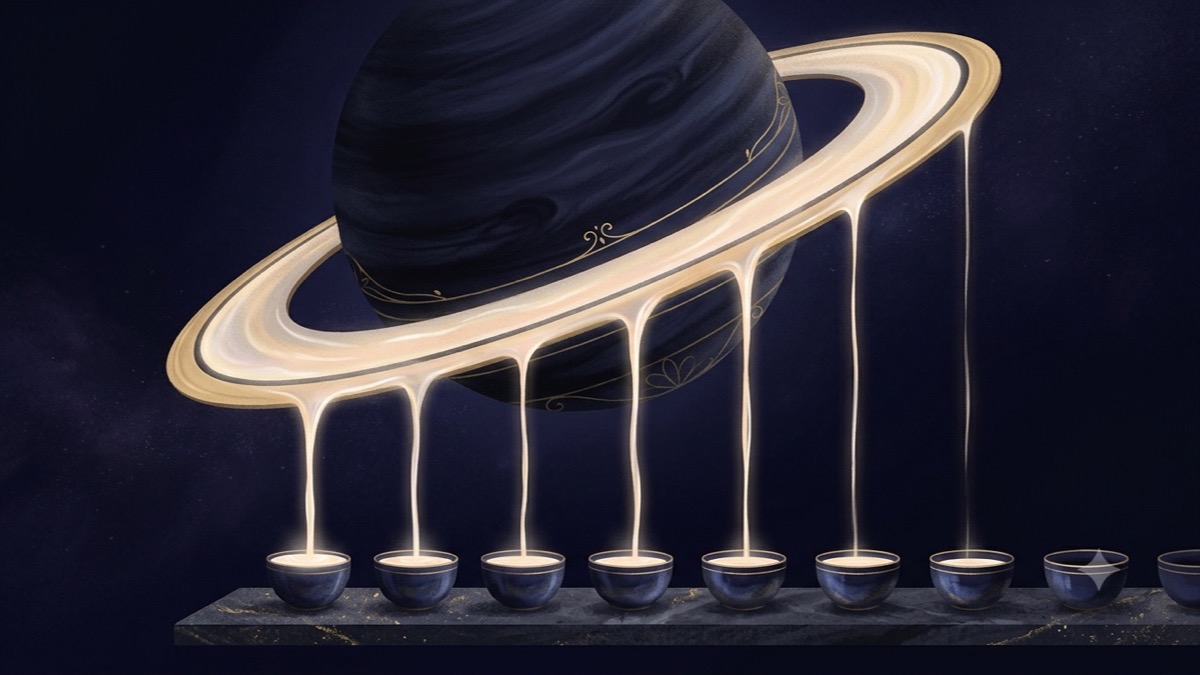
- Ruled by Saturn, with Brhaspati — Jupiter in his role as teacher of the gods — as its presiding deity, pairing disciplined structure with wisdom-guided care
- Its primary symbol is the udder of a cow, pointing toward steady and renewable output rather than a single act of generosity
- Located in Cancer, the Moon's own sign, so the nakshatra draws on emotional protectiveness while organizing it through Saturn's structural instinct
This combination makes Pushya unusual in the zodiac: Saturn here doesn't contract or withhold — it provides a container so that care flows efficiently without burning out. Traditional sources treat it as one of the most favorable placements for beginning anything meant to last. The full context for where this sits within Vedic lunar astrology belongs to the broader overview of all 27 Vedic nakshatras, which maps each mansion's ruling planet, presiding deity, and essential orientation.
Why It Matters for Self-Awareness
Understanding pushya nakshatra matters because the Saturn connection consistently produces the wrong expectation. Saturn in Cancer is traditionally debilitated — the planet of limits placed in the sign of emotional nourishment. The natural read is hardship: cold care, emotional restriction, the feeling of giving through gritted teeth. Most popular Jyotish content lands here and stops, which is why the misread persists.
The placement works differently. Pushya redirects Saturn's energy away from control and toward sustainability. The discipline here doesn't decide who deserves nourishment — it decides how nourishment gets delivered reliably, over time, without depletion. People with Pushya prominent in their charts often describe care that operates on a kind of internal schedule: consistent rather than spontaneous, durable rather than intense, structured around what they can actually maintain.
That shift is the self-awareness entry point. If you've been told your care feels too conditional, too scheduled, or not warm enough — and Saturn connects strongly to your Cancer placement — the Pushya framework offers a different angle. The structure may be the point, not the problem. What looks like emotional distance from the outside is often a Saturn-native instinct to make sure the nourishment doesn't run dry.
pushya nakshatra vs Adjacent Concepts: How It Works + Trade-offs
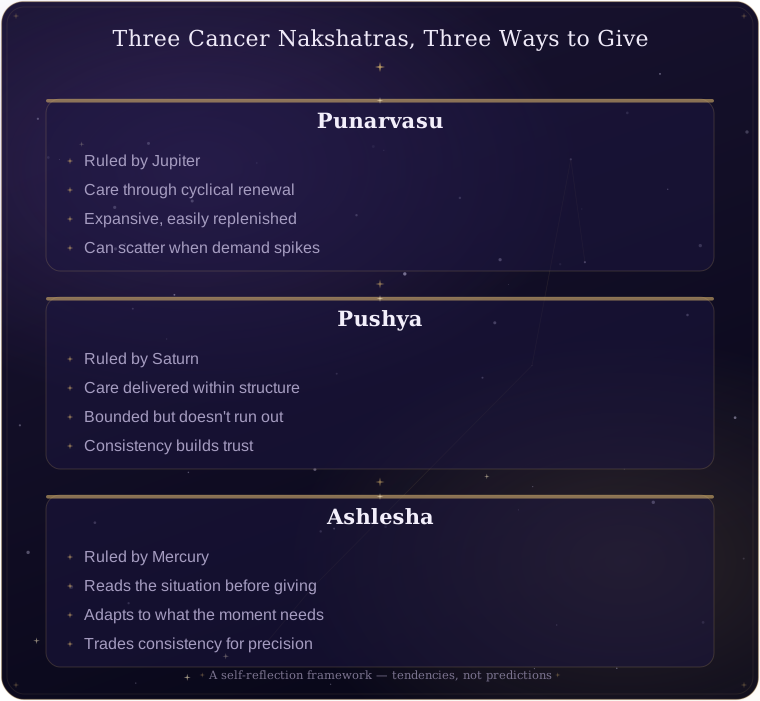
Pushya nakshatra sits alongside Punarvasu and Ashlesha, the two other nakshatras in Cancer, and each represents a different way emotional sustenance moves through a chart. The comparisons reveal distinct trade-offs:
- Pushya vs Punarvasu (ruled by Jupiter). Punarvasu channels nourishment through renewal — its care is expansive, easily replenished, and oriented toward cyclical return. To get Punarvasu's warmth and regenerative optimism, you work with openness and trust. The cost: care without Saturn's structure can scatter when demand exceeds what's been conserved. Pushya's trade-off runs in the other direction — to get lasting, sustainable output, you accept that Saturn's limits define what can be offered and when. The nourishment is more bounded, but it doesn't run out. Readers looking at how Punarvasu operates within Cancer's full range can explore Punarvasu nakshatra guide for a direct comparison.
- Pushya vs Ashlesha (ruled by Mercury). Ashlesha handles sustenance through perception and strategic calculation — it reads the situation before deciding when and how to give. Compared to Ashlesha, Pushya is more direct. It provides within a reliable system rather than adapting continuously to context. To get Pushya's consistency and the trust that comes with it, you sacrifice Ashlesha's contextual precision. Pushya gives according to a structure; Ashlesha gives according to what the moment actually needs.
- The underlying dynamic. The way Pushya works is that Saturn, when it serves nourishment rather than control, becomes a container rather than a cage. The same disciplining force that hardens in other configurations softens into a boundary that holds good things in rather than keeping people out. Parashara's tradition identifies this as the nakshatra's essential teaching: discipline and abundance are not opposites but collaborators, when discipline serves something worth sustaining.
How to Read pushya nakshatra in Yourself
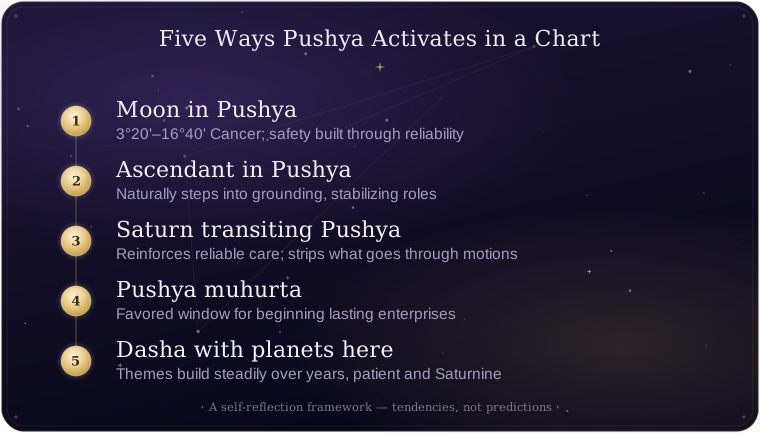
Spotting pushya nakshatra in a natal chart or transit period means looking for specific, observable patterns rather than abstract impressions of good fortune. Here are five signals worth tracking:
- Moon in Pushya (3°20'–16°40' Cancer). Emotional needs tend to organize around providing structure and consistency for others. Chaotic or unpredictable environments may feel viscerally draining — not from a desire to control, but because reliability is how this placement builds a sense of safety for everyone involved.
- Ascendant in Pushya. The person often steps naturally into stabilizing roles, perceived as grounding even without intending to be. Their warmth carries a seriousness that can be misread as emotional distance when it's actually a quality of sustained commitment.
- Saturn transiting Pushya. This period tends to consolidate existing systems of care. What's reliable gets reinforced; what's been going through the motions gets stripped back. A constructive transit for long-term projects tied to sustaining others' wellbeing.
- Pushya muhurta (electional timing). The Moon's transit through this nakshatra is treated in traditional Jyotish as among the most favorable windows for beginning lasting enterprises — agreements, courses of study, businesses connected to food, health, or welfare, or any endeavor that requires sustained effort to pay off.
- Dasha or bhukti with natal planets in this range. When a planet placed in Pushya's degrees becomes active in the dasha sequence, its themes emerge with cumulative, patient, Saturnine quality — building steadily over years rather than peaking and receding.
Common Misreadings
Several misreadings cluster persistently around pushya nakshatra, and most trace back to the Saturn-in-Cancer debilitation assumption. Here's what each one gets wrong:
- "Saturn here means emotional restriction." Saturn does limit in most of the zodiac. In Pushya, the cow's udder symbol directly counters that reading: steady, renewable output from a well-maintained source. People with Pushya prominent in their charts more often describe giving too consistently than too little — the challenge is sustainability, not scarcity of care.
- "Saturn's debilitation undermines the placement's quality." Saturn's general debilitation in Cancer is a sign-level analysis. The nakshatra layer is a separate frame, and traditional Jyotish is explicit: Pushya is named auspicious precisely because the nakshatra's character redirects Saturn's energy toward nourishment. The nakshatra resolves the tension the sign creates.
- "Pushya equals passive, receptive energy." The cow symbol can evoke stillness, but Brhaspati as the presiding deity brings an active teaching function — wisdom that builds capacity in others, not just comfort. Care in this nakshatra tends to be constructive: it educates, structures, and enables, not only soothes.
- "Auspicious means easy." Auspiciousness describes the nakshatra's inherent orientation toward good outcomes — not an absence of difficulty. Saturn still demands sustained effort. What changes is where that effort aims: toward something that lasts.
pushya nakshatra at a Glance
| Property | How It Works | Energy Center | How to Observe |
|---|---|---|---|
| 8th nakshatra, spanning Cancer | Falls in 3°20'–16°40' Cancer; the natal Moon degree determines active placement | Cancer (Moon's own sign) | Check the exact degree of the natal Moon or Ascendant |
| Planetary ruler: Saturn | Structures the channel through which care flows — consistency and limits make output sustainable rather than depleting | Saturn's organizing force | Note how the native defines what they can reliably offer and for whom |
| Presiding deity: Brhaspati | Jupiter in his teacher role; wisdom-guided care that builds others' capacity, not just provides comfort | Jupiter-Mercury wisdom axis | Caretaking roles that also teach, advise, or create lasting competence in others |
| Symbol: cow's udder | Steady, renewable output from a maintained source — a system, not a single act of generosity | Sustenance and continuity | Recurring patterns of care where consistency matters more than emotional intensity |
Common Questions About pushya nakshatra
Why is pushya nakshatra considered the most auspicious of the 27 nakshatras?
Traditional Jyotish texts point to the combination of Saturn's structural reliability with Brhaspati's wisdom-led care — two forces that, together, orient the nakshatra toward outputs that are both nourishing and lasting. The auspiciousness isn't about luck; it's about the nakshatra's character being fundamentally aligned with sustainable abundance.
What rashi does Pushya fall in, and how does that affect the reading?
Pushya nakshatra falls entirely within Cancer (Karka rashi), spanning 3°20' to 16°40'. The Moon's degree at birth places someone in this lunar mansion regardless of Sun sign or rising sign. The Cancer context means Pushya's Saturn energy operates in the emotionally protective register of the Moon's home sign — which is part of what makes its nourishing character so distinct from Saturn in other settings.
How does Pushya's character shift depending on which planet is placed there?
Planets placed in Pushya degrees tend to express their themes with a cumulative, patient quality. A benefic like Venus may give care that's steady rather than romantic or intense; a planet like Mars may produce effort that's methodical and enduring rather than impulsive. The nakshatra shapes the texture of how a planet expresses, not its fundamental nature.
Is Pushya muhurta reliable, or is its reputation overstated in popular astrology?
The muhurta tradition treats Pushya transits as favorable for lasting beginnings because the nakshatra's orientation — structure, nourishment, sustained output — aligns with what most durable projects need from the start. Whether a specific moment is genuinely favorable also depends on the full horary chart, not the nakshatra's reputation alone.
Reflection Prompts
- Think of a recent moment when setting a clear limit around your time or energy actually protected something you care about — what made that boundary feel like care rather than withdrawal?
- Recall a time when showing up consistently, not dramatically, was what someone genuinely needed from you — and how that kind of presence landed compared to what you expected.
- Notice a situation where your care felt "too structured" to the other person — was that a real mismatch, or a misread of what sustainable support actually requires from you?
Related Reading
- Cancer zodiac sign in Vedic astrology — the sign that houses Pushya and how Cancer's emotional instinct interacts with Saturn's structure across all three of its nakshatras
- Saturn in Jyotish overview — how Saturn's expression varies across different nakshatra placements and why Pushya represents one of its most counterintuitive configurations
- Ashlesha nakshatra explainer — the third Cancer nakshatra, ruled by Mercury, for a direct contrast with Pushya's Saturn-led approach to care and sustenance
- Nakshatra (Wikipedia)
Take Action
Generate your free birth chart to explore pushya nakshatra. Your birth chart shows the exact degree of your natal Moon — the clearest way to confirm whether this nakshatra is shaping how you give, sustain, and hold limits in your closest relationships. Once you can see where your Moon or Ascendant sits relative to Cancer's mid-range degrees, you have a concrete anchor for everything this nakshatra describes about structured, lasting care.
Sources
- Parashara — principal authority of the Brihat Parashara Hora Shastra, the classical Jyotish text that establishes nakshatra classifications, planetary lordships, and the interpretive framework this article draws on