
What Is USA Pluto Return Astrology?
USA Pluto Return Astrology is a symbolic reading of the moment Pluto returns to its natal spot in the U.S. chart. Because the country's founding chart places Pluto in Capricorn, and Pluto moves slowly, this alignment arrives only about once every 248 years — so the United States met it for the first time in 2022, when Pluto returned to its founding degree near 27° Capricorn in three exact passes — February 20, July 11, and December 28, 2022 — before moving on into Aquarius. Astrologers treat it as a lens for national identity, power structures, and the themes a country tends to revisit as it matures. Building on the broader the 8th house in astrology, it frames the return as a season of reckoning and rebuilding rather than a fixed prediction about the future.
- Marks a once-per-founding-era alignment tied to the nation's birth chart
- Read symbolically as a cycle of power, control, and reinvention
- Describes collective themes, not the fate of any single person
Why It Matters for Self-Awareness
Understanding USA Pluto Return Astrology matters because it gives people a structured way to think about how a country — and their own place inside it — handles pressure, endings, and renewal. Pluto's symbolism centers on what gets buried and what eventually resurfaces, so the return works as a mirror for collective moods many people already sense but struggle to put into words. Rather than forecasting events, it offers a vocabulary for a feeling that is already in the room. It shows up in a few practical ways:
- A frame for collective feeling. It gives language to the unease around institutions, money, and power that many people carry without a clear way to describe it, turning a vague dread into a nameable theme.
- A prompt for personal reflection. Watching a national cycle can help someone notice where they personally resist change or hold onto old structures long after those structures stop serving them.
- A boundary against panic. Read as symbolism rather than prophecy, it invites steady reflection instead of anxious forecasting about worst-case outcomes.
Consider someone who feels a low, hard-to-name worry every time the news covers a fight over money or authority. The return does not tell that person what will happen; it simply hands them a theme to sit with — what a maturing country decides to keep, and what it finally sets down. Sitting alongside the the solar return chart, it belongs to a family of astrological "return" moments that ask what has outgrown its usefulness, and this framing builds on the cycle-centered tradition Dane Rudhyar helped shape. Used well, it reads less like a crystal ball and more like a set of reflective questions about identity and responsibility.
USA Pluto Return vs a Personal Pluto Transit: What Actually Differs
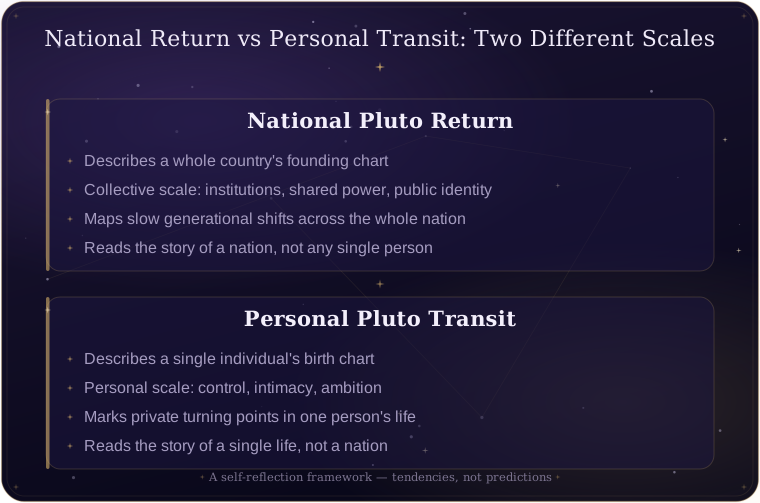
USA Pluto Return Astrology is easy to confuse with a personal Pluto transit, but the two work on completely different scales — and keeping them separate is where honest interpretation begins.
How Each One Works
A national Pluto return describes an entire country's founding chart completing one full Pluto orbit. The way it works is collective: it maps slow shifts in institutions, shared power, and public identity across a whole generation. A personal Pluto transit — such as Pluto squaring its own birth position around midlife — works on the individual instead, marking private turning points in control, intimacy, or ambition. One reads the story of a nation; the other reads the story of a single life. They can rhyme thematically, but they never describe the same subject.
Where the Trade-Off Lands
Each view buys clarity at one level by giving it up at another. To get the sweeping, generational read of a national return, you sacrifice any precision about a single person's day-to-day life; the framework simply cannot speak to one individual's choices. To get the specific, personal detail of a natal Pluto transit, you lose the collective picture — one birth chart says nothing about a country's direction. There is no single reading that does both jobs at once, and pretending otherwise is how interpretation drifts into overclaim.
Why Blending Them Backfires
Mixing the two is exactly where popular interpretation goes wrong. Reading national symbolism as a personal forecast, or shrinking a collective cycle down to one person's private drama, blends two frameworks that function on entirely different levels. Picture someone reading about the national return and concluding it explains why their own career stalled this year — that leap treats a country-sized symbol as a personal horoscope, and it holds up under no serious astrological logic. The cleaner approach keeps the scales apart: let the national cycle describe shared themes, and let personal transits describe personal life. When the levels stay separate, each one stays useful; when they collapse into each other, both lose their meaning.
How to Read the USA Pluto Return as It Unfolds
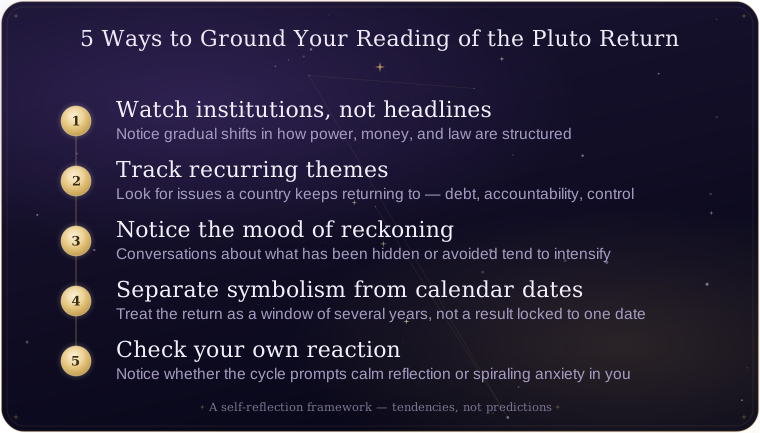
Because the cycle plays out over years rather than on a single day, the USA Pluto Return is easier to observe as a slow pattern than as one dramatic event. The goal is to read tendencies, not to pin down outcomes. A few observable signals help keep the interpretation grounded:
- Watch institutions, not headlines. Notice gradual shifts in how power, money, and law are structured, rather than reacting to any single day's news cycle.
- Track recurring themes. Look for the issues a country keeps returning to — debt, accountability, control — resurfacing in fresh forms over time.
- Notice the mood of reckoning. Public conversations about what has been hidden, avoided, or left overdue tend to intensify during this passage.
- Separate symbolism from calendar dates. Treat the return as a window of several years, not a scheduled result locked to one exact date.
- Check your own reaction. Notice whether the cycle prompts calm reflection or spiraling anxiety in you — that response is useful information in itself.
Read this way, the return becomes something you observe over seasons, the way transit-focused astrologers such as Robert Hand describe slow outer-planet cycles: a pattern that reveals itself gradually, not a switch that flips on a headline. The most grounded readers hold their conclusions loosely, revisit them as the years pass, and treat surprises as a sign to update the interpretation rather than defend it.
Common Misreadings
Most popular coverage stumbles in the same predictable places, almost always by treating a symbolic cycle as if it were a forecast. Sorting the misreading from the actual claim keeps the framework honest. Three come up again and again:
- Misreading it as political prediction. Some treat the return as proof that a specific political outcome is guaranteed. In reality, it describes symbolic themes of power and renewal, not named events, laws, or election results.
- Reading it as pure doom. Pluto's intensity often gets flattened into "collapse." The archetype is about transformation and rebuilding, which can include painful endings but is not a promise of catastrophe.
- Applying it to individuals. People sometimes ask what the national return "means for me" personally. It speaks to collective identity and shared structures, not to a single person's horoscope.
A useful test sits behind all three: if a reading names a winner, predicts a date, or promises ruin, it has slipped from symbolism into forecasting. The return points to a mood a country moves through — pressure, exposure, and the slow work of rebuilding trust — and moods do not obey fixed timetables or election calendars. Kept in proportion, these corrections turn a scary-sounding headline into a manageable reflective theme rather than a verdict. This is not a clinical interpretation or mental health advice.
USA Pluto Return at a Glance
| Property | How It Works | Natal Placement | How to Observe |
|---|---|---|---|
| Cycle length | Completes one full Pluto orbit before it can repeat | About a 248-year return period | Appears once per founding era, never yearly |
| Core theme | Surfaces buried power and pushes toward rebuilding | Natal Pluto in Capricorn, U.S. chart | Watch slow shifts in institutions and money |
| Scale | Operates on the whole nation's founding chart | Founding chart dated to July 1776 | Read collective trends, not personal events |
| Interpretive stance | Frames change symbolically, not predictively | Pluto's placement by house and sign | Notice recurring national themes across years |
Common Questions About the USA Pluto Return
When does the USA Pluto Return actually happen?
According to NASA, Pluto takes about 248 years to complete one orbit of the Sun, so a chart founded in 1776 reached its first Pluto return in 2022. Because Pluto stationed retrograde and then direct that year, the return came in three exact passes — February 20, July 11, and December 28, 2022 — and astrologers read its influence as a multi-year window rather than a single fixed date. Pluto has since moved into Aquarius, so the exact return is now behind us.
Is USA Pluto Return Astrology a political prediction?
No. It describes symbolic themes of power, control, and renewal, and it does not forecast specific elections, laws, or events.
Does the Pluto return mean the country will collapse?
The archetype centers on transformation, which includes endings and rebuilding rather than guaranteed disaster. Many astrologers frame it as a reckoning that can open into renewal.
Can this return affect me personally?
It speaks to collective identity rather than an individual horoscope. You might notice its themes echoed in the wider culture, but it is not a personal transit tied to your own chart, and it makes no claim about your private life.
Reflection Prompts
- Think of a recent moment when a national headline made you uneasy — what deeper change did it seem to point toward?
- Recall a time you clung to an old structure in your own life even after it clearly stopped working for you.
- Notice where you slip from symbolic reflection into predicting the future whenever you read about big collective cycles.
Related Reading
- the Saturn in Aries 2026 transit — another of the slow, dated outer-cycle movements this return sits among.
- the 12th house in astrology — background on the collective, behind-the-scenes themes a generational placement speaks to.
- Pluto in astrology (Wikipedia) — a neutral reference on the planet's astrological meaning.
Take Action
Generate your free birth chart to explore USA Pluto Return Astrology. You'll get a personalized map of your own placements to hold up against these collective cycles, and seeing where your chart meets the national story can turn a distant historical theme into a clear, personal starting point for reflection.
Sources
- Dane Rudhyar — pioneered the humanistic, cycle-centered reading of astrological transits that this national framing draws on
- Robert Hand — helped formalize modern transit interpretation, including how slow outer-planet cycles are read over time