
What Is the Difference Between Vedic and Western Astrology?
The short answer: Vedic and Western astrology read the same sky from two different zodiac starting points, which is why the same birth can produce two different Sun signs. Vedic astrology is the traditional Indian system of chart reading, also called Jyotish (the Sanskrit term for the "science of light"), and it maps the planets against the sidereal zodiac — twelve equal 30° signs anchored to the fixed stars by a measured offset called the ayanamsa. Western astrology maps the same planets against the tropical zodiac, anchored to the seasons. That one structural choice is the root of every other difference between the two systems.
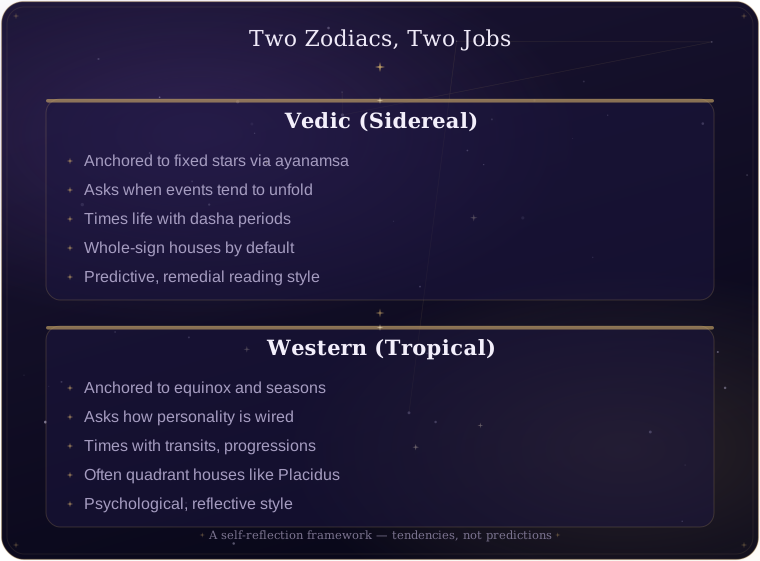
- Vedic uses the sidereal zodiac, anchored to the visible fixed stars
- Western uses the tropical zodiac, anchored to the seasons and the spring equinox
- A gap of roughly 24 degrees between them is why your Sun placement can change
Because the two zodiacs have drifted apart over the centuries, your Western Sun often lands one sign earlier in a Vedic chart, and your Moon and ascendant (lagna) can move as well. For how both traditions fit among the wider family of methods, see this pillar guide to the major astrology systems.
Why It Matters for Self-Awareness
Understanding Vedic vs Western astrology matters because of one jarring moment almost every newcomer runs into: they pull a Vedic chart, and the Sun placement they have identified with for years has quietly disappeared. A lifelong Western Leo turns up as a Vedic Cancer; a confident Sagittarius slides back into Scorpio; a Capricorn becomes a Sagittarius. The first reaction is rarely curiosity. It is the uneasy sense that one chart must be broken and the other one is the "real" you, and that you now have to choose between them. What looks like a contradiction is really just two maps of the same territory drawn to different scales.
In a decade of reading charts alongside the classical Sanskrit texts I grew up with, I have watched this single mismatch unsettle more beginners than any other question they bring to a first session. The relief almost always arrives the same way. People stop asking which system is correct and start asking which question each one was built to answer. A tropical chart is designed to describe the seasonal moment you were born into, which maps closely onto temperament and personality. A sidereal chart is designed to track measurable star positions, which is what you want when the question is about timing rather than character.
That reframe matters for self-awareness because the panic itself is the real lesson. If a relabeled Sun placement can shake your sense of who you are, the old label was probably carrying more weight than any single placement should. Reading both systems side by side tends to loosen that grip, leaving you holding flexible patterns instead of a fixed verdict about your identity. The point is not to crown a winner but to notice how lightly or tightly you were holding that label in the first place.
Vedic vs Western: Key Differences That Change Your Reading
Vedic vs Western astrology really comes down to one technical choice the two camps make differently: where the zodiac begins. That single choice cascades into different signs, different timing tools, and a different reading style — so it helps to look at how each one works and what each gives up in exchange. Seeing the trade-off clearly is what turns the comparison from an argument into a simple choice of tools.
Sidereal vs Tropical Zodiac — The 23-Degree Gap Explained
The Western tropical zodiac begins at the exact point where the Sun crosses the celestial equator each spring, which means 0° Aries is simply the spring equinox. The way it functions is seasonal: the signs stay locked to the solstices and equinoxes no matter how the background stars slowly shift. The payoff is intuitive, because the symbolism of each sign lines up with the season it falls in. To get a zodiac that always matches the seasons, though, Western astrology sacrifices alignment with the actual constellations. After roughly two thousand years of slow precession, tropical Aries no longer sits in front of the stars of the Aries constellation at all.
The Vedic sidereal zodiac makes the opposite trade: it begins from a fixed stellar reference and applies an ayanamsa — the measured angle of offset between the two zodiacs, currently a little over 23 degrees and slowly widening. That gap is the whole reason your two charts disagree: subtract roughly 23–24° from a tropical position and you often land a full sign earlier. Anchoring to the stars is why the sidereal system pairs so naturally with dasha cycles (planetary time-periods used to date life events) and nakshatras (the 27 lunar mansions that subdivide the sky). To get a chart that stays aligned with the fixed stars and supports precise timing, Vedic astrology sacrifices the tidy season-to-sign overlap that Western readers take for granted.
Which Sign Is "Correct"?
Neither — and the question itself is the trap. The two zodiacs are not rival measurements of one fact; they are two coordinate systems answering two different questions. Your tropical Sun correctly describes the season you were born into, which is why it maps so well onto temperament and personality. Your sidereal Sun correctly tracks the stars actually behind the Sun at your birth, which is what you want for star-anchored timing work. Asking which is correct is like asking whether Fahrenheit or Celsius is the "real" temperature: both are accurate, they just start counting from a different zero. The sidereal tradition, codified in classical form by Parashara and carried to modern English-speaking readers by B. V. Raman, leans predictive and remedial; the tropical approach leans psychological. Calling one "real" usually just reveals which question you care about more.
When to Use Vedic and When to Use Western
A practical rule: reach for the tropical (Western) chart when your question is about who you are — temperament, motivations, relationship patterns, inner psychology. Reach for the sidereal (Vedic) chart when your question is about when — life-stage timing, which years carry which themes, and the long planetary periods that dasha cycles track. Many experienced readers run both without contradiction: the Western chart as a portrait of character, the Vedic chart as a calendar of when familiar themes tend to surface. The mistake is not using both; it is expecting them to say the same thing in the same vocabulary.
How to Read Your Signs Across Both Systems
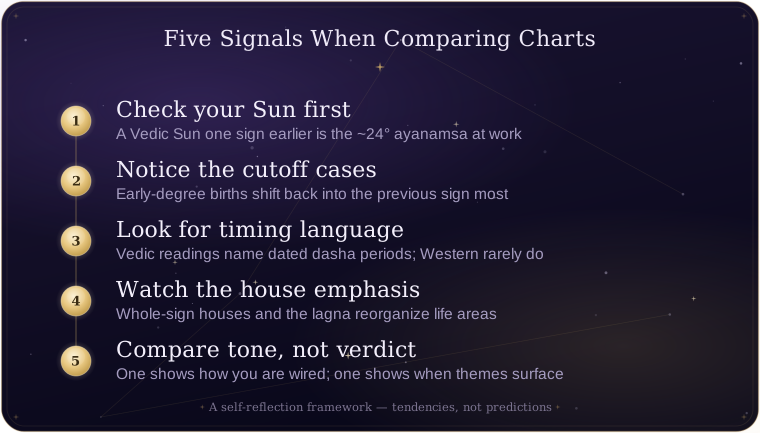
You do not need software to feel the Vedic versus Western difference once you know what to look for. Pull both charts, set them side by side, and read these signals:
- Check your Sun placement first. A Vedic Sun one whole sign earlier than your Western Sun is the ~24-degree ayanamsa doing exactly what it should.
- Notice the cutoff cases. People born in the first days of a Western sign shift most, since subtracting the ~24-degree ayanamsa pulls them back into the previous sidereal sign.
- Look for timing language. A Vedic reading names dated periods called dashas; a Western reading rarely commits to specific windows.
- Watch the house emphasis. Whole-sign houses dominate Vedic charts, so your ascendant (lagna) often reorganizes which life areas stand out.
- Compare the tone, not the verdict. One chart shows how you are wired; the other shows when familiar themes tend to surface.
Reading Your Sun Sign Across Both Systems
Your Sun sign is where the mismatch hits hardest, because it is the placement most people stake their identity on. In the tropical chart, your Sun describes the seasonal moment of your birth and reads as core temperament. In the sidereal chart, that same Sun usually slides back one sign — a lifelong tropical Leo often meets a sidereal Cancer. Read them as two layers, not a contradiction: the tropical Sun for the personality you recognize, the sidereal Sun for how that same drive looks when measured against the actual stars. If the shift unsettles you, that is worth noticing on its own — it usually means the label was carrying more weight than any single placement should.
Reading Your Ascendant Across Both Systems
The ascendant, or rising sign, matters even more in Vedic practice than in Western, because the sidereal tradition leans on whole-sign houses anchored to the lagna. When you compare the two charts, watch how your ascendant reorganizes which life areas stand out: a placement that sat quietly in your Western chart can land in a prominent house once the sidereal lagna resets the framework. Reading the ascendant across both systems is often more revealing than comparing Sun signs, because it shows not just which sign shifted but how the whole structure of emphasis moves with it.
Because the house emphasis shifts so much between the two charts, it helps to know how the twelve astrology houses map to your life areas before you compare the two charts. Read together, the two charts usually replace the "which one is right" reflex with a more useful habit: matching the question to the system before you read a single line.
Common Misreadings
Most of the confusion in the Vedic vs Western astrology debate comes from a few assumptions that sound reasonable but quietly miss the point. Here is what the popular version gets wrong, and what is actually happening:
- "One system must be wrong." Both are internally consistent and use valid math; they simply measure from different zero points. A different Sun placement is the expected result, not a mistake in either chart.
- "Vedic is the older and more accurate one." Vedic is sidereal and very old, but age does not equal accuracy. Tropical is no less precise for personality work — the two are tuned for different questions.
- "My real sign is the Vedic one." Neither sign is more real than the other. Your tropical sign still describes the season you were born into, and your sidereal sign still tracks the actual stars.
- "The two will eventually line up again." The gap is widening slowly through precession, so for now the systems are drifting apart; because precession is a long cyclical motion, they realign only across a full ~26,000-year cycle, not within any timescale that matters for reading a chart.
Every one of these misreadings shares the same root: treating two coordinate systems as rival claims about a single fact, instead of two tools built for two different jobs. Once that assumption goes, most of the supposed conflict simply dissolves.
Vedic vs Western at a Glance
| Aspect | Vedic (Sidereal) | Western (Tropical) | How to Observe It |
|---|---|---|---|
| Zodiac reference | Anchored to the fixed stars via the ayanamsa | Anchored to the spring equinox and seasons | Your Vedic Sun usually lands one sign earlier |
| Core question | When life events tend to unfold | How your personality is wired | Notice if a reading feels event-based or trait-based |
| Main timing tool | Dasha periods (planetary time-cycles) | Transits and progressions | Check whether your report names dated periods |
| House system | Whole-sign houses by default | Often quadrant houses such as Placidus | See whether each house equals one full sign |
| Reading style | Predictive, with remedial suggestions | Psychological and reflective | Look at whether advice is fix-it or self-aware |
Common Questions About Vedic Astrology
Why is my Sun placement different in Vedic vs Western astrology?
The two systems use different zodiacs, so a Western Sun usually moves back about one sign in a Vedic chart. The roughly 24-degree ayanamsa offset accounts for the shift, which means it reflects a difference in measurement rather than an error.
Which system is more accurate?
Neither is more accurate in general, because accuracy depends entirely on what you are asking. Sidereal Vedic charts tend to be strongest for timing events through dashas, while tropical Western charts tend to be strongest for mapping personality and inner psychology.
Can I use both charts at the same time?
Yes, and many experienced readers do exactly that without contradiction. A simple approach is to treat the Western chart as a portrait of your temperament and the Vedic chart as a calendar for when familiar themes tend to surface. If you want to generate the sidereal side and read it placement by placement, the Vedic birth chart calculator walkthrough covers the lagna, Moon sign, navamsa, and dasha timeline step by step.
Do Vedic and Western astrology read the same planets?
They use the same visible planets and place them in the same twelve houses. The real difference is the zodiac reference point and the additional timing tools each tradition layers on top of it.
Reflection Prompts
- Think of the moment you first saw your Vedic Sun placement — what did you assume had gone wrong?
- Recall a time a single label, like your sign, shaped how you explained your own behavior.
- Name one recent decision where knowing the timing, not the personality, would have helped most.
Related Reading
Take Action
Open your birth chart in both a tropical and a sidereal setting, then compare where your Sun, Moon, and ascendant (lagna) fall in each version. That gives you two readings that stop competing — one showing how you are wired, the other showing when your themes tend to move — so the mismatch becomes information instead of a problem to solve. To apply either system to your own placements, read the How to Read a Birth Chart guide, and you may find that holding both views at once tells you more about yourself than picking a single side ever could.
Sources
- Parashara — codified the classical foundations of Vedic (sidereal) astrology that the predictive tradition still rests on
- B. V. Raman — carried Vedic astrology to modern English-speaking readers and helped standardize its contemporary practice