
What Is the Letting-Go Astrology Prompt?
What Do I Need to Let Go Of is a reflective astrology prompt that turns a broad, uneasy feeling into a specific question you can actually sit with. Rather than predicting an outcome, it reads chart symbolism — placements traditionally tied to endings, maturity, and release — as a reflective prompt for spotting patterns you have outgrown. Asking what do I need to let go of shifts attention away from "what will happen to me" and toward "what am I still carrying that no longer fits." It pairs naturally with a full read of your guide to reading your birth chart, where the same themes show up in more detail across the whole picture.
- Frames release as a question to explore, not a verdict handed down
- Draws on placements linked to closure, such as Saturn, the twelfth house, and the South Node
- Works as a self-reflection tool, not a forecast or a diagnosis
Why It Matters for Self-Awareness
Understanding what do I need to let go of matters because most people can feel that something is weighing on them long before they can name it. The prompt gives that feeling an edge to grab. Instead of a vague sense that you should "move on," you get a specific place to look — a habit, an old role, or a story about yourself that made sense years ago and quietly stopped fitting.
Where the weight comes from
Often the things we carry longest are the ones that once protected us. A pattern of over-preparing may have earned praise in school; a reflex to keep the peace may have kept a household calm. Years later those same reflexes can run on autopilot, costing more than they return. This framing is useful because it separates "this served me once" from "this serves me now" — a distinction most day-to-day thinking skips right past, especially when a pattern is comfortable.
What an honest read gives you
In practice, the value shows up in a few concrete ways:
- Naming the pattern. A person notices they keep over-explaining themselves at work and reads it as an old need for approval worth releasing.
- Timing a decision. Someone weighing whether to end a stale commitment uses the question to separate real loyalty from plain habit.
- Softening self-judgment. Framing growth as release rather than failure makes it easier to look at a pattern honestly, without flinching away from it.
The point is not prediction. It is the pause — a structured moment to ask what you are ready to set down, and why now rather than later.
A Reflective Release Prompt vs a Deterministic Forecast
The clearest confusion to clear up is between a reflective what do I need to let go of prompt and a deterministic forecast that claims to tell you what is going to happen. They look similar because both read the same chart, but they work in opposite directions.
A reflective prompt works by using symbolism as a mirror: you look at a placement like Saturn or the South Node, notice what it stirs up, and then decide what it means for your own life. A deterministic forecast works by treating that same placement as a fixed cause — "this transit means you lose X." To get the certainty of a forecast, you sacrifice your own agency in the read; to get the openness of a reflective prompt, you sacrifice the comfort of a clean, closed answer.
Building on the person-centered tradition Dane Rudhyar shaped, this page treats the chart as a language for reflection rather than a script that is already written. The distinction matters most when the stakes feel high. Under pressure, a deterministic reading is tempting because it seems to lift the burden of choosing. But the same certainty that soothes can also foreclose options you had not considered. A reflective prompt keeps those options open by returning the decision to you — slower, but usually more honest. This sits alongside the meaning of the south node in astrology, which maps the same release themes inside one placement.
How to Read What You Need to Let Go Of in Your Chart
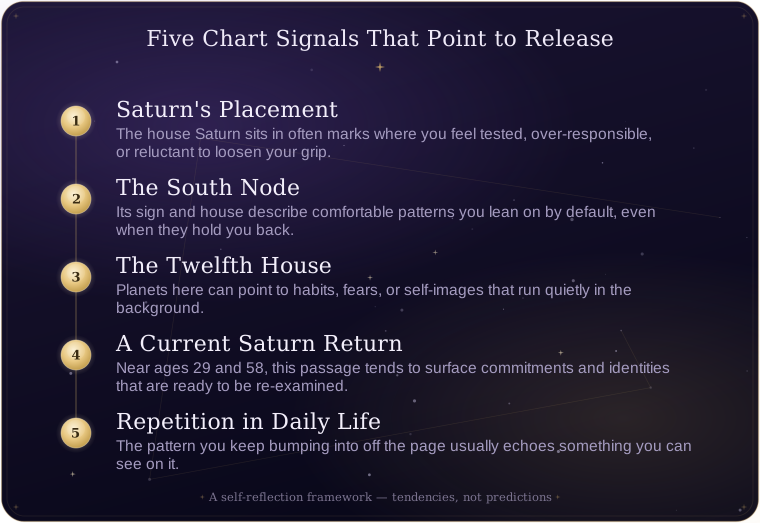
You do not need advanced technique to start, and the psychological approach to Saturn that Liz Greene helped popularize keeps the read grounded. A few observable signals point toward release themes:
- Saturn's placement. The house Saturn sits in often marks where you feel tested, over-responsible, or reluctant to loosen your grip.
- The South Node. Its sign and house describe comfortable patterns you lean on by default, even when they hold you back.
- The twelfth house. Planets here can point to habits, fears, or self-images that run quietly in the background.
- A current Saturn return. Near ages 29 and 58, this passage tends to surface commitments and identities that are ready to be re-examined.
- Repetition in daily life. The pattern you keep bumping into off the page usually echoes something you can see on it.
According to NASA, Saturn takes about 29.5 years to complete one orbit, which is why the Saturn return recurs near ages 29 and 58 — a natural checkpoint for asking what you might be ready to release, and what you would rather keep.
Common Misreadings
Popular write-ups often flatten what do I need to let go of into something harsher or more mystical than it is. Because the phrase sounds dramatic, it collects assumptions that get in the way of an honest read. A few corrections keep the framing clear:
- Misreading: it predicts loss. Actually, the prompt asks what you choose to release, not what fate removes from you.
- Misreading: letting go means cutting people off. Actually, release more often points to a belief, habit, or expectation than to a person.
- Misreading: the chart hands you the answer. Actually, the placements raise the question; you supply the meaning from your own life.
- Misreading: once you let go, it is permanent. Actually, release tends to work as a repeating practice, not a one-time event.
The Letting-Go Prompt at a Glance
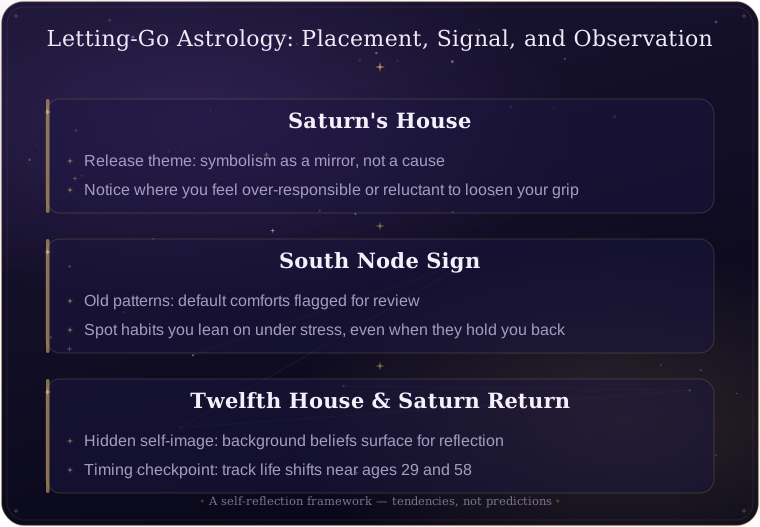
| Property | How It Works | Energy Center | How to Observe |
|---|---|---|---|
| Release theme | Symbolism read as a mirror, not a cause | Saturn's house | Notice where you feel over-responsible |
| Old patterns | Default comforts flagged for review | South Node sign | Spot habits you lean on under stress |
| Hidden self-image | Background beliefs surface for reflection | Twelfth house | Catch stories you tell about yourself |
| Timing checkpoint | Cyclic prompt to reassess commitments | Saturn return window | Track shifts near ages 29 and 58 |
Common Questions About Letting Go in Astrology
What does the letting-go prompt mean in astrology?
It means using chart symbolism as a reflective prompt to identify patterns, roles, or beliefs you have outgrown. It describes a self-reflection practice, not a prediction about what you will lose.
Which placements point to letting go?
Saturn, the twelfth house, and the South Node are the placements most often linked to release and closure themes. Reading them together tends to give a fuller picture than leaning on any one alone.
Can astrology tell me exactly what to release?
No — it raises the question and offers symbolic themes, but you decide what fits your life. Treating it as a fixed answer misses the reflective point entirely.
How often should I revisit this question?
Many people revisit what do I need to let go of around birthdays, a Saturn return, or major life transitions. Release tends to work as an ongoing practice rather than a single decision.
Reflection Prompts
- Think of a recent moment you felt over-responsible — what belief kept you holding on so tightly?
- Recall a habit you defended last month; what quiet need was it actually meeting for you?
- Name one role you have outgrown, and one small way to loosen its grip this week.
Related Reading
- meaning of the north node in astrology — the growth-facing counterpart to the release themes covered here.
- guide to the twelfth house in astrology — a closer look at the placement tied to hidden patterns and self-images.
- what a Saturn return means — the timing checkpoint many people link to letting go.
Take Action
Open your birth chart and locate Saturn, the twelfth house, and your South Node, then note one pattern each placement raises for you. You end up with a short, personal list of what feels ready to release — not a prediction, but an honest starting point. Over time, that habit of asking rather than bracing turns letting go from something that happens to you into something you choose. Explore Astrology Tools to map these placements in your own chart.
Sources
- Dane Rudhyar — shaped the person-centered approach that reads the chart for reflection rather than fixed prediction
- Liz Greene — advanced the psychological reading of Saturn and its themes of maturity and release