What Is My Love Language?
My Love Language, in astrology, is a symbolic way of describing how someone tends to give and receive affection, read from where Venus, Mars, and the Moon sit in a birth chart. If you arrived from the Chapman quiz expecting five neat categories, this is a related but different lens: your affection style read from Venus, Mars, and the Moon, not a type you score. When people ask what is my love language, they are usually reaching for words to name a pattern they already feel in how they love and want to be loved. This lens leans on the same planets astrologers have long tied to attraction, desire, and emotional need, and it sits alongside a broader pillar page on how to read a birth chart that maps how those placements work together. Treated this way, it is a reflective framework, not a prediction about your relationships.
- Venus points to how you show and receive warmth, taste, and appreciation
- Mars points to how you pursue, initiate, and express desire
- The Moon points to what makes you feel emotionally safe and cared for
Why It Matters for Self-Awareness
Understanding what is my love language matters because affection is easy to feel and hard to name. Plenty of people sense they crave steadiness yet keep pairing with partners who run on intensity. Others pour care into practical help — fixing things, showing up, handling logistics — while quietly wishing someone would just say the words out loud. That mismatch is rarely about not loving enough; it is a difference in how two people encode care. One partner reads a full gas tank and a made bed as devotion; the other is waiting for a text that says "I was thinking about you." There is also a timing version: someone who needs slow, steady reassurance paired with someone who shows love in big, sudden gestures that arrive in a rhythm the other can never quite absorb.
Reading Venus, Mars, and the Moon gives that gap a vocabulary. Seeing that your Moon leans toward security while your Mars wants pursuit can explain why you feel torn between wanting to be chased and wanting to feel safe at once. It reframes an internal contradiction as two real needs instead of a personal flaw. The value here is self-recognition, not a verdict. If you already know your placements, comparing them against your guide to your Venus sign meaning is often where the first real click happens.
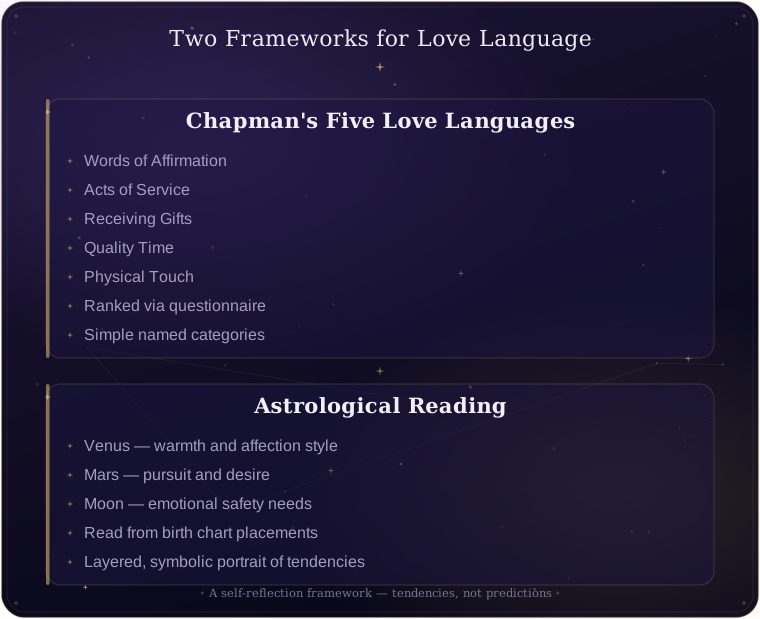
Astrological Love Language vs Chapman's Five Love Languages
The phrase what is my love language sits between two frameworks that are easy to blend but worth keeping apart.
- Chapman's five love languages. A popular relationship self-help framework that sorts affection into five named categories — words of affirmation, acts of service, receiving gifts, quality time, and physical touch — which you rank from a questionnaire about your preferences.
- The astrological reading. This interprets tendencies from where Venus, Mars, and the Moon fall in your chart, an approach informed by the psychological-astrology tradition that reads a chart as a portrait of tendencies rather than fixed fate.
The trade-off is real. The five-language quiz gives you simple, named categories and a shared vocabulary, but a person is rarely one tidy box. A chart offers a layered, sometimes contradictory portrait, but symbolic readings stay open to interpretation. If you do want to line the two systems up, start from behavior you can actually observe — how you and a partner already act — rather than forcing planets into Chapman's category labels. Trouble starts only when someone treats a symbolic reading as if it produced the same kind of testable result as a questionnaire.
How to Read Your Love Language in Your Chart
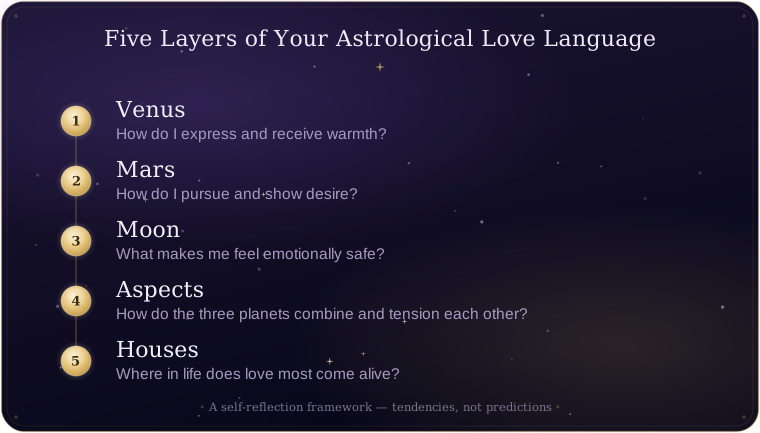
A fast shortcut is the element of your Venus: fire Venus (Aries, Leo, Sagittarius) loves through passion and play, earth Venus (Taurus, Virgo, Capricorn) through touch and reliability, air Venus (Gemini, Libra, Aquarius) through words and shared ideas, and water Venus (Cancer, Scorpio, Pisces) through emotional depth and devotion. For a fuller read, three placements carry most of the weight, and for each you can ask one question:
- Venus — how do I express and receive warmth? Your Venus sign shows your everyday style of affection. Venus in Taurus tends to love through touch, consistency, and small physical comforts; Venus in Gemini loves through words, banter, and curiosity; Venus in Aquarius shows care through friendship and breathing room.
- Mars — how do I pursue and show desire? Mars is the active, wanting side of love. Mars in Aries pursues directly and fast, craving heat and momentum; Mars in Cancer moves more indirectly, showing desire through protection and care.
- Moon — what makes me feel safe? The Moon is what you quietly need most. Moon in Cancer needs nurturing, reassurance, and emotional constancy; Moon in Sagittarius feels safest with honesty and room to roam.
Two more layers refine the picture but are advanced, not the basic answer:
- Aspects change how the three combine. Venus square Mars, for instance, often feels like wanting closeness and space at once — attraction laced with friction.
- Houses show where love comes alive. Venus in the 7th house craves affection expressed through committed partnership and one-on-one time; Venus in the 5th leans toward romance, play, and courtship.
Read together, these move the question from a label you look up to a pattern you can watch play out in your own relationships.
Common Misreadings
Because what is my love language gets answered by both quizzes and horoscopes, a few misreadings show up again and again.
- Reading it as destiny. A Venus placement describes a tendency in how you love, not a fixed outcome about who you belong with.
- Collapsing it into one planet. Reducing your whole style to your Sun sign misses the point; Venus, Mars, and the Moon each add a distinct layer.
- Mixing the two systems. Stacking Chapman's five categories directly onto planets treats a self-help quiz and a symbolic reading as the same tool.
- Reading it as a scorecard. There is no winning placement; a chart describes patterns to reflect on, not a rank to beat.
Spotting these early keeps the reading useful — a mirror for reflection rather than a set of rules about who is right for you.
My Love Language at a Glance
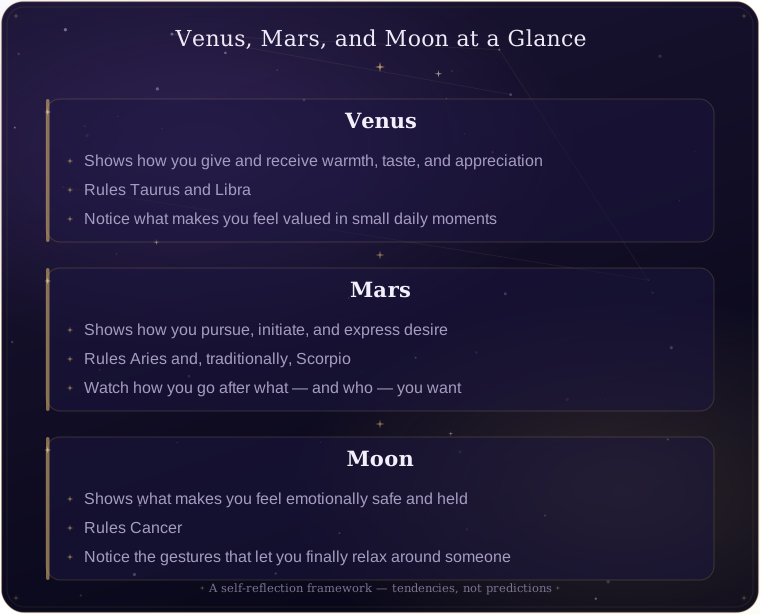
| Property | How It Works | Rules / Sign Rulership | How to Observe |
|---|---|---|---|
| Venus | Shows how you give and receive warmth, taste, and appreciation | Rules Taurus and Libra (earth, air) | Notice what makes you feel valued in small daily moments |
| Mars | Shows how you pursue, initiate, and express desire | Rules Aries and, traditionally, Scorpio (fire, water) | Watch how you go after what — and who — you want |
| Moon | Shows what makes you feel emotionally safe and held | Rules Cancer (water) | Notice the gestures that let you finally relax around someone |
Questions People Ask About My Love Language
What is my love language in astrology, exactly?
It is a symbolic reading of how you give and receive affection, drawn mainly from your Venus, Mars, and Moon placements. It describes tendencies in your chart, not a fixed personality label.
Is the astrological version the same as the five love languages?
No. Chapman's five love languages come from a popular self-help questionnaire, while the astrological version reads planetary placements. They can complement each other, but they are separate frameworks.
Which planet matters most for my love language?
Venus is the usual starting point for affection and attraction, but the Moon and Mars round out the picture. Reading all three together tends to be more accurate than leaning on one.
Can my love language change over time?
Your placements stay fixed, but how you express them often shifts with age, reflection, and experience. Many people describe growing into parts of their chart they once ignored.
Reflection Prompts
- Think back to a recent moment when you felt truly cared for. What did the other person actually do?
- Recall the last time you showed love and it landed flat. What were you offering, and what were they hoping for?
- Notice one relationship where you feel safe. What small, repeated gesture keeps building that trust?
Related Reading
These pages go deeper on the placements behind this reading:
- guide to your Mars sign meaning — covers the desire-and-pursuit side of how you love
- overview of your Moon sign meaning — explains the emotional-safety layer this reading leans on
- rising sign meaning explainer — shows how your outward style can color first impressions in love
- Planets in astrology (Wikipedia) — a neutral primer on what each planet traditionally signifies
Take Action
Run your birth chart to see exactly where Venus, Mars, and the Moon fall for you. Generate Your Free Birth Chart, and you'll have the three placements this whole reading depends on laid out in a single view. With those in front of you, your love language stops being something you guess at and becomes a pattern you can name, question, and talk through with the people who matter most.
Sources
The "love language via Venus, Mars, and the Moon" framing is a modern, popular one; the interpretive tradition it draws on includes:
- Dane Rudhyar — shaped the person-centered approach that reads a chart as a portrait of tendencies rather than fixed fate
- Liz Greene — advanced the psychological reading of Venus, Mars, and the Moon in relationship astrology
- Howard Sasportas — helped formalize how planetary placements describe emotional and relational patterns