
What is the Ascendant?
The ascendant is the exact zodiac degree rising over the eastern horizon at the moment of your birth, which becomes the cusp of your first house and the hinge the rest of the chart turns on. People search for the ascendant meaning expecting another personality label, yet what they find is structural: this single degree decides where every house begins. Read closely, how the twelve houses map life areas makes more sense once you see that the ascendant is the door the houses are numbered from.
- The ascendant is the rising sign — the two terms name the same point
- It marks the first house cusp, so it anchors the entire house system
- It depends on the exact minute and place of birth, not just the date
This is an interpretive framework for reading a chart, not a forecast or a fixed verdict on character.
Why It Matters for Self-Awareness
Most beginner content treats the rising sign as a costume — the surface you wear before the "real" sun sign underneath. That framing misses the point of the ascendant meaning, because the rising degree is not decoration; it is the coordinate that tells the chart where to put everything else. Move the ascendant and you move all twelve house cusps with it, which means a planet that read as a career signature can quietly become a home signature instead. The point worth holding is that this is the most time-sensitive part of your chart, and that sensitivity is exactly what makes it informative.
The instinctive layer matters too. The rising sign tends to describe first impressions, physical bearing, and the reflexes that show before conscious intention catches up — the way you cross a threshold into a room. Astrologers from Liz Greene to Robert Hand have read this as the meeting point between the inner self and the world it walks into, a symbol rather than a sentence. Taken that way, the ascendant meaning becomes less a label to memorise and more a question about how you arrive before you decide to.
the Ascendant vs Adjacent Concepts: How It Works + Trade-offs
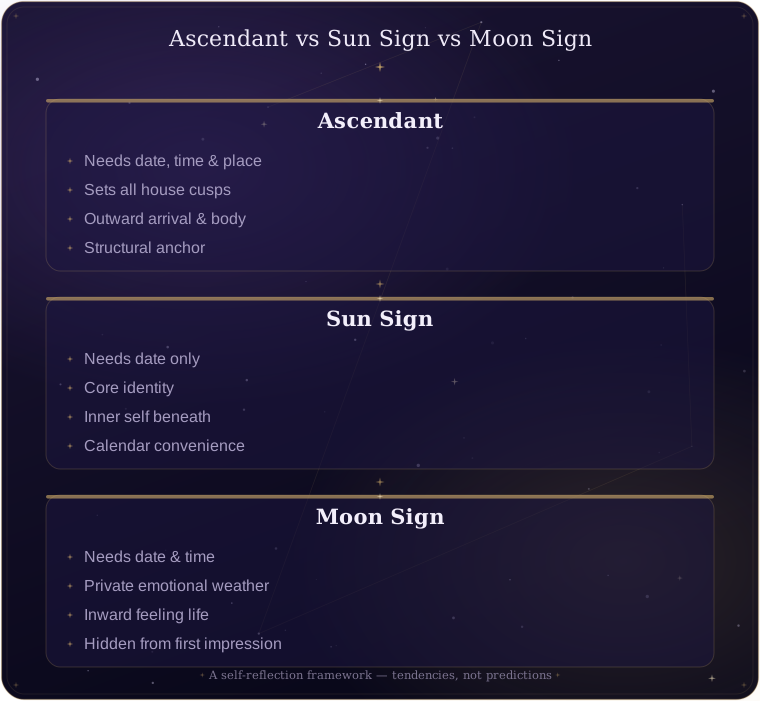
It helps to set the ascendant against two neighbours it is often confused with. Against the sun sign, the trade-off is precision for convenience. Your sun sign needs only the date, which is why horoscope culture leans on it; the ascendant meaning needs the date, the time, and the place, because it tracks a point that moves through all twelve signs in a single day. You gain a far more personal chart, but you pay for it with the demand for an accurate birth time.
Against the moon sign, the contrast is outward versus inward. The moon describes the private emotional weather; the ascendant describes the public arrival and the body that carries it. How it works in practice: the rising degree fixes the first house cusp, and from there the remaining cusps fall into place, assigning every planet to a life domain. The trade-off is that this whole scaffold is only as reliable as the birth time behind it — a rough time gives you valid sign positions but shaky house placements.
This is also where honest astrology lives. The ascendant is one of the "big three" alongside the sun and moon, yet it is the only one of the three that the calendar alone cannot give you. Treating the ascendant meaning as a structural anchor rather than a flattering trait keeps the symbol and the mechanics in their proper places, and that separation is what lets a chart stay readable instead of becoming a horoscope of loose adjectives.
How to Read the Ascendant in Your Chart
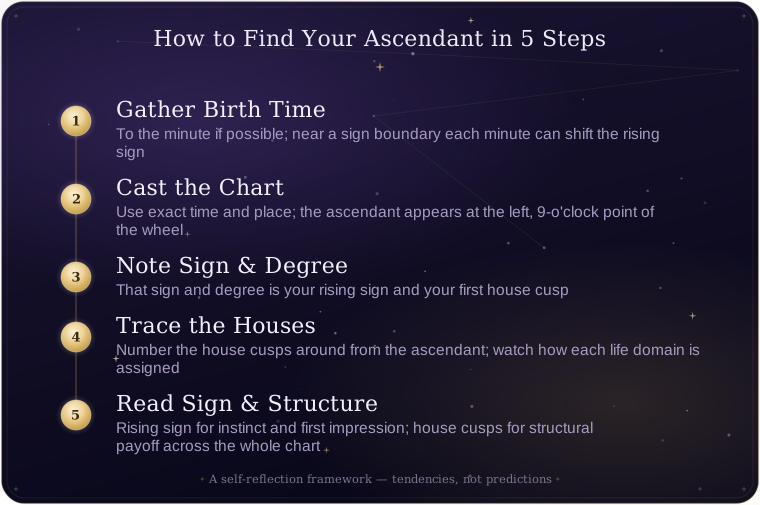
You can locate the ascendant meaning in your own chart with a few deliberate steps, and the same method works for any chart you are handed.
- Gather an accurate birth time — to the minute if you can, since the rising degree moves about one per four minutes, and near a sign's edge that drift can tip you into a different rising sign.
- Cast the chart for that exact time and place; the ascendant appears on the left, at the nine-o'clock point of the wheel.
- Note the sign and degree on that point — that is your rising sign and your first house cusp.
- Trace the house numbers around from there, watching how the ascendant fixes where each life domain begins.
- Read the rising sign for instinct and first impression, but treat the house cusps it sets as the structural payoff.
Common Misreadings
- The ascendant is just a "mask" over the real you. It is the chart's structural anchor, not a costume; it decides where every house starts, which shapes how the whole chart is read, not only how you appear.
- You can find your ascendant from your birthday alone. The rising sign moves through all twelve signs in a day, so without the time and place the ascendant meaning cannot be pinned down at all.
- A rough birth time is good enough. A small error can shift the rising sign and slide every house cusp, leaving planetary sign positions valid but house placements unreliable.
- The rising sign matters less than the sun sign. As one of the big three and the cusp of the first house, the ascendant carries structural weight the sun sign does not.
the Ascendant at a Glance
| Property | What It Is | What It Depends On | How to Observe |
|---|---|---|---|
| Rising sign | The zodiac sign on the eastern horizon at birth | Exact birth time and place | The sign at the left point of the chart wheel |
| First house cusp | The starting line of the house system | The ascendant's precise degree | Every other cusp is numbered from it |
| Time sensitivity | How fast the point moves | Roughly one degree every four minutes | The rising sign typically changes about every two hours |
| Big-three role | The outward, instinctive self | Birth time, unlike sun and moon by date | First impressions and physical bearing |
Common Questions About the Ascendant
Is the ascendant the same as the rising sign?
Yes — they name the same point. The ascendant meaning refers to the zodiac degree on the eastern horizon at your moment of birth, and "rising sign" is simply the everyday term for the sign that degree falls in. There is no difference in substance; one phrase is technical and the other is conversational, and both point to the cusp of your first house.
Why does my exact birth time matter so much?
Because the ascendant moves roughly one degree every four minutes, the whole rising sign turns over about every two hours — so on most birth times a few minutes will not change it. The exception matters: if you were born close to the boundary between two signs, a small error in the recorded time can change which sign is rising and slide every house cusp with it. Your planetary sign positions stay valid on a rough time, but the house placements — where each planet's life domain sits — become unreliable until the time is accurate.
Is the ascendant more important than the sun sign?
Neither outranks the other; they do different jobs. The sun sign describes core identity, while the ascendant anchors the house system and the instinctive, outward self. Because it sets the first house cusp, the ascendant meaning carries structural weight across the whole chart, which is why astrologers count it among the big three alongside the sun and moon.
What does the ascendant actually describe about me?
It tends to describe first impressions, physical bearing, and the reflexes that surface before conscious intention. More structurally, it fixes where your houses begin, so it shapes how every other placement is read. Held as a symbol rather than a label, the ascendant meaning speaks to how you arrive in a situation before you have decided how to respond.
Reflection Prompts
- Recall a moment when how you arrived shaped what followed — what did your instinctive first impression set in motion?
- Think of a time you assumed your sun sign was the whole story; what might shift if you read the structure underneath it instead?
- Notice where you reach for a tidy label about yourself — what does asking how you enter a room, rather than which sign you are, open up?
Related Reading
- how the twelve houses map life areas — the system the ascendant anchors from the first cusp
- rising sign vs sun sign explained — the distinction beginners most often blur
- how to read a birth chart for beginners — where the ascendant fits in the larger wheel
- worked examples by ascendant: Leo rising and the houses, Libra rising and the houses, and Scorpio rising and the houses — how one rising sign sets all twelve house cusps
Take Action
Generate your free birth chart to find your own ascendant and watch how it sets the rest of the wheel. With an accurate birth time entered, the chart shows your rising sign on the left and numbers the houses out from it, turning the ascendant meaning from an abstract idea into the visible hinge your whole chart turns on.
Sources
- Liz Greene — grounded the reading of the rising sign as a symbolic meeting point between the inner self and the world, rather than a fixed trait
- Robert Hand — known for treating the ascendant and house system as a language of meaning anchored to the precise moment of birth