What is Aura Reading?
Aura reading is the practice of sensing and interpreting the energy field that many traditions believe surrounds a living body, then matching what you notice to specific colors and the moods they stand for. At its core, it comes down to one shift: sensing energy by feel and color before sight.
- Starts with body sensation, not with anything your eyes catch
- Pairs each color with a recognizable mood, theme, or relational style
- Treats clear visual sight as the final skill, not the entry fee
For a beginner, that order is the whole game. Most people open the broader pillar page on all aura colors expecting to see a glowing outline, get nothing, and quit within a week. The felt layer comes first — a warmth, a heaviness, a quiet pull toward someone — long before a single color shows up. Treating that felt signal as the real work, rather than a warm-up to seeing, is what turns a frustrating party trick into a skill you can build at your own pace.
Why It Matters for Self-Awareness
Reading auras matters for self-awareness because the way most people start it is also the way most people quit it. They treat sight as the test, stare at a hand against a white wall, see nothing, and decide they simply don't have the gift. The skill they actually needed was never visual — it was the quieter ability to notice what a person's energy does to their own body, and to put a name to it. That naming is where the self-knowledge lives.
What gets lost in that first failed attempt is the part that builds genuine awareness over time:
- The felt signal comes first. You register a person's energy as a body response — ease, tension, a pull to lean in or step back — well before any color appears.
- Color is a label for a state, not a verdict. Naming what you sense turns a vague mood into something you can track in yourself across days and weeks.
- Quitting too early costs the insight. Beginners who push past the no-sight wall learn to read their own shifting states, not just other people's, which is the real payoff.
Picture two coworkers walking into the same tense meeting. One leaves drained and can't say why; the other noticed, the moment they sat down, that their chest tightened and their attention narrowed — a felt reading they could name and set aside. That difference is not about psychic talent. It is about whether you have practiced turning a vague bodily reaction into information you can actually use.
Aura Reading vs Adjacent Concepts: How It Works + Trade-offs
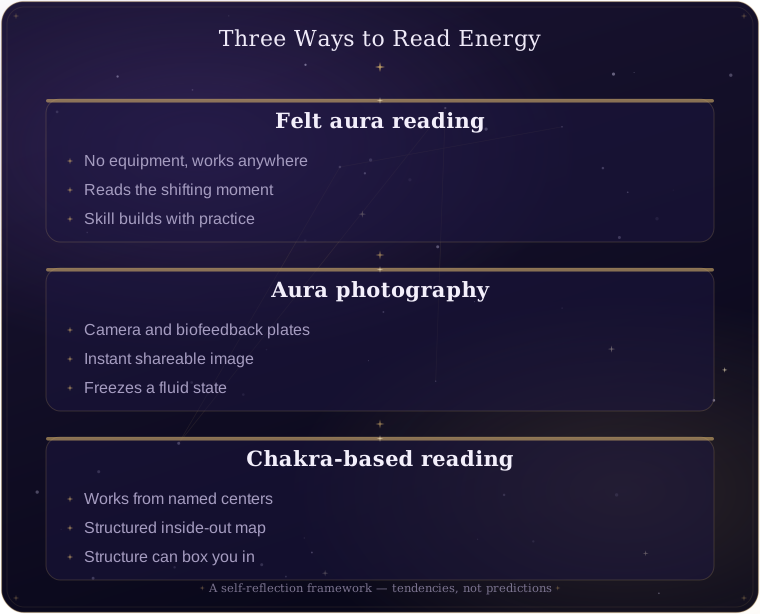
This practice is easy to confuse with two close neighbors, and the clearest way to tell them apart is to look at how each one actually works. Aura photography uses a camera and biofeedback plates to print a color image of your hand or body. The way it functions is mechanical and external, so it hands you a shareable picture in seconds — but to get that instant, objective-looking image, you sacrifice the felt skill that lets you read a room with no equipment at all. The photo can also lock a fluid state into a single frame, which is misleading when your energy shifts by the hour.
Chakra-based reading, the lineage Anodea Judith helped systematize and that early aura writers like Charles Leadbeater described long before, works from the inside out. You locate energy at named centers — the throat, the heart, the solar plexus — and interpret from there. To get that structured map, you give up some of the loose, whole-body intuition that open reading allows; the structure can box you in if you force every sensation into a named center. A practical beginner path borrows from both: use the scaffolding of a throat chakra explainer to anchor what you feel, then let the felt sense lead. The trade-off worth remembering is that no single method gives you everything — precision and looseness pull against each other, and beginners do best holding both lightly.
How to Read Aura Reading in Yourself
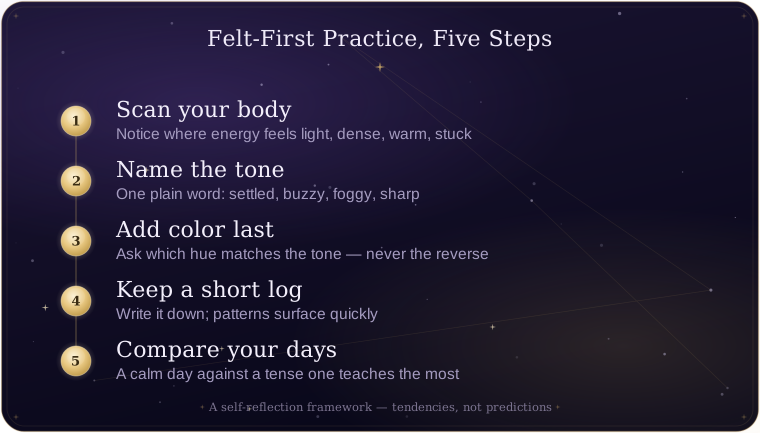
In my eight years of reading auras professionally, in the hands-on tradition Barbara Ann Brennan helped popularize, the beginners who broke through were the ones who stopped staring and started sensing. The fastest way past the no-sight wall is to read your own energy as pure sensation first, then add color last. Work in this order:
- Sit quietly and scan your own body — notice where energy feels light, dense, warm, or stuck right now.
- Name the overall tone in one plain word: settled, buzzy, foggy, sharp. That single word is your reading.
- Only now reach for color, asking which hue matches the tone you just named — never the other way around.
- Write it down for two weeks. Patterns surface quickly once you stop forcing your eyes to do the work.
- Compare a calm day with a tense one. The contrast teaches you more than any single dramatic reading ever will.
The point of the log is repetition. A felt impression you have noticed thirty times becomes a reliable signal; one you glimpsed once stays a guess. Beginners often expect a dramatic visual breakthrough, but the real shift is subtler: you start trusting the body data you were already collecting and simply ignoring.
Common Misreadings
Most beginner frustration with reading auras traces back to a handful of myths that the popular write-ups repeat and never correct. Clearing them up early saves months of feeling like you are doing it wrong:
- "If I can't see it, I can't do it." Sight is the last skill to arrive, not the price of entry — felt sensation and color association come first and carry the vast majority of real readings.
- "The color is a fixed label for who I am." A reading captures a prevailing state, not a permanent trait; the same person reads differently across moods, seasons, and weeks.
- "There must be one correct color per person." Most people register a blend, where one hue names what is loudest today and the others name what they are quietly balancing.
- "Flashy visuals mean a better reader." Quiet, consistent felt impressions are far more dependable than the occasional dramatic glimpse, which is often just tired eyes.
The thread running through all four is the same: people judge the skill by the wrong sense. Drop the demand to see, and the practice gets easier almost immediately.
Reading Auras at a Glance
| Color | How It Works | Energy Center | How to Observe |
|---|---|---|---|
| Red | Reads as raw physical drive and grounded action | Root | Notice a pull toward movement, doing, or protecting someone |
| Yellow | Reads as confidence and clear self-direction | Solar plexus | Feel a steady, sunny momentum toward your own goals |
| Green | Reads as relational warmth and care for others | Heart | Catch yourself tracking everyone's mood in a room |
| Blue | Reads as calm, expression-led communication | Throat | Watch for the urge to choose your words precisely before speaking |
| Purple | Reads as intuition and inner vision | Third eye | Sense impressions that arrive before logic can explain them |
Questions People Ask About Reading Auras
How do I start aura reading if I can't see anything?
Begin with sensation rather than sight: scan a person or yourself for warmth, tension, or a pull, then match that feeling to a color. Most readers feel the energy for months before they ever see it, so that order is completely normal.
Can my aura color change over time?
Yes — most aura literature treats color as a snapshot of a prevailing state, not a fixed trait. The same person can read differently across moods, seasons, and major life phases.
Is it the same as aura photography?
No. Photography prints a color image from biofeedback plates, while felt reading is a skill you build with no equipment and can use anywhere.
How long until I get reliable at it?
Most beginners sense dependable felt impressions within a few weeks of short daily practice. Consistent, quiet noticing builds the skill far faster than chasing dramatic visuals.
Reflection Prompts
- Think back to a recent moment when you sensed someone's mood before they said a word — what did your body register first?
- Recall a day you felt foggy or buzzy, and if you had to name that state as a single color, which one fits and why?
- Notice the next time a room's energy shifts as one person walks in — what changed for you, physically, in that instant?
Related Reading
- explainer on how to see auras with practice — the visual layer to add once your felt readings feel steady.
- overview of the seven-chakra system — the energy-center map that anchors most color interpretations.
- comparison of warm and cool aura colors — useful when a reading sits between two neighboring hues.
- Chakra (Wikipedia) — background on the energy centers behind the color framework.
Take Action
Once the felt layer clicks, the natural next step is learning to name what you sense. Explore the Aura Colors guide to decode the colors you start to sense, and that guide gives you a working vocabulary for the moods and states you have been picking up all along. Over time that vocabulary turns into a mirror: the colors you read most often in other people tend to be the ones quietly asking for your own attention, too.
Sources
- Anodea Judith — systematized the modern chakra framework that this color mapping draws on
- Charles Leadbeater — among the early writers who described aura colors and the meanings attached to them
- Barbara Ann Brennan — advanced the hands-on, felt approach to reading the human energy field