
What Is Moon in Capricorn?
Moon in Capricorn is a natal placement where the Moon — the part of the chart tied to emotions, instincts, and what makes a person feel safe — sits in the earth sign Capricorn. In plain terms, it describes someone whose emotional default is measured, self-reliant, and slow to show vulnerability. Traditional astrology grounds this with a technical fact: the Moon is in detriment here, because it rules Cancer and Capricorn is the opposite sign, so its watery, nurturing nature is running on structured, Saturn-ruled terrain. That is the doctrine behind the felt experience — deep feeling held under a lid rather than shown on demand. It sits inside the larger map covered in the pillar guide to reading a birth chart, which shows how the Moon works with everything else.
- Leads with emotional self-containment over open expression
- Ties safety to structure, responsibility, and feeling capable
- Sits in detriment, which is why the warmth reads as guarded, not absent
Why It Matters for Self-Awareness
Understanding moon in capricorn reframes traits that often get read as flaws — reserve, seriousness, a hard time asking for help — as a coherent emotional strategy rather than a shortcoming. Once someone sees that staying composed is how they steady themselves, they can decide when it serves them and when it quietly costs them.
The clarity pays off in specific moments:
- Naming a need in conflict. The instinct is to go quiet and self-manage, which reads to a partner as stonewalling. A concrete move: say the need in one flat sentence — "I need ten minutes, then I want to finish this" — so the reserve becomes information instead of a wall.
- Why rest feels hard. This placement ties safety to competence, so stopping can feel like exposure. Scheduling rest as a task — a booked block, not a spontaneous collapse — is usually the only way it gets taken, because permission rarely arrives on its own.
- Asking a partner for support. Requests feel like admitting inadequacy, so they get swallowed. Framing help as a logistics hand-off ("can you take dinner so I can catch up?") lands far easier than an open-ended emotional ask.
None of this is fixed fate. It is a starting temperament, and it sits alongside the wider role of overview of what the Moon means in a birth chart, worth reading to see how the emotional layer fits the rest of the picture.
How the Vedic Reading of This Placement Differs From the Western One
In modern Western astrology the placement is tropical: it reads emotional temperament, but not only personality — a careful Western reading also weighs the Moon's detriment, its house, its aspects, and the condition of Saturn as chart ruler before drawing conclusions. Jyotish, the classical astrology of India, measures the same Moon against the sidereal sky and sorts it into a nakshatra (a lunar mansion — one of 27 segments the Moon passes through), pushing the emphasis toward timing and circumstance.
One correction matters here, because it trips up almost every write-up. Sidereal Capricorn (roughly 270°–300° of the sidereal zodiac) contains the back of Uttara Ashadha, all of Shravana, and the first half of Dhanishta — those are the mansions for a Moon that is already sidereal Capricorn. But a tropical Capricorn Moon usually is not one of them: subtracting the ~24° ayanamsa shifts most tropical Cap Moons back into sidereal Sagittarius — into Mula or Purva Ashadha — so your Jyotish reading can land in a different sign entirely. That is exactly why you cannot stack the two systems and read them as one.
The trade-off is simple. The Western frame hands you a portable snapshot the moment you know your Moon sign, at the cost of staying broad. The Vedic frame gives timing and circumstance, but demands exact birth data and real study. Neither is wrong; they answer different questions, and merging them is what leaves readers muddled.
How to Read This Placement in Your Chart
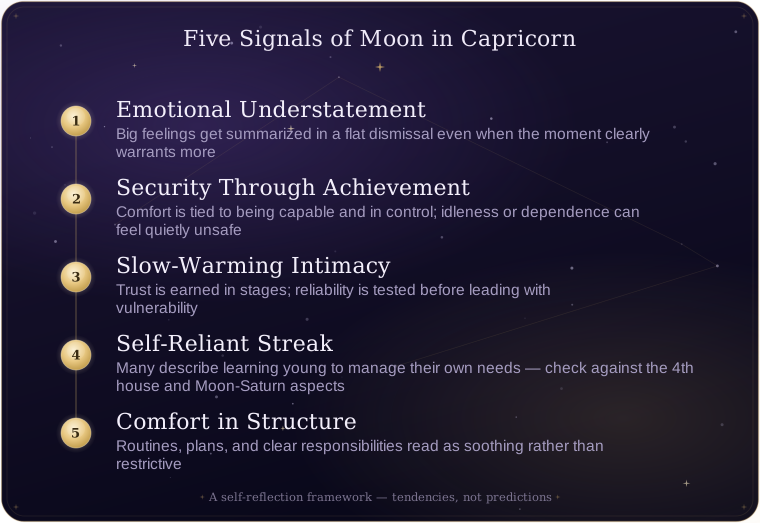
Once the theory clicks, moon in capricorn is easy to spot. Watch for these signals:
- Emotional understatement. Big feelings get summarized in a flat "I'm fine," even when the moment clearly warrants more.
- Security through achievement. Comfort is tied to being capable and in control, so idleness or dependence can feel quietly unsafe.
- Slow-warming intimacy. Trust is earned in stages; this person tests reliability before leading with vulnerability.
- A possible self-reliant streak from early on. Many describe learning young to manage their own needs — but treat this as a possibility to check, not a given. Confirm it against the 4th house, any Moon–Saturn aspect, and Saturn's overall condition before reading it as an early-responsibility story.
- Comfort in structure. Routines, plans, and clear responsibilities read as soothing rather than restrictive.
Strengths and challenges, side by side. The strengths are real: composure in a crisis, follow-through, loyalty you can bank on, and emotional stamina. The challenges are their shadow: carrying too much alone, mistaking control for safety, and struggling to name a need before it hardens into resentment. Working with the placement means using the first list on purpose and catching the second early.
Common Misreadings to Clear Up
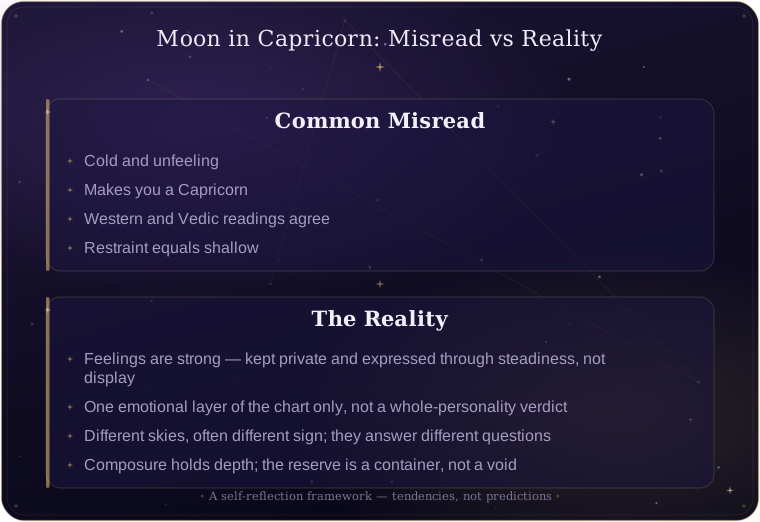
A handful of misreadings keep circulating:
- Misread: cold and unfeeling. The feelings are strong; they are kept private and expressed through steadiness rather than display.
- Misread: it makes you "a Capricorn." This is one emotional layer of the chart, not a whole-personality verdict.
- Misread: the Western and Vedic versions agree. They use different skies and often disagree, as the sidereal shift above shows.
- Misread: restraint equals shallow. Composure is a way of holding depth, not evidence there is nothing underneath.
The common thread is treating quiet as absence. The reserve is a container, not a void — read it that way and the placement stops looking like a problem to fix.
Moon in Capricorn at a Glance
| Property | How It Works | Astrological Basis | How to Observe |
|---|---|---|---|
| Emotional default | Feelings are processed privately and shown through steadiness | Moon in detriment | Calm, contained responses even in genuinely stressful moments |
| Ruling influence | Saturn lends structure, patience, and a sense of duty | Saturn rulership | A pull toward responsibility and long-term goals |
| Source of comfort | Safety is tied to competence, order, and self-reliance | Cardinal earth | Reassurance from plans, routines, and feeling capable |
| Under stress | Doubles down on control and quietly carries the load | Saturn rulership | Taking on more alone instead of asking for help |
Common Questions About Moon in Capricorn
What does moon in capricorn mean in simple terms?
It means the emotional, security-seeking part of your chart runs on restraint, structure, and self-reliance — and, technically, the Moon is in detriment here, which is why the warmth is real but guarded.
How does moon in capricorn show up in love and relationships?
It favors care through reliability and practical support over constant verbal reassurance — showing up, remembering the details, fixing the problem. Partners who need frequent spoken affection may have to ask for it directly; this placement rarely volunteers it but responds well to a clear request.
Is there a difference for men and women?
The core temperament is the same; the difference is mostly social. Reserved self-reliance is often praised in men and misread as coldness in women, so the same placement can draw very different feedback. The chart doesn't change — the audience does.
How do you work with this placement?
Use the strengths deliberately — lean on the composure and follow-through — and pre-commit to the harder moves: naming one need per conflict, scheduling rest, and treating a request for help as logistics rather than weakness.
Reflection Prompts
- Recall a recent moment when you stayed composed while feeling shaken — what were you protecting?
- Think of a time you handled something alone that you could have shared. What made asking feel unsafe?
- Name one relationship where showing care through action landed better than words — what exactly did you do?
Related Reading
- guide to the Ascendant and how it shapes first impressions — how your outward style can differ from this placement's inner reserve.
- explainer on the Moon-Saturn square aspect — a related tension between emotional need and self-control.
- Capricorn (astrology) (Wikipedia) — the astronomical and traditional profile of the sign itself.
Take Action
This is not a clinical interpretation or mental health advice.
Run your own chart and locate your Moon to see how this placement actually plays out for you. Explore Astrology Tools maps your Moon's sign, house, and aspects in one place — and once you can see why you guard your feelings the way you do, you can choose when that steadiness protects you and when it is worth letting someone in.
Sources
- Brihat Parashara Hora Shastra, the classical Sanskrit compendium attributed to the sage Parashara that sets out the Jyotish framework for Moon and nakshatra interpretation.
- B. V. Raman, Hindu Predictive Astrology — a twentieth-century standard that carried classical Vedic chart reading into modern practice.