
What Is Rodri Birth Chart?
Rodri birth chart is a symbolic map of the sky at the reported moment of the footballer's birth, read here through Jyotish — the classical astrology of India. Treated honestly, it works as a symbolic snapshot of planetary positions read as archetype, not achievement. A chart like this is best used as an interpretive lens, part of the wider practice covered in pillar guide on how to read a birth chart, rather than as a record of trophies or matches. It maps the twelve bhavas (houses, or areas of life) and the grahas (planets, the moving symbols) that classical Sanskrit texts, from Parashara onward, assign meaning to, then asks what story those symbols tell. Each symbol is treated as an invitation to reflect, never as evidence about a match or a medal.
- Frames the chart as archetype and cultural narrative, never as biographical proof
- Uses Jyotish houses and planets as symbols, kept separate from Western astrology
- Reads tendencies and recurring themes rather than fixed outcomes or predictions
Why It Matters for Self-Awareness
Studying a public figure's Rodri birth chart matters because it gives readers a low-stakes way to practice symbolic thinking before turning to their own chart. When the subject is famous, it is tempting to treat every placement as an explanation for what they did on the field. The more useful move is the opposite: to notice how the same symbols could describe patience, timing, or a quiet steadiness in anyone's life, including yours. Reading it in the modern interpretive tradition carried by B. V. Raman keeps the focus on character themes rather than outcomes.
That habit pays off in a few concrete ways:
- It separates symbol from résumé. You learn to ask what an archetype means on its own terms, not whether it "matches" a career you already admire.
- It rehearses fairness. The same steady reading you give a stranger's chart is the reading you can then give your own guide to the ascendant, without flattering or judging yourself.
- It reframes tension. Placements often described as heavy — Saturn's discipline, for instance — become themes to reflect on rather than warnings to fear.
Many people come to astrology hoping a chart will confirm a story they already believe about someone. A symbolic reading asks a gentler question: what tendencies does this arrangement point toward, and where might a person feel that pull in ordinary moments — a slow decision, a held boundary, a preference for structure over flash? Practicing that question on a familiar name makes it far easier to ask it honestly when the chart in front of you is your own.
A Symbolic Profile vs Biographical Proof
Rodri birth chart sits at the meeting point of two things people constantly blend: a symbolic profile and a biographical claim. A symbolic profile describes archetypes — the classical significations of planets and houses that Varahamihira helped systematize — and how they tend to express. A biographical claim says a placement caused a real event. Here is how it works: Jyotish assigns meaning to each graha and bhava, and the reader interprets the pattern; the chart never reaches out and verifies a fact about a career.
To get the richness of a living symbol, you give up the comfort of proof. Read as biography, the chart looks impressive whenever it seems to match, and quietly ignores whatever does not; read as symbol, it stays honest but never claims to forecast a title. Choosing symbolic depth over apparent proof gets you a reading you can trust, but you lose the false certainty that a chart "explains" anyone.
There is a second line worth keeping clear. Vedic and Western astrology rely on different zodiac calculations, so a reading of this chart in Jyotish will not line up placement-for-placement with a Western one. Blending the two systems, or blending symbol with proof, is where most of the confusion around any celebrity chart begins.
How to Read Rodri's Chart Symbolically
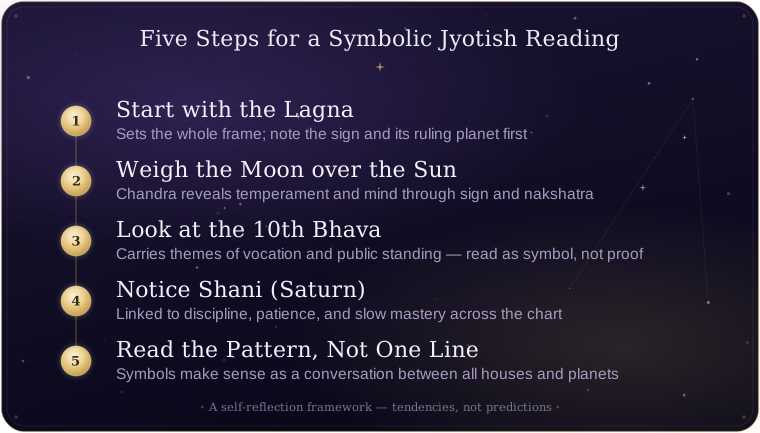
A symbolic reading of Rodri birth chart looks for a few recurring signals rather than a single verdict. In my own decade as a second-generation Jyotish practitioner working through classical Sanskrit texts, I treat these as starting points for reflection, not fixed labels:
- Start with the Lagna (ascendant). The Lagna sets the whole frame; note the sign and its ruling planet, since they color how every other symbol reads.
- Weigh the Moon over the Sun. Jyotish leans on the Chandra (Moon) for temperament and mind, so its sign and nakshatra (lunar mansion) often say more about inner character than the Sun.
- Look at the 10th bhava. The tenth house carries themes of visible work and public standing; read it as symbolism about vocation, not as a guarantee of fame.
- Notice Shani (Saturn). Saturn is traditionally linked to discipline, patience, and slow mastery — a fitting theme to reflect on, whoever the chart belongs to.
- Read the pattern, not one line. No single placement decides anything; the symbols only make sense as a conversation between houses and planets.
Common Misreadings
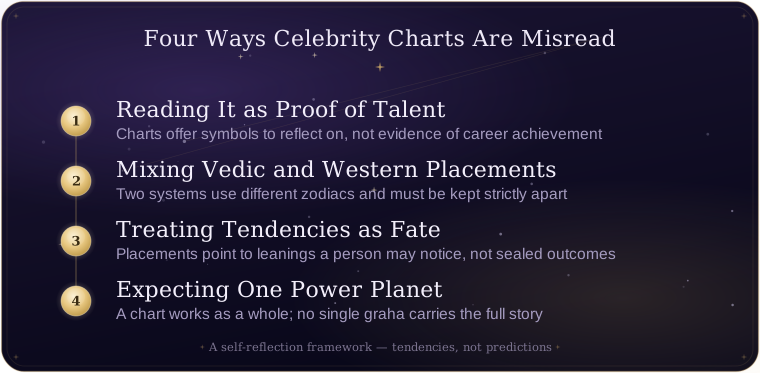
Each misreading shares the same root error: the chart is treated as a verdict about a person rather than a set of symbols open to interpretation. Most quick takes on his chart go wrong in the same few ways, and each one collapses symbol into fact:
- Reading it as proof of talent. The misread says the chart explains his success; the honest read says it offers symbols to reflect on and cannot verify a career.
- Mixing Vedic and Western placements. People often quote a Western solar placement beside Vedic houses. The two systems use different zodiacs and should be kept apart.
- Treating tendencies as fate. A placement described as patient does not mean anyone is destined for anything; the reading points to leanings a person may notice, not sealed outcomes.
- Expecting one "power planet." Beginners hunt for the single symbol that "made" him. A chart works as a whole; no lone graha carries the story.
Rodri's Chart at a Glance
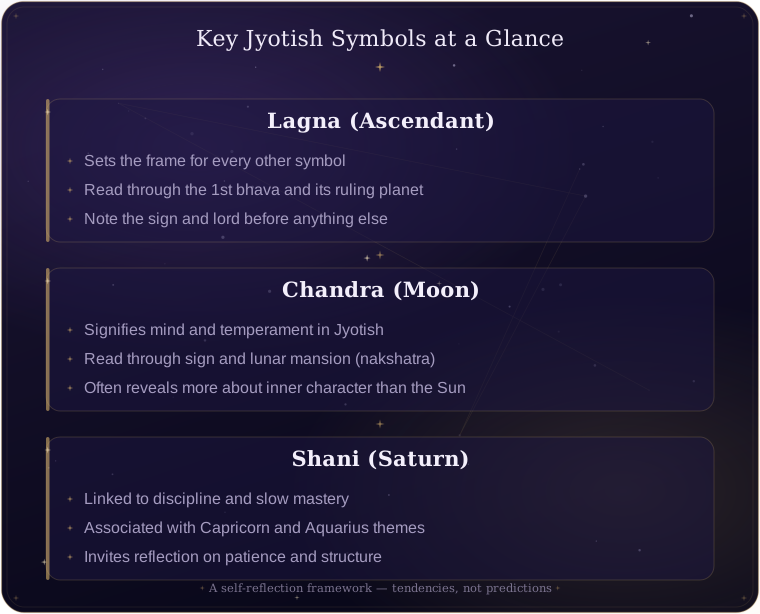
| Property | How It Works | Energy Center | How to Observe |
|---|---|---|---|
| Lagna (ascendant) | Sets the frame every other symbol is read against | 1st bhava and its ruling planet | Note the Lagna sign and its ruling planet first |
| Chandra (Moon) | Signifies mind and temperament in Jyotish | 4th bhava themes, nakshatra | Look at the Moon's sign and lunar mansion |
| 10th bhava | Carries symbolism of vocation and public standing | Career and status house | Read it as recurring theme, not proof of fame |
| Shani (Saturn) | Traditionally linked to discipline and slow mastery | Capricorn and Aquarius signification | Notice patience and structure themes across the chart |
Common Questions About Rodri's Chart
Is Rodri birth chart proof of his football ability?
No. A chart is a symbolic profile, not evidence about a career. It offers archetypes to reflect on and cannot confirm or measure any real-world achievement.
Does this reading use Vedic or Western astrology?
It uses Jyotish, the Vedic system. Vedic and Western charts rely on different zodiac calculations, so their placements will not match, and the two should not be mixed.
Can a birth chart predict someone's future success?
Jyotish here describes tendencies and themes, not fixed outcomes. It points to leanings a person may notice rather than guaranteed events.
Why read a famous person's chart at all?
A well-known chart is a low-stakes way to practice symbolic interpretation. The habit you build reading it transfers directly to reading your own chart more fairly.
Reflection Prompts
- Think of a recent moment when patience, not speed, gave you the outcome you wanted — what made you wait?
- Recall a time you judged someone by their résumé; how might their symbols read differently to you?
- Notice where you seek proof before trusting a pattern already showing up in your own life.
Related Reading
- explainer on the twelve houses in a birth chart — deepens how each bhava carries its own themes.
- comparison of Vedic and Western astrology — clarifies why the two systems produce different placements.
- Hindu astrology (Wikipedia) — overview of the system's history and structure.
Take Action
This is not a clinical interpretation or mental health advice.
Generate your free birth chart to explore Rodri birth chart. In minutes you get your own Jyotish placements mapped out in front of you — the same houses and planets read symbolically above. From there, you can start noticing which archetypes describe your own patience, timing, and sense of purpose, and read your story as symbol rather than scoreboard.
Sources
- Parashara — foundational sage whose framework of houses and planetary significations underlies classical Jyotish.
- Varahamihira — classical author who helped systematize the planetary symbolism this reading draws on.
- B. V. Raman — practitioner who carried Jyotish interpretation into modern practice with a focus on character themes.