
What Is Spain vs France World Cup 2026 Astrology?
Spain vs France World Cup 2026 astrology is a symbolic way of reading the fixture through the national birth charts of Spain and France, the standout signatures in key players' charts, and the transits hanging over the 2026 tournament. In plain terms, it treats the meeting of two footballing cultures as a story told through astrological symbols, not a prediction of the result.
- Reads each side as an archetype pulled from its national chart, not a win probability
- Leans on player chart signatures and the Jupiter-in-Cancer 2026 backdrop to set the mood
- Stops well short of forecasting a winner, an expected-goals figure, or a final score
This reading sits under the broader pillar guide on how to read a birth chart, which maps the houses, signs, and placements the whole approach leans on. None of it competes with tactics, form guides, or the bookmakers. It runs alongside them as cultural commentary with an astrological accent — a way of talking about temperament, rivalry, and timing that adds texture to the match rather than trying to settle it. Fans who look this up are usually after exactly that: a richer story for ninety minutes, not a shortcut to the outcome.
Why It Matters for Self-Awareness
Understanding Spain vs France World Cup 2026 astrology matters because it hands fans a way to hold a rivalry as meaning rather than as a coin toss. Most people who search for this already know the odds and the probable lineups; what they're missing is a frame that makes the emotional weight of the match legible. A lot of the pull toward a fixture like this is really about identity — which style of play you admire, which national story you find yourself rooting for — and a symbolic reading gives that feeling somewhere to land. The value shows up in a few concrete ways:
- A richer way to watch. Reading each team as a set of symbols gives you something to notice beyond the scoreline — style, mood, and the feel of a national footballing identity that a stats page can't capture.
- A mirror for your own loyalties. Naming why you lean toward one archetype over the other can surface what you actually value, whether that's flair, discipline, resilience, or the underdog's defiance.
- A gentler relationship with outcomes. When the point is the story, a bad result stings a little less, and you might notice how much of your weekend mood you've quietly staked on a football match.
- A shared language with other fans. Trading archetype reads — one side as the composed favorite, the other as the expressive challenger — gives a rivalry conversation more texture than arguing over odds.
Used this way, the lens becomes a small exercise in self-reflection. It asks what you project onto eleven strangers in matching shirts, and why a game between two nations can end up feeling so personal. That question tends to outlast the final whistle.
Spain vs France World Cup 2026 Astrology vs Match-Outcome Prediction: Where the Framing Stops
The neighbor people most often blur this with is match-outcome prediction — the attempt to squeeze a winner out of the charts. Spain vs France World Cup 2026 astrology and outcome prediction start from the exact same raw material, the national charts and the tournament transits, yet they pull in opposite directions. Separating them is the single most useful move a reader can make.
How Each One Actually Works
Symbolic reading works by treating placements as archetypes and metaphors. A stellium becomes a theme, a transit becomes a mood, and a national chart becomes a character with a temperament you can describe. It builds on the cyclic, mundane tradition Dane Rudhyar helped shape and the archetypal style Liz Greene is known for, where the chart maps tendencies and pressures rather than handing down verdicts. Outcome prediction runs the opposite way: it tries to collapse those same rich symbols into a binary — win or lose — that astrology's own interpretive tradition never promised to deliver.
That difference in how it works is not a small technicality. One approach stays inside what the symbols can honestly carry; the other borrows the authority of astrology to make a claim the practice was never built to make.
What You Trade for Each
The trade-off is worth stating plainly. To get honesty and cultural depth, you sacrifice the thrill of a confident call — symbolic reading will simply never name who lifts the trophy. To get a tidy prediction, you sacrifice credibility, because you are forcing a language of tendencies to behave like a betting model. A rule from transit interpretation in the lineage of Robert Hand travels well here: a transit colors the timing, it does not dictate the event. Choose the symbolic route and you trade certainty for meaning you can actually stand behind.
How to Read the Fixture Through Both National Charts
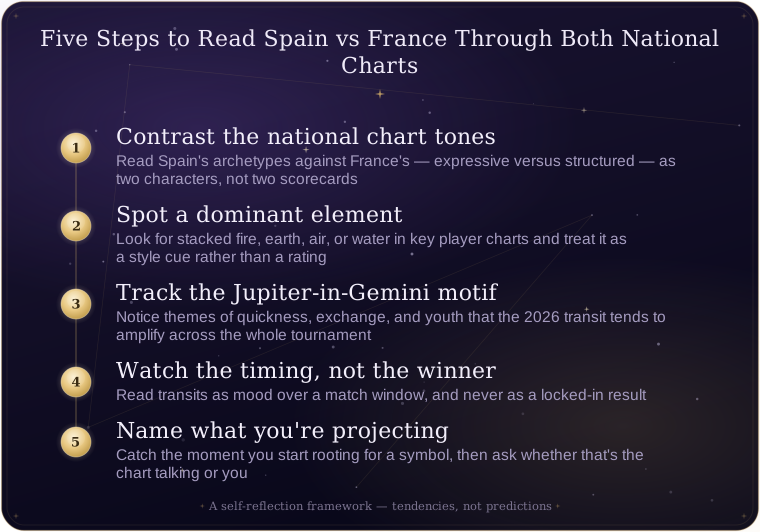
Reading Spain vs France World Cup 2026 astrology in practice means hunting for signatures you can actually point to, then holding them loosely. According to NASA, Jupiter takes about twelve years to orbit the Sun, so its 2026 pass through Cancer is a shared backdrop both teams play under — a natural place to begin. Work through these observable cues:
- Contrast the national chart tones. Read Spain's chart archetypes against France's — expressive versus structured, say — as two characters, not two scorecards.
- Spot a dominant element. Look for stacked fire, earth, air, or water in key player charts and treat it as a style cue rather than a rating.
- Track the Jupiter-in-Cancer motif. Notice themes of belonging, protection, and shared feeling that the transit can evoke across the tournament.
- Watch the timing, not the winner. Read transits as mood over a match window, and never as a locked-in result.
- Name what you're projecting. Catch the moment you start rooting for a symbol, then ask whether that's the chart talking or you.
None of these cues needs to be right to be useful; each one simply gives you a more interesting way to watch the game unfold.
Common Misreadings
Most quick takes on this topic stumble in the same handful of places, usually because they want the charts to do something the charts can't. Naming the misreadings keeps the whole exercise honest and stops it drifting into fortune-telling.
- "The charts predict the winner." They don't. This reading describes temperament and timing, and it makes no claim on the final score.
- "A stronger chart means a stronger team." There is no cosmic league table. A chart is a character sketch, not a power rating you can rank.
- "One transit decides the match." A transit sets a mood over a window of time; it can't override form, tactics, or a shot that clips a defender and loops in.
- "National astrology is destiny." A country's chart is a symbolic portrait, not a fixed fate its players are somehow locked into.
Keep those four in view and the reading stays where it belongs: an interpretive lens for enjoying the fixture, never a substitute for the match itself.
Spain vs France 2026 at a Glance
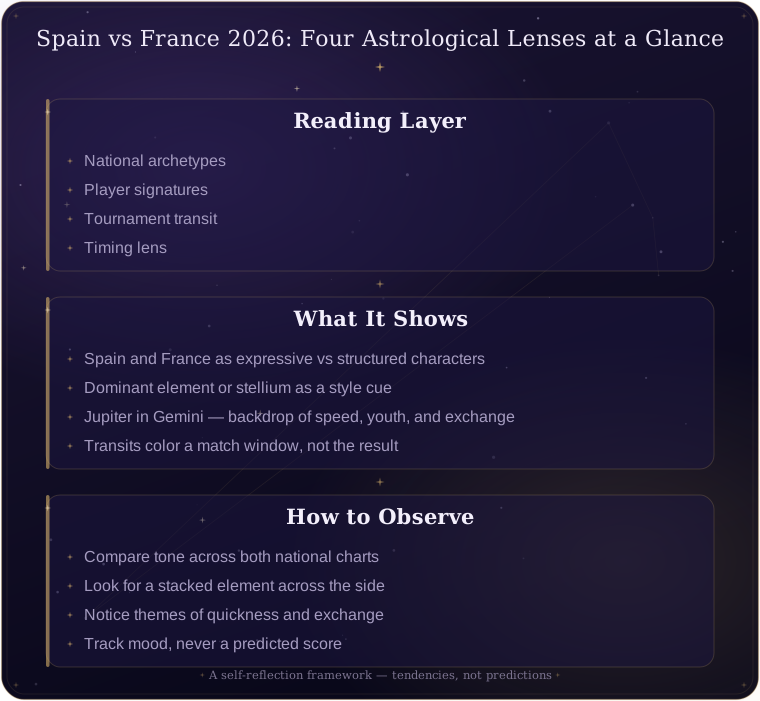
| Property | How It Works | Chart Signature | How to Observe |
|---|---|---|---|
| National archetypes | Reads each country's chart as a character | Spain and France national charts | Compare tone: expressive vs structured |
| Player signatures | Turns standout placements into style cues | Dominant element or stellium in key charts | Look for a stacked element across the side |
| Tournament transit | Sets a shared mood over the event | Jupiter in Cancer, 2026 | Notice themes of belonging, protection, and shared feeling |
| Timing lens | Colors a match window, not the result | Transits to the national charts | Track mood, never a predicted score |
Questions Fans Keep Asking About the Charts
Can astrology predict who wins Spain vs France at the World Cup 2026?
No. This reading interprets temperament, style, and timing, not results. Anyone selling a guaranteed winner from a chart is stepping outside what astrology's own tradition claims to do.
What does the Jupiter-in-Cancer transit mean for the 2026 tournament?
Jupiter in Cancer is read as a backdrop of belonging, protection, and shared feeling that both teams share. It works as a mood over the event, not a factor that quietly favors one side.
Is a national birth chart a real thing in astrology?
Yes, in mundane astrology a nation is given a chart based on a founding moment. Reading nations through charts is commonly traced to Babylonian and Hellenistic practice, and it stays symbolic rather than literal.
How is this different from a betting tip?
A betting tip commits to an outcome; this framing deliberately doesn't. It offers a cultural story to enjoy alongside the match, not a wager to place.
Reflection Prompts
- Think of a recent match that hurt to lose — what did you project onto that team before kickoff?
- When you pick a side in this fixture, which archetype pulls you: flair, discipline, or the underdog?
- Recall a moment your mood rode on a result — what story were you really watching for?
Related Reading
- World Cup 2026 astrology overview — the hub this fixture page branches from, tying every team reading together.
- Jupiter guide — background on the Jupiter-in-Cancer motif that frames the whole tournament.
- guide to rising sign and ascendant meaning — how a chart's rising sign shapes the "character" this reading leans on.
- 2026 FIFA World Cup (Wikipedia) — neutral context on the event itself.
- Jupiter (Wikipedia) — the planet whose orbit sets the twelve-year cycle referenced above.
Take Action
Ready to see the symbolism for yourself? Generate your free birth chart to explore Spain vs France World Cup 2026 astrology, and you get a full map of the placements and transits behind the reading. Once you can spot your own signatures, the rivalry stops being something that happens to you and becomes a story you can actually read.
Sources
- Dane Rudhyar — shaped the cyclic, person-centered approach to reading astrological cycles that underlies mundane and transit work
- Liz Greene — advanced the archetypal, psychological style of chart interpretation this reading borrows
- Robert Hand — clarified how transits color timing rather than dictate events