
What Is The Most Common Mbti Types for Each Zodiac Sign?
The Most Common MBTI Types for Each Zodiac Sign is a symbolic sign-to-type comparison, not a personality verdict. It pairs familiar zodiac archetypes with MBTI styles that people often associate with them in popular culture. The point is to compare languages for personality, not to claim that a birthday determines someone’s type.
- Uses zodiac signs as broad symbolic patterns rather than fixed diagnoses
- Treats MBTI labels as preferences and habits, not a complete identity
- Leaves room for upbringing, culture, choices, and the rest of a birth chart
A sign-level pairing starts with a simple contrast: Aries is often read as direct and fast-moving, while Taurus is often read as steady and practical. That can make ESTP or ENTJ feel like a recognizable Aries match, and ISTJ or ISFJ feel familiar for Taurus. A fuller pillar page on how to read a birth chart adds houses, planets, and aspects that can change the picture considerably.
Why It Matters for Self-Awareness
Understanding The Most Common MBTI Types for Each Zodiac Sign matters when a person recognizes part of themselves in a sign description but not the whole stereotype. Someone with a quiet Aries Sun, for example, may relate to initiative without relating to constant boldness. Someone who identifies with an INFP description may still have a highly social, expressive side. The pairing can give language to those tensions: private versus visible, spontaneous versus deliberate, harmony-seeking versus candid.
It is most useful in everyday situations where people are trying to name a pattern rather than pass judgment. A Libra who hesitates before choosing may notice a wish to keep relationships balanced; an ESFJ framework may describe the outward caretaking, while the sign archetype highlights the relational setting. The rising sign meaning page is helpful here because a rising sign often describes first impressions and social style more directly than a Sun sign alone. Used lightly, these comparisons can turn “Why do I act differently in different rooms?” into a more specific question about context.
Zodiac Sign Archetypes vs Full Birth Charts: What Changes
The Most Common MBTI Types for Each Zodiac Sign differs from a full birth chart because it begins with one symbolic layer: the Sun sign. A full chart considers the Moon, rising sign, Mercury, Mars, Venus, houses, and aspects. The sign-to-type format works by giving a quick cultural shorthand, while chart reading looks for patterns among several placements. To get a fast, memorable comparison, you sacrifice the detail that explains why two people with the same Sun sign can behave very differently.
A second distinction is between personality language and astrological symbolism. MBTI descriptions focus on reported preferences in attention, decision-making, and social energy; zodiac archetypes use elemental and seasonal imagery. Neither should be used as proof that a person must act one way. To get a clean category such as “Scorpio resembles INTJ,” you sacrifice the nuance of a person whose chart has strong fire placements or whose behavior is shaped by their environment. A square aspect meaning can add friction or drive that a Sun-sign-only comparison misses.
The trade-off is practical. Use a sign-and-type pairing when you want a light prompt for reflection or conversation. Use a full chart when the question is about conflicting traits, repeating relationship patterns, or the difference between private feelings and public behavior.
How to Read MBTI-Zodiac Pairings in Your Chart
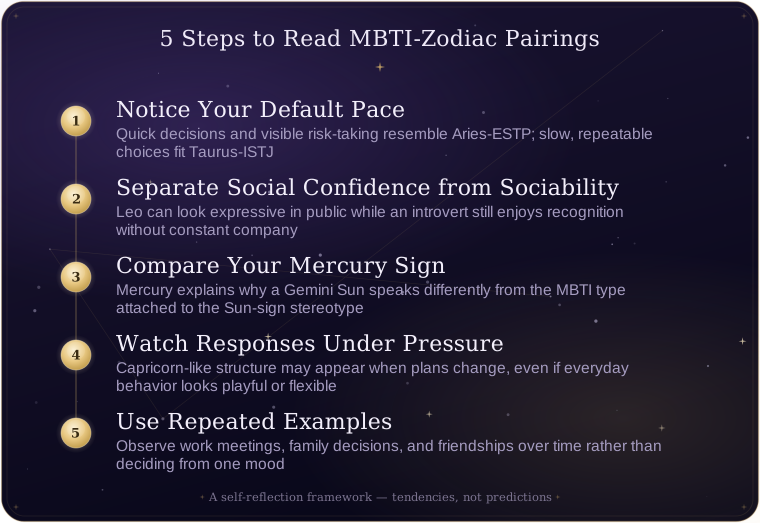
To read The Most Common MBTI Types for Each Zodiac Sign with more care, start with observations that can be checked against real behavior instead of picking the most flattering label.
- Notice your default pace. Quick decisions and visible risk-taking may resemble Aries-ESTP imagery; slow, repeatable choices may fit Taurus-ISTJ imagery better.
- Separate social confidence from sociability. Leo can look expressive in public, yet an introverted person may still enjoy recognition without wanting constant company.
- Compare your Mercury sign. Mercury is often used for communication style, so it can explain why a Gemini Sun speaks differently from the type attached to the Sun-sign stereotype.
- Watch your responses under pressure. A Capricorn-like preference for structure may appear when plans change, even if everyday behavior looks playful or flexible.
- Use repeated examples. Look at work meetings, family decisions, and friendships over time instead of deciding from one mood or one online quiz.
Common Misreadings
Several shortcuts make these pairings less useful than they could be:
- “Every Aries is an ESTP.” Aries is associated with initiative, but initiative can appear through many MBTI styles, including quieter forms of leadership.
- “MBTI proves zodiac traits.” The two systems use different assumptions and vocabularies; a resemblance is an interpretive comparison, not evidence of cause.
- “One sign explains the whole personality.” Sun signs are only one part of astrology, and people also bring lived experience, values, and changing circumstances.
- “The most common pairing is a population statistic.” In this context, “most common” usually means culturally repeated or symbolically familiar, not a verified count of all people born under a sign.
Zodiac and MBTI Pairings at a Glance
| Zodiac Sign | Commonly Associated MBTI Types | How It Works | Energy Center | How to Observe |
|---|---|---|---|---|
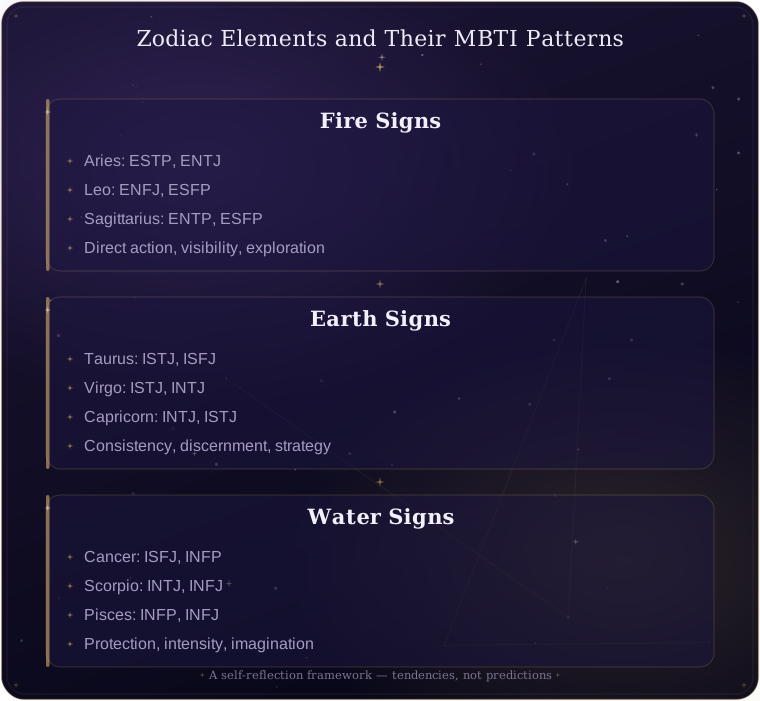
| Aries | ESTP, ENTJ | Direct action and competition are often compared with assertive, fast-response styles. | Fire element / first house themes | Notice how quickly you initiate when a group hesitates. |
| Taurus | ISTJ, ISFJ | Consistency, comfort, and follow-through are often linked with dependable preferences. | Earth element / second house themes | Watch whether stability guides purchases, routines, and commitments. |
| Gemini | ENTP, ENFP | Curiosity and verbal variety are often matched with exploratory, idea-led styles. | Air element / third house themes | Notice how you gather information and shift between topics. |
| Cancer | ISFJ, INFP | Protection, memory, and emotional attunement are often compared with caring inner styles. | Water element / fourth house themes | Observe what makes a place, friendship, or ritual feel safe. |
| Leo | ENFJ, ESFP | Visibility and creative warmth are often matched with expressive, people-facing styles. | Fire element / fifth house themes | Notice whether you energize a room through play, praise, or performance. |
| Virgo | ISTJ, INTJ | Discernment and improvement are often connected with orderly, analytical habits. | Earth element / sixth house themes | Track how you handle details, deadlines, and small errors. |
| Libra | ESFJ, ENFP | Social balance and shared taste are often paired with relationship-aware styles. | Air element / seventh house themes | Notice how you make choices when another person’s needs are involved. |
| Scorpio | INTJ, INFJ | Privacy, intensity, and pattern-reading are often compared with inwardly focused types. | Water element / eighth house themes | Observe how long you consider trust before disclosing something personal. |
| Sagittarius | ENTP, ESFP | Exploration and candor are often linked with novelty-seeking, expansive styles. | Fire element / ninth house themes | Notice whether new ideas, travel, or debate restore your interest. |
| Capricorn | INTJ, ISTJ | Strategy and responsibility are often paired with long-range, structured preferences. | Earth element / tenth house themes | Watch how you define progress when no one is praising the effort. |
| Aquarius | INTP, ENTP | Independent thinking and group ideals are often matched with conceptual styles. | Air element / eleventh house themes | Notice whether you challenge a rule because it seems inefficient or unfair. |
| Pisces | INFP, INFJ | Imagination and porous boundaries are often compared with reflective, meaning-led styles. | Water element / twelfth house themes | Observe how music, stories, and atmosphere influence your choices. |
Questions About Zodiac and MBTI Pairings
Are zodiac and MBTI pairings accurate for everyone?
No. They are broad symbolic associations, and no pairing can account for a whole person’s chart, history, or behavior. They work best as prompts for comparison rather than labels to defend.
Why do I match my MBTI type but not my zodiac sign stereotype?
A Sun sign is only one astrological factor, while MBTI descriptions focus on a different set of preferences. Your rising sign, Moon, Mercury, and personal circumstances may make the usual Sun-sign image feel incomplete.
Can two people with the same zodiac sign have different MBTI types?
Yes. People with the same Sun sign can differ in temperament, priorities, communication, and life experience. In astrology, their other chart placements may also emphasize very different themes.
Should I use a zodiac-MBTI pairing to make relationship decisions?
It can offer a conversation starter about differences in pace, communication, or values. It should not replace direct discussion, consent, or attention to how the relationship actually feels and functions.
Reflection Prompts
- Think of a recent decision: did your pace resemble the sign stereotype, the MBTI description, or neither?
- Recall a group conversation where your public style differed from your private preference.
- Think of a recurring conflict and identify whether it involves timing, communication, trust, or expectations.
Related Reading
- guide to zodiac houses — House placement adds context to the life area where a sign’s themes are most visible.
- Serena Williams's birth chart — A named chart example shows how several placements can coexist beyond a Sun-sign shorthand.
This is not a clinical interpretation or mental health advice.
Take Action
Write down one sign-based description and one MBTI description that both feel partly true. The result is a short comparison list that separates repeated behavior from a label that only sounds appealing. That distinction can make self-awareness more honest, especially when a simple type or sign begins to feel too small. Explore Astrology Tools
Sources
- CHANI — publishes introductory astrology resources that distinguish sign-based material from broader birth-chart reading.