
What Is Venus in Taurus?
Venus in Taurus is a birth-chart placement that describes a steady, sensory way of relating to love, pleasure, money, and taste. It pairs Venus, the planet of attraction and values, with Taurus, a fixed earth sign tied to patience and tangible comfort. At its core it builds attraction on consistency, physical touch, and things made to last rather than on novelty or drama. A guide to reading a birth chart helps you place it beside the Moon, Sun, houses, and aspects instead of treating one placement as the whole person.
- Attraction is slow-burn: interest grows through repeated closeness, not instant sparks
- Affection flows through the body — food, touch, nature, and physical comfort
- Loyalty runs deep, with a matching slowness to commit and, later, slowness to leave
In traditional astrology Venus rules Taurus, so the planet expresses its usual themes here with unusual ease. That symbolic fit describes a recognizable pull toward the dependable, but it does not decide how a person acts in any specific relationship or purchase.
Why It Matters for Self-Awareness
Venus in Taurus gives language to the gap between wanting affection and needing a bond to feel dependable. Someone with this placement often notices that a lavish evening means little without follow-through the next week, or that a home-cooked meal, a well-made jacket, and a kept promise carry more weight than a flood of compliments. In dating it can look like a preference for a steady rhythm — regular time together, predictable plans — over a stop-start chase. In spending it can look like saving for one durable piece instead of many quick buys, or building a home that feels good to touch and sit in.
As an illustration, picture someone who keeps the same worn leather wallet for a decade, cooks the same Sunday meal for a partner year after year, and takes months to say "I love you" — then, once said, means it for good. That is Venus in Taurus in ordinary clothes: attraction and value expressed through repetition, texture, and staying power rather than grand announcements.
Treated as a pattern to watch rather than a verdict, the placement helps separate a real desire for stability from the habit of clinging to the familiar. That difference surfaces in intimacy, where physical reassurance may matter more than talking things through, and in conflict, where a partner usually needs a concrete, predictable action — a plan, a repair, a shown-up-for date — rather than a promise. Self-awareness comes from naming the value under the behavior and asking whether the current habit still serves it.
Venus in Taurus vs. Venus Mahadasha: Different Jobs in a Reading
These describe two different things, and mixing them muddies a reading. Venus in Taurus is a natal placement: the sign Venus held at birth and the style it colors for good. A Venus Mahadasha is a timing period in Vedic astrology, used to mark when Venusian themes come forward in a life — a matter of when, not what. One clause is worth flagging: the Mahadasha system is sidereal, and in a sidereal chart Venus often falls in a different sign than it does in the tropical zodiac this article uses, so the two are not simply the same Venus wearing two labels. For natal meaning, stay with the tropical placement and read it beside the house Venus occupies and the aspects it makes; a supportive guide to trine aspects involving Venus softens its expression, while a hard aspect adds friction, but neither replaces the core sign meaning. Timing questions belong to the dasha and its own chart context.
How to Read Venus in Taurus in Your Chart
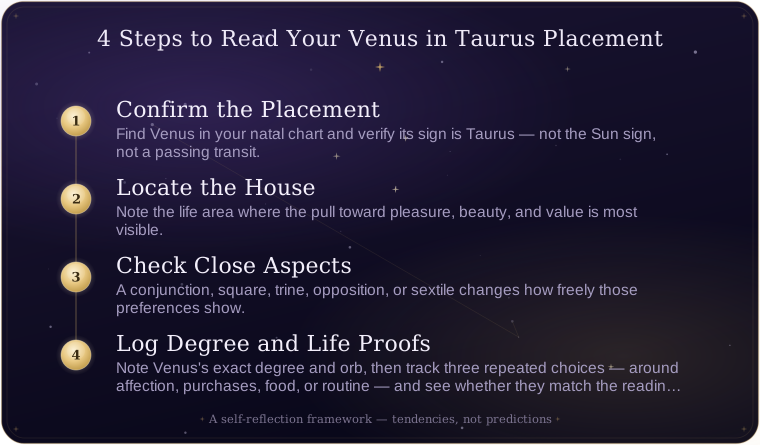
Read the placement by checking a few concrete points before spinning it into a story about romance or money:
- Confirm the placement. Find Venus in the natal chart and verify its sign is Taurus — not the Sun sign, not a passing transit.
- Locate the house. Note the life area where the pull toward pleasure, beauty, and value is most visible.
- Check close aspects. A conjunction, square, trine, opposition, or sextile changes how freely those preferences show.
- Log the degree and three life proofs. Note Venus's exact degree and orb, then track three repeated choices — around affection, purchases, food, or routine — and see whether they match the reading.
A person might love luxury yet have Venus in a house that points that energy at work, friendship, or study; the sign alone cannot pick the stage. A tense aspect can add strain around desire without erasing the steady pull. The strongest reading comes from patterns that recur across ordinary decisions, and it sharpens when you check it against what you actually do rather than forcing every preference into one tidy personality.
Common Misreadings
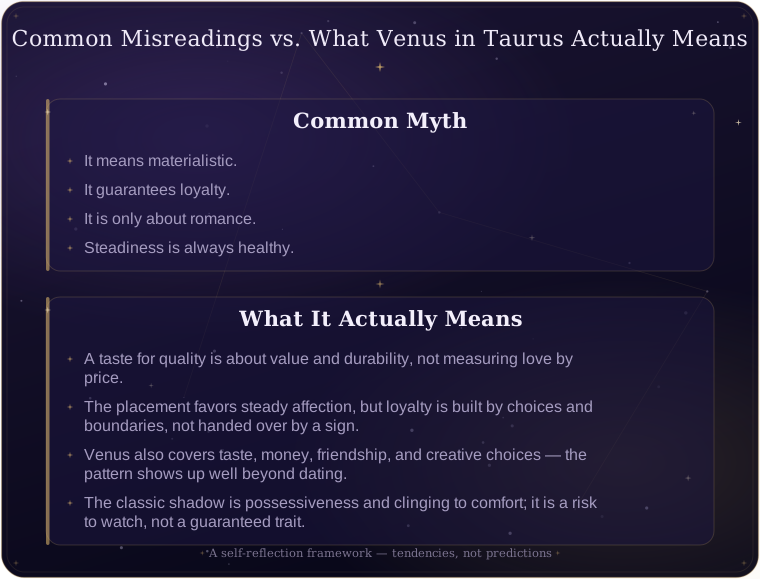
Several shortcuts make a Taurus Venus sound narrower than it is:
- "It means materialistic." A taste for quality is not measuring love by price; the real theme is value and durability.
- "It guarantees loyalty." The placement favors steady affection, but loyalty is built by choices and boundaries, not handed over by a sign.
- "It is only about romance." Venus also covers taste, money, friendship, and creative choices, so the pattern shows up well beyond dating.
- "Steadiness is always healthy." The classic Taurus-Venus shadow is possessiveness — jealousy, clinging to comfort, and stubborn attachment that outlasts its usefulness. Naming it matters, but bound it: it is a risk to watch, not a guaranteed trait, and it strengthens or fades with the rest of the chart.
Read the placement as a style of valuing, then test that style against its house, aspects, and real behavior. That leaves room for people who are sensual but frugal, devoted yet changeable elsewhere, or traditional in taste without being rigid.
Venus in Taurus at a Glance
| Property | How It Works | Chart Basis | How to Observe |
|---|---|---|---|
| Element | Earth favors what can be built, kept, and felt through the senses. | Earth sign — grounded and sensory | Notice whether durability and touch shape choices. |
| Mode | Fixed energy holds a steady pace once a preference sets in. | Fixed sign — continuity | Watch how readily a valued routine changes. |
| Venus themes | Attraction, taste, and money run through Taurus priorities. | Venus rules Taurus (domicile) | Compare gifts, spending, and ways of showing care. |
| Chart context | Houses and aspects say where and how the style appears. | Natal house + aspects; second-house themes only if Venus sits in the 2nd | Read the placement beside nearby factors. |
Questions About a Taurus Venus Placement
Is Taurus Venus a strong placement?
Venus is in domicile — its own sign of rulership — in Taurus, not in exaltation (that is Pisces). Rulership means the planet expresses its themes with dignity and ease. But dignity describes symbolic condition, not outcome: it does not promise that love or money will run smoothly, which depends on the whole chart and on real choices.
How does Taurus Venus show affection?
Usually through consistency, practical help, physical warmth, remembered preferences, and unhurried time together. Gifts tend toward the tactile and well-made over the flashy. The house and aspects say which of these read loudest.
Who is Venus in Taurus compatible with?
It tends to harmonize with earthy Venus placements such as Virgo and Capricorn, which share its steadiness, and with water placements such as Cancer and Pisces, which welcome its physical care; it can chafe against restless or fiercely independent Venus styles that read slowness as inertia. Compatibility is a whole-chart question, so treat this as a starting hypothesis, not a rule.
What about a Venus Mahadasha?
That is a Vedic timing period, a separate topic from the natal sign, and because it is sidereal the Venus sign there may differ from the tropical Taurus placement. Keep timing questions with the dasha and its own chart.
Why can this placement resist change in relationships?
Familiarity can feel especially safe, which makes abrupt shifts hard to welcome. Ask whether the steadiness is protecting a real value or just preserving a pattern that no longer fits.
Reflection Prompts
- Think of a recent purchase you were glad to keep — what quality made it feel worth more than its price?
- Recall a moment when steady follow-through mattered more than a grand gesture — what did you need to see?
- In your last conflict with a partner, what concrete, predictable action would have reassured you more than words?
Related Reading
- meaning of the second house — Context for the chart area tied to resources, values, and self-worth.
- guide to square aspects — Helps separate a sign placement from the friction an aspect can add.
Take Action
Open a birth-chart calculator and enter accurate birth details, including the time if you have it. A correct chart keeps Venus, its house, and its aspects from being confused with generic Taurus descriptions. Then check three things directly — which house Venus occupies, the aspects it makes, and its exact degree and orb — and log three pieces of real-life evidence, such as a purchase, a way you showed care, and a moment of conflict, that either confirm or complicate the reading.
The aim is not a fixed label but a clearer view of what you protect, what you enjoy, and what kind of reliability feels honest in your life.
This is not a clinical interpretation or mental health advice.
Generate Your Free Birth Chart
Sources
- Dane Rudhyar — a person-centered approach to reading each placement within the whole chart; cited here for that interpretive method, not as a source for the specific traits described above.