
What Is the Vera Wang Birth Chart?
Vera Wang birth chart is a symbolic map of the sky at the moment of her birth, read as a cultural portrait of a bridal-design icon rather than proof that astrology shaped her career. Born on June 27, 1949, Wang carries a Cancer Sun — the sign of home, care, and emotional security — but the chart doesn't stop there. Because Mercury, Venus, and Mars barely move across a single day, we can name them without a confirmed birth time: her Venus also falls in Cancer, while Mercury and Mars sit in quick-witted Gemini. The Moon is the exception — it travels 12–13° a day and can change signs before nightfall, so a Cancer Moon is only fan-shared, unconfirmed until a birth time settles it. That double-Cancer weight, echoing a life built around weddings and milestone moments, is the real thread this reading follows — part of the wider craft covered in the pillar guide on how to read a birth chart.
- Sun and Venus in Cancer — a strong pull toward home, protection, and emotional bonds; a Cancer Moon is often shared by fans but stays unconfirmed without a birth time
- Mercury and Mars in Gemini — a fast, versatile, editorial cast of mind
- The fast-moving Moon, the ascendant, houses, and Midheaven all need her unconfirmed birth time, so those stay provisional
Why It Matters for Self-Awareness
Reading the Vera Wang birth chart matters because a well-known chart becomes an accessible mirror. It lets you watch an archetype — here, a Cancer Sun reinforced by Venus — express itself in a public life, then ask where the same theme lives in your own placements. Roughly 29% of U.S. adults tell Pew Research they believe in astrology, and celebrity charts are often the first door people walk through. A figure you already have context for makes abstract symbolism concrete, because you can hold the interpretation against a life you already know something about. That framing — placements as tendencies, not destiny — reflects the person-centered tradition Dane Rudhyar established and the later psychological work of Liz Greene.
For most readers, the value lands in three ways:
- Archetype over biography. You learn to read her Cancer emphasis as a cluster of tendencies — care, protectiveness, memory — not a script that guaranteed a design empire.
- Pattern recognition. Seeing how a placement reads in a familiar figure trains you to spot the same pattern in your own chart, family, or relationships.
- The edge of the tool. A public chart makes it obvious where interpretation stops, since you can compare the symbolism against outcomes that already happened.
The Full Birth Chart vs the Sun Sign: What Actually Differs
The Vera Wang birth chart differs from her zodiac sign in scope, and blurring the two is the most common mistake readers make. A Sun sign is a single placement — Cancer — while the full chart layers the Moon, the planets, the houses, and the angles into one picture.
The Sun sign is fast and portable: one archetype from a birth date, no birth time required. The cost is depth — a Cancer Sun alone says nothing about how she communicates or what she values. Her full chart fills that in: a fan-shared but unconfirmed Cancer Moon would deepen the emotional register, Cancer Venus sets her taste toward romance and tenderness, and Gemini Mercury and Mars add a restless, articulate drive. What still needs a confirmed birth time is broader than people assume — the fast-moving Moon along with the ascendant, houses, and Midheaven, plus a planet caught exactly on a sign boundary. The rising sign in particular reshapes everything else, which is why the guide to the ascendant and rising sign meaning changes how the rest of the chart is read.
How to Read Vera Wang's Natal Chart Symbolically
You don't need her birth time to reach a meaningful read. Work from the placements her birth date fixes, and treat everything time-dependent as an open question.
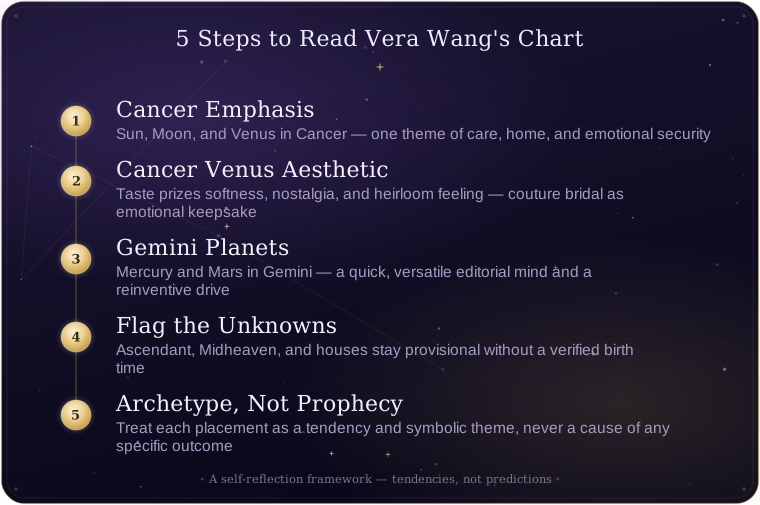
- Start with the Cancer emphasis. Sun and Venus in Cancer point to one theme — care, home, emotional security — and it echoes across her life: she trained as a competitive figure skater, spent roughly sixteen years as a senior fashion editor at Vogue, then founded her own bridal label at forty. The late, deliberate bloom reads as Cancer patience more than sudden luck.
- Read Cancer Venus for her aesthetic. Venus here prizes softness, nostalgia, and heirloom feeling — a lens that reframes her couture bridal work as emotional keepsake rather than runway spectacle. It is the chart's sharpest hook: where a Libra or Leo Venus might chase symmetry or drama, Cancer Venus reaches for tenderness and memory, which is exactly the register a wedding gown lives in. The value she places on ceremony and belonging shows up as clothing built to be kept, wept over, and handed down.
- Add the Gemini planets. Mercury and Mars in Gemini fit an editor's quick, verbal mind and a drive that reinvented itself from rink to magazine to atelier.
- Flag the unknowns. Mark the fast-moving Moon along with the ascendant, Midheaven, and houses as unresolved until a verified birth time surfaces.
- Read for archetype, not prophecy. Treat each placement in the chart as a tendency, never a cause of any specific outcome.
Common Misreadings
Most popular takes flatten her chart into a single deterministic story. The recurring errors are easy to correct:
- "Her Cancer Sun explains the bridal empire." In reality, the chart offers symbolic resonance, not causation. Plenty of Cancer Suns never touch fashion at all.
- "The zodiac sign is the whole chart." In reality, Cancer is one placement; her Cancer Venus and her Gemini Mercury and Mars all shift the reading.
- "We can state her rising sign with confidence." In reality, without a verified birth time, any ascendant claim is guesswork dressed up as fact.
- "A chart validates her life choices." In reality, astrology describes tendencies and archetypes — it doesn't endorse or explain a biography.
Vera Wang's Chart at a Glance
| Placement | How It Works | Ruling Element / House | How to Observe |
|---|---|---|---|
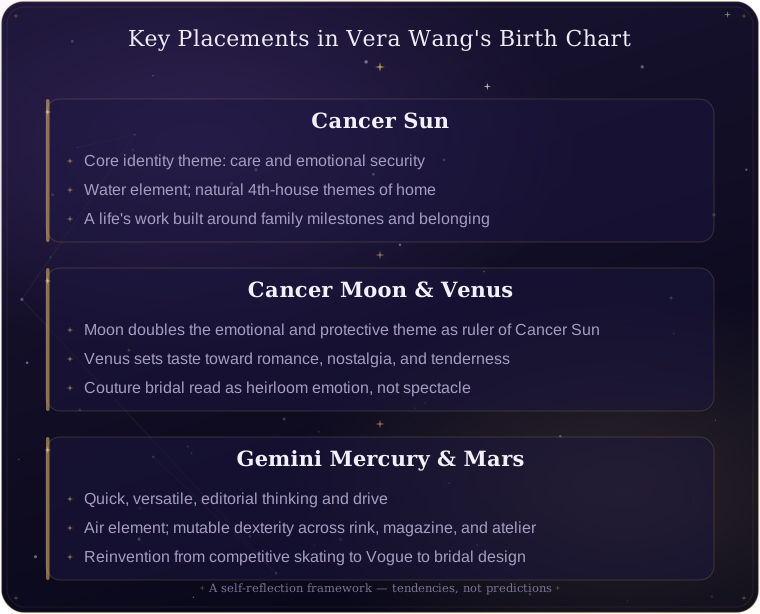
| Cancer Sun | Sets the core identity theme of care and emotional security | Water element; natural 4th-house themes of home | A life's work built around family milestones and belonging |
| Moon (sign unconfirmed) | Emotional rhythm and instinct; fans often place it in Cancer, but the fast-moving Moon needs a birth time to confirm | Water; the Moon rules Cancer | Treat any sign as provisional until a verified time appears |
| Cancer Venus | Taste and values steeped in romance, nostalgia, and tenderness | Water; Venus by sign here | Couture bridal read as heirloom emotion, not spectacle |
| Gemini Mercury & Mars | Quick, versatile, editorial thinking and drive | Air; mutable dexterity | Years shaping words at Vogue; reinvention rink to runway |
| Rising sign | Frames how the whole chart presents itself | Depends on an unknown birth time | Treat as provisional until a verified time appears |
Questions People Ask About Vera Wang's Chart
What zodiac sign is shown in the Vera Wang birth chart?
Her birth date of June 27, 1949 puts the Sun in Cancer — and Venus joins it there, a strong Cancer emphasis tied to home, care, and emotional security. Mercury and Mars sit in Gemini. The Moon may also fall in Cancer, but because it can change signs within a day, that stays unconfirmed without a birth time.
Can we actually know her rising sign?
Not reliably, because a rising sign requires an accurate birth time, which isn't publicly confirmed. Any ascendant stated online is an educated guess rather than a verified fact.
Does her chart explain her success as a designer?
No — astrology reads as symbolic pattern, not cause. The chart offers a cultural portrait, while her career reflects skill, work, and circumstance.
How is a birth chart different from a horoscope?
A birth chart is the fixed map of the sky at your birth, while a horoscope is a short-term forecast based on current transits. The chart is the foundation that the daily reading draws from.
Reflection Prompts
- Think of a recent moment when caring for someone at home felt more urgent than any outside goal — what did that protectiveness reveal?
- Recall a time you were reduced to a single label; how did the fuller picture of you differ from that snapshot?
- Notice when you last treated a personality read as destiny — what changed once you held it as a tendency instead?
Related Reading
- guide to the twelve houses in a birth chart — how houses would refine her provisional placements once a birth time is confirmed.
- explainer on Cancer Sun sign traits — a closer look at the archetype that anchors this reading.
- overview of major aspects like the trine and square — how planets connect, which shapes any full chart interpretation.
- Vera Wang (Wikipedia)
- Cancer (astrology) (Wikipedia)
Take Action
Generate your free birth chart with this free birth chart generator to map your own Sun, Moon, and rising the same way this profile maps hers. You'll come away with a personalized chart of the archetypes you carry — and, reading it beside a public figure's placements, a clearer sense of where astrology's symbolism ends and your own choices begin.
Sources
- Dane Rudhyar — pioneered the person-centered, psychological reading of the birth chart as symbolic pattern rather than fixed fate
- Liz Greene — developed the modern psychological approach that treats placements as tendencies rather than guaranteed outcomes