
What Is Zendaya's Birth Chart?
A Zendaya birth chart is a snapshot of the sky at her birth, read for archetypal themes rather than a record of her achievements. Born September 1, 1996, she carries a Virgo Sun in the tropical zodiac that most Western astrologers use — the rashi, or zodiac sign, that colors her core expression. Public chart databases list her birth time as 6:01 PM, which gives common tropical calculations an Aquarius ascendant and a readable house layout, so any honest Zendaya birth chart still works best as an interpretive sketch, not a finished portrait. It sits alongside the broader pillar guide on how to read a birth chart, which explains how the pieces fit together.
- Reads each placement as a symbolic theme, not proof of biography
- Anchored on a Virgo Sun plus a public 6:01 PM birth time used for full-chart calculations
- Works as a mirror for reflection rather than a fixed prediction
Why It Matters for Self-Awareness
Understanding a Zendaya birth chart matters because it gives you a low-stakes way to practice symbolic thinking on someone you already have a feel for. When a placement like a Virgo Sun lines up with a public persona known for precision and craft, you get a clean example of how astrology names a tendency — a leaning — without claiming that outcome was inevitable. That distinction is the whole point: a graha (planet) marks emphasis, not destiny.
The payoff for your own reflection is practical. According to a 2017 Pew Research Center survey, about 29% of U.S. adults said they believed in astrology, which is part of why celebrity charts travel so widely and get copied so carelessly. Studying a familiar chart trains the eye you then turn on yourself — noticing where you lead with detail, where you quietly crave the stage, and where genuine care can tip into self-criticism. Reading the ascendant meaning explainer alongside it shows how much a recorded birth time sharpens the whole picture. The skill you build here is separating a tendency-based reading from a fatalistic one, and that habit carries straight into how you talk about your own patterns.
Tropical vs Sidereal: Reading the Same Chart Two Ways
The chart looks genuinely different depending on which zodiac you use, and this is where most online confusion starts.
How the two systems work
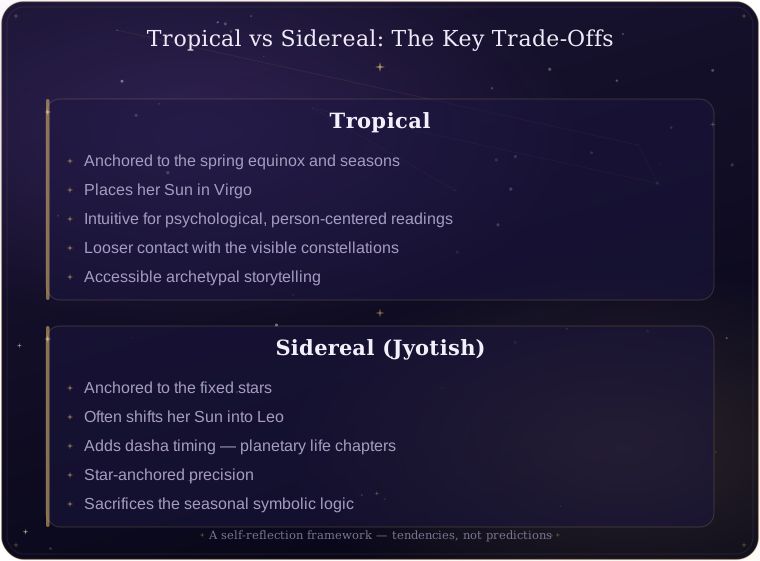
Western astrology reads the chart in the tropical zodiac, which is tied to the seasons and anchored to the spring equinox. That system places her Sun in Virgo. Vedic astrology — Jyotish, literally the "science of light" — uses the sidereal zodiac, tied to the fixed stars, and its offset of roughly 24 degrees often shifts an early-Virgo Sun back into Leo. Same person, same sky, two different named signs. Neither is wrong; they simply measure from different starting points.
Building on the framework Parashara established and later carried into modern practice by B. V. Raman, the sidereal system also adds timing tools like the dasha — planetary periods that divide a life into chapters ruled by different planets. In my own work as a second-generation Jyotish practitioner, I treat neither chart as the "true" one; each is a distinct lens, and quietly blending them is what produces the contradictory placements you see quoted around the web.
What each one costs you
Here is the trade-off stated plainly. The tropical system keeps the chart aligned with the seasonal calendar, which makes psychological, person-centered readings intuitive; the cost is looser contact with the visible constellations. The sidereal system tracks the actual stars and layers in dasha timing, but to get that precision you sacrifice the seasonal symbolism Western readers rely on.
The practical rule follows from that: never mix the two systems silently. Choosing tropical over sidereal gets you an accessible archetypal story, but you lose sidereal's star-anchored timing. Choosing sidereal gets you that timing, but you lose the seasonal logic Western readers find so readable. Decide which one you are speaking before you interpret a single placement.
How to Read Zendaya's Birth Chart Without Overclaiming
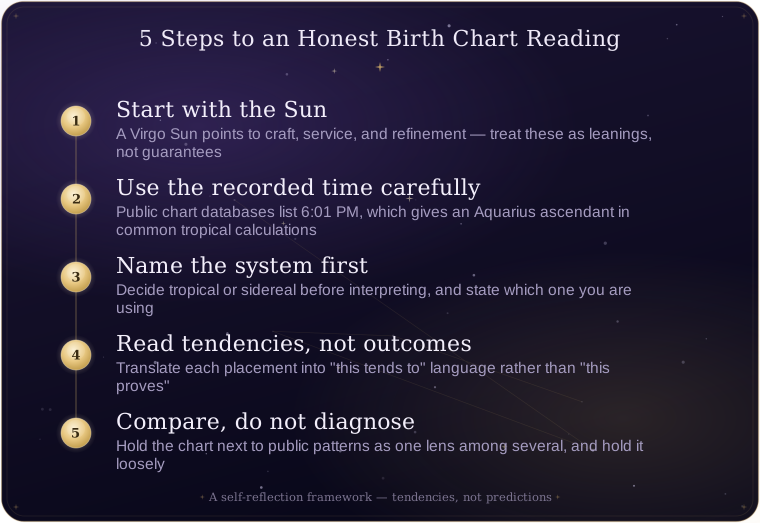
To read a Zendaya birth chart the way this page suggests, treat every placement as a theme to test against what you can already observe, never as a verdict. A few concrete moves keep the reading honest:
- Start with the Sun placement. A Virgo Sun points to themes of craft, service, and refinement — watch for them as leanings, not guarantees.
- Use the recorded time carefully. Public chart databases list 6:01 PM, which gives an Aquarius ascendant in common tropical calculations, but the meaning of that setup is still interpretive.
- Name the system first. Decide tropical or sidereal before interpreting, and state which one you are using.
- Read tendencies, not outcomes. Translate each placement into "this tends to" language rather than "this proves."
- Compare, do not diagnose. Hold the chart next to public patterns as one lens among several, and hold it loosely.
Common Misreadings
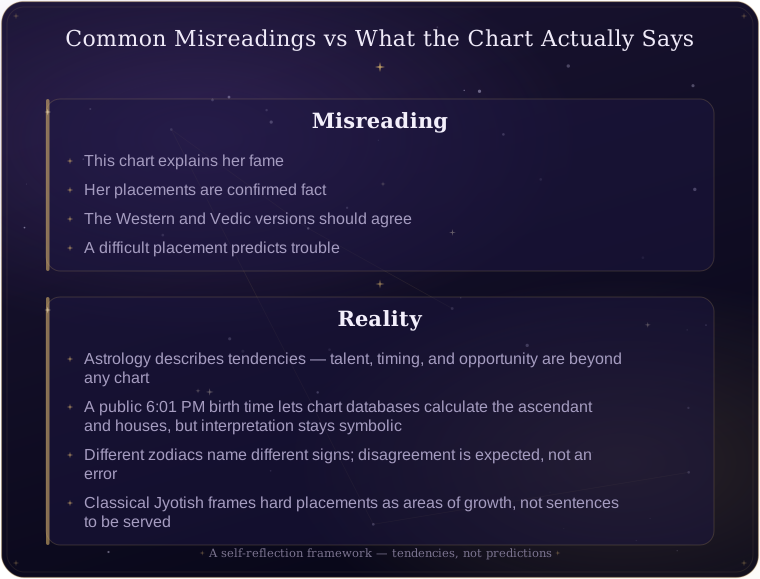
The popular versions of a Zendaya birth chart go wrong in a few predictable ways, and each one blurs symbolic reading with biographical claim. Here are the Zendaya birth chart mistakes worth correcting:
- Misreading: this chart explains her fame. Reality: astrology describes symbolic tendencies and cannot account for talent, timing, or opportunity.
- Misreading: her placements are confirmed fact. Reality: a public 6:01 PM birth time lets chart databases calculate the ascendant and houses, but the meaning of those placements is still symbolic rather than literal proof.
- Misreading: the Western and Vedic versions of this chart should agree. Reality: they use different zodiacs and often name different signs, which is expected rather than an error.
- Misreading: a "difficult" placement predicts trouble. Reality: classical Jyotish frames hard placements as areas of growth, not as sentences to be served.
Zendaya's Birth Chart at a Glance
| Property | How It Works | Energy Center | How to Observe |
|---|---|---|---|
| Sun placement (Virgo, tropical) | Anchors core identity and style of expression | Earth element, mutable quality | Look for themes of craft, precision, and service |
| Moon placement | Colors emotional needs and private instincts | Fast-moving, highly time-sensitive | Needs an accurate birth time to place reliably |
| Ascendant / lagna | Sets the whole house layout and first impression | Public 6:01 PM data yields Aquarius in common tropical charts | Read symbolically, not as biography |
| Chart ruler | Ties the chart together through the ascendant | Follows once the recorded time fixes the ascendant | Read only after naming your system |
Common Questions About Zendaya's Birth Chart
What is Zendaya's zodiac sign?
Born September 1, 1996, she has a Virgo Sun in the tropical zodiac most Western astrologers use. In the sidereal zodiac of Vedic astrology, that same Sun often reads as Leo instead.
Do we actually know Zendaya's ascendant?
Public chart databases list a 6:01 PM birth time, which yields an Aquarius ascendant in common tropical calculations. The time is public; the part that stays interpretive is what that ascendant means, not whether the chart can calculate one.
Can a birth chart explain Zendaya's success?
No. A chart describes symbolic tendencies, not outcomes like fame, which involve talent, timing, and circumstances far beyond any single placement.
Why do different sites list different placements for her?
Mostly because they mix tropical and sidereal systems, switch house logic, or interpret the same 6:01 PM record through different rule sets. Naming the system first clears up most of the apparent disagreement.
Reflection Prompts
- Think of a recent moment when you assumed a trait was fixed in you — could it be a tendency you can work with instead?
- Recall a time you judged your own attention to detail — did it help the situation, or tip into self-criticism?
- Name one label others often give you that feels more like a costume than the real you.
Related Reading
These pages go deeper on ideas a Zendaya birth chart reading only touches:
- guide to the lunar nodes in a birth chart — covers the karmic axis a fuller Zendaya birth chart reading would add.
- Serena Williams's birth chart profile — another real birth chart read for archetypal themes, a useful comparison for a Zendaya birth chart.
- Zendaya (Wikipedia) — for the biographical facts a Zendaya birth chart does not cover.
- Hindu astrology (Wikipedia) — context on the Jyotish tradition referenced above.
Take Action
Astrology like this is a mirror for reflection, not a diagnosis. This Zendaya birth chart is not a clinical interpretation or mental health advice.
Generate your free birth chart to explore how the same symbolic method applies to you — the output is a full placement map of your own Sun, Moon, and ascendant, laid out the same tendency-first way, and reading yours beside a familiar Zendaya birth chart is often where you first notice which patterns you want to lean into and which you would rather rework. Start with the free astrology birth chart calculator.
Sources
- Parashara — classical sage credited with the foundational Jyotish teachings this sidereal reading draws on
- B. V. Raman — modern scholar who carried classical Vedic astrology into contemporary practice