
What is Ajna Chakra?
Ajna chakra is the sixth energy center in the traditional chakra map, sitting at the brow, just above and between the eyebrows, and it is usually described as the seat of inner perception, clear seeing, and discernment. In the older yogic accounts it is the brow or third-eye center, the place where two channels of subtle energy are said to meet before reaching the crown. Modern teachers, building on the framework Anodea Judith systematized, frame it as the part of you that notices a pattern before you can explain it, then checks that hunch against what you actually know. This sits within the wider pillar overview of the chakra system, which maps how each center relates to the next. The whole point of working with the brow center is not to chase visions but to read the difference between a real signal and a loud, repeating thought.
- Centered on perception and discernment rather than emotion or willpower
- Located at the brow, the sixth center in the standard seven-center system
- Often confused with forced "awakening" when it is really about quiet clarity
Why It Matters for Self-Awareness
Understanding ajna chakra matters because most people who search for it are stuck on the wrong problem. They have read that the third eye is a gateway to sudden insight, so they strain to force it open, then feel like they are failing when nothing dramatic happens. The friction is real, and it shows up in a few recognizable ways:
- The forcing trap. People push for a flash of certainty, and the harder they push, the noisier their head gets, which feels like the opposite of clear seeing.
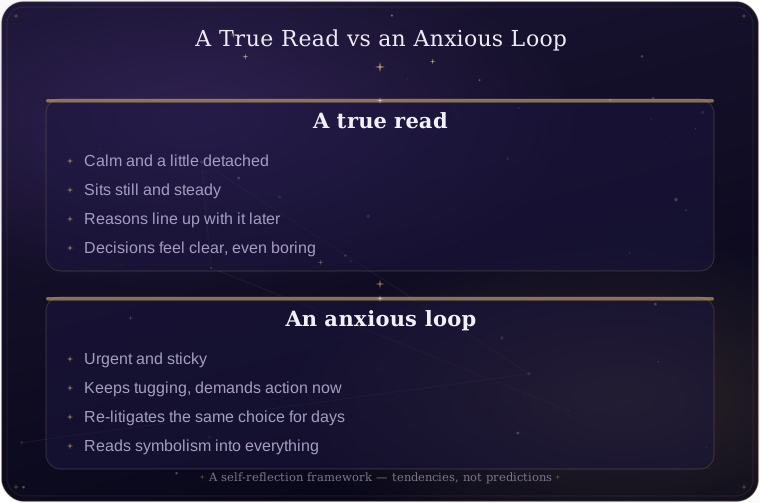
- The overthinking mistake. Genuine discernment feels calm and a little detached; anxious looping feels urgent and sticky. People who work with this center slowly learn to feel which one is running.
- The skeptic's worry. Some readers half-believe the framework and feel silly for it. You can treat the brow center as a self-awareness vocabulary without ever claiming it predicts anything.
Reading the brow center the grounded way gives you a tool to tell a true read apart from mental noise, and that distinction is the practical payoff. It carries into ordinary days in concrete ways. Picture a job offer that looks great on paper while something quietly nags at you, or a new friend everyone loves while a small part of you stays cautious, or a deadline you keep agreeing to even though your gut says it is too tight.
The grounded reading does not tell you any of those nags are destiny. It tells you to slow down, name the signal, and check it against what you actually know before you decide. That habit is the difference between a hunch you can use and an anxious story you keep re-running, and it is the skill most searchers were actually looking for when they typed the brow center into a search bar.
Ajna Chakra vs Adjacent Concepts: How It Works + Trade-offs
Ajna chakra is easiest to understand against the centers nearest to it, because the real differences are differences in how each one works. In the seven-center model that Charles Leadbeater helped popularize, the brow center governs perception and judgment, so it tends to step back and observe, and that distance is exactly what gives it clarity. Compared with the crown center above it, the brow stays grounded in interpreting what you sense, while the crown leans toward a more open, less defined awareness.
The sharpest contrast is with the throat center just below it, which carries expression and voice. Working through the throat center, you turn an inner sense into clear words, and you trade some of the brow's quiet certainty for the risk of speaking before the insight has settled. To get the precision of clear inner seeing, you sacrifice the immediate relief of saying something out loud right away. The reverse trade also holds: lead with expression and you gain momentum, but you lose the pause where discernment actually happens. Read this way, the brow center is the part that watches and weighs, and its strength is also its cost, because it can sit so long in observation that it forgets to act.
How to Spot the Brow Center in Yourself
You do not need a special state to notice this center at work; it shows up in plain moments of judgment. A few practical signals make the brow chakra easier to spot in real life:
- The quiet "no" before the reasons. You sense something is off about a plan or a person before you can list why, and later the reasons line up with the hunch.
- The calm scan. In a busy meeting or a crowded commute, you can step back and read the room without getting pulled into the mood of it.
- The difference you can feel. A true read sits still and steady; a worried loop keeps tugging at you and demanding action right now.
- The settled decision. When discernment is leading, choices feel clear and a little boring; when it is blocked, you keep re-litigating the same choice for days.
- The strain signal. If you are squinting for symbolism in everything, that is usually an over-active brow center scattering, not opening.
Common Misreadings
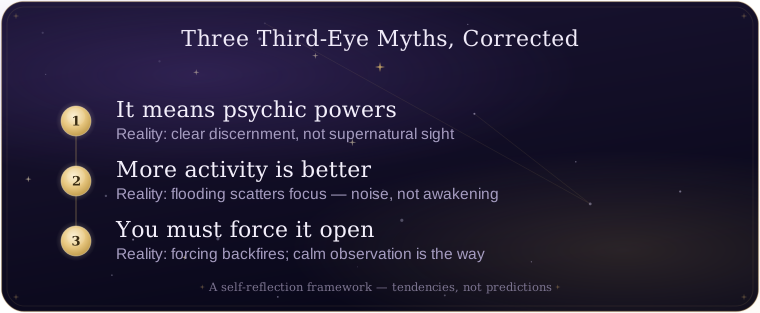
The popular write-ups push readers toward a few specific misreads of the brow chakra, and each one keeps people stuck on the friction that sent them searching. Corrected one by one:
- "It means psychic powers." The misread: an open third eye hands you supernatural sight. The reality: ajna chakra is described as clear discernment, telling a real signal from a stray thought, not magic.
- "More activity is better." The misread: a buzzing, hyper-active third eye is a sign of progress. The reality: an over-active brow center scatters focus, so flooding feels like awakening but reads as noise.
- "You have to force it open." The misread: straining and special techniques pry it open. The reality: forcing usually backfires, and the calmer, observing state is what the tradition actually points to.
The Brow Center at a Glance
| Property | How It Works | Energy Center | How to Observe |
|---|---|---|---|
| Core function | Filters perception into clear judgment | Brow / third-eye center | You sense the "right call" before you can explain it |
| Balanced state | Calm, detached discernment | Brow center, sixth in the system | Decisions feel steady and quietly certain |
| Over-active state | Scattered, vision-chasing focus | Brow center, leaning toward crown | You read symbolism into everything and feel restless |
| Blocked state | Doubt overrides the inner signal | Brow center, leaning toward throat | You loop on a choice and ignore the early hunch |
Questions People Ask About the Third Eye
What does the brow chakra do?
It is described as the center of inner perception and discernment, the part of you that notices a pattern and then weighs whether it is real. In practice that means telling a steady insight apart from an anxious thought.
How do I know if my third eye is overactive?
A common sign is reading meaning into everything and feeling scattered or restless rather than clear. Traditional accounts treat that flooding as an over-active brow center, not a more "awakened" one.
Is the brow chakra the same as the third eye?
Yes, in most modern usage the brow chakra and the third eye refer to the same sixth center. The "third eye" is the everyday name; ajna is the older term meaning command or perception.
Can I work with this center without believing it is literal?
You can. Many people treat the brow center as a vocabulary for self-awareness, a way to name the difference between insight and overthinking, without claiming it foretells anything.
Reflection Prompts
- Think of a recent moment when you sensed something was off before you had any reasons to back it up.
- Recall a decision you kept re-opening for days. Was a clear read present, or just an anxious loop?
- Notice the last time you read deep meaning into a small sign. Did it sharpen your focus or scatter it?
Related Reading
- explainer on the crown chakra — the center directly above, useful for telling open awareness apart from grounded discernment.
- chakra system overview — the hub that places the brow center sixth in the full sequence.
- chakra test — self-assess whether your brow center reads clear, scattered, or blocked alongside the other six.
Take Action
Take the Chakra Test to see whether your ajna chakra reads as open, blocked, or overactive. You'll come away with a simple snapshot of which state is running right now, plus a clearer sense of when to trust a quiet inner read versus when you are only overthinking a decision.
Sources
- Anodea Judith — systematized the modern chakra framework this brow-center reading draws on
- Charles Leadbeater — early popularizer of the seven-center model used here