What is The Crown Chakra?
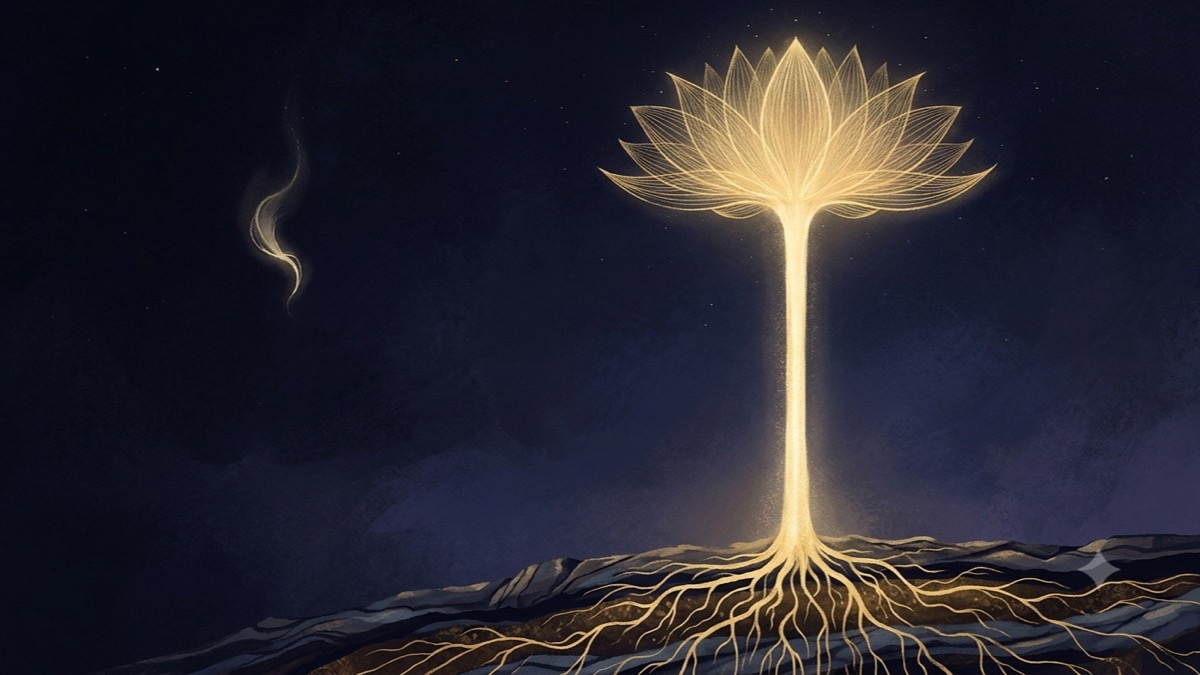
The Crown Chakra is the seventh and highest energy center in the chakra system, sitting right at the top of your head. In plain terms, crown chakra meaning usually points to your sense of connection to something larger than yourself — to meaning, to perspective, and to a quiet trust that does not depend on having every answer. Traditional teachings call it Sahasrara, the thousand-petaled lotus, and associate it with the colour violet or pure white. It sits at the end of a sequence that begins at the base of the spine, so it helps to see where it fits inside the broader pillar page on the chakra system before reading it in isolation rather than treating it as a standalone idea.
- Governs your sense of connection, perspective, and quiet trust in life
- Sits at the crown of the head, just above the third eye, as the seventh chakra
- Easily mistaken for spacing out when its focus tips into ungrounded disconnection
Why It Matters for Self-Awareness
Understanding crown chakra meaning matters because the search itself usually hides a quiet worry. People rarely look this up out of idle curiosity. They look it up after a stretch of feeling foggy, detached, or strangely far away from their own life, having read somewhere that an "open" crown chakra is the goal. So they push to open it further, when the real issue is that they have already drifted up and out of their own body. The fix they reach for — more opening, more meditation, more reaching upward — tends to make the problem worse, because you cannot ground a floating crown by floating harder.
In my years reading auras and working hands-on with energy, the most common mix-up I see is this: a crown that feels light and airy gets celebrated as "spiritual," while a crown that has floated loose from the ground gets the very same praise. From the outside they look alike. To live in, they feel completely different. A balanced crown leaves you clear, calm, and present in the room; an ungrounded one leaves you vague, scattered, and quietly anxious, narrating your life from a few feet above it. If you have ever felt suspicious of chakra language, that is fair — the distinction here is practical, not mystical. It comes down to one honest question: can you still feel your feet on the floor while you reach for the bigger picture?
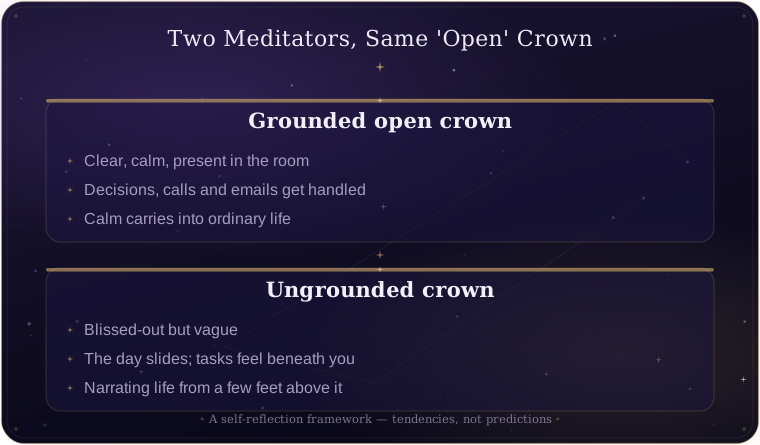
Picture two people who both meditate every morning. One comes out of it able to make a clear decision about the day ahead, call a friend back, and handle a difficult email without spiralling — the calm carries into ordinary life. The other comes out blissed-out but vague, lets the day slide, forgets half of what they meant to do, and feels faintly above small tasks like paying bills or answering texts. Both would describe their crown as "open," and both might even feel proud of it. Only one of them is actually grounded in that openness. That gap — between connection that lands and connection that drifts — is the whole reason crown chakra meaning is worth pinning down instead of chasing.
The Crown Chakra vs Adjacent Concepts: How It Works + Trade-offs
The crown rarely causes trouble on its own; the confusion almost always comes from how it relates to the centers just below it. It helps to set crown chakra meaning beside the ones it gets mixed up with, because each pairing carries a real trade-off you can feel in daily life:
- Crown versus the third eye. The third eye handles insight you can name — patterns, intuition, seeing how things connect. The crown works one level up, as the felt sense of connection itself, with no storyline attached. Lean hard into the crown and you gain spaciousness and perspective, but you sacrifice the pointed focus the third eye gives you, which is exactly how a "high" crown starts to feel like floating.
- Crown versus the root. The root chakra anchors you in the body and the practical world. To get the crown's openness and trust, you give up some of the root's heaviness and certainty, and that is a fair trade until it tips too far and openness becomes untethered. A steady crown borrows stability from the explainer on the root chakra and grounding rather than abandoning it.
- Opening versus integrating. Most advice sells "opening" as the whole goal. But the way the crown actually functions is through balance — energy rising up and then settling back down into the body. Chase opening on its own and you get intensity without integration, which reads as disconnection rather than clarity.
This grounded reading of the crown owes a lot to the modern chakra framework Anodea Judith helped formalize, and to energy-anatomy teachers like Barbara Ann Brennan and Cyndi Dale, who mapped how these centers actually interact rather than treating each one in isolation.
In day-to-day terms, that interaction is the point. A crown that is doing its job does not pull you out of your life to feel connected; it lets you feel connected while you are still washing dishes, sitting in traffic, or comforting a friend. The trade-offs above are not problems to eliminate — they are dials to balance, and most people simply have the crown dial turned up while the root dial sits ignored.
How to Read The Crown Chakra in Yourself
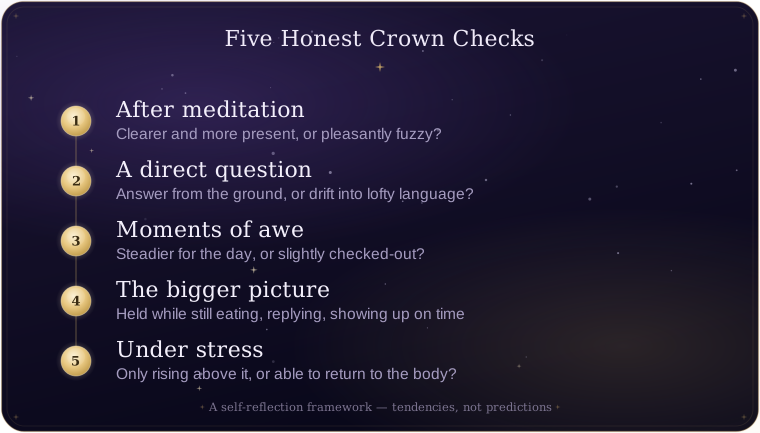
You do not need special sight or any equipment to read your own crown chakra. You need honest attention to a handful of everyday signals, most of which show up in how present you feel right after a so-called spiritual moment — meditation, prayer, time in nature, even a good conversation:
- After meditation or prayer, do you feel clearer and more present, or pleasantly fuzzy and hard to reach?
- When someone asks you a direct, practical question, can you answer from the ground, or do you drift into vague, lofty language?
- Do moments of awe leave you steadier for the rest of the day, or slightly checked-out and unable to focus?
- Can you hold a sense of the bigger picture while still remembering to eat, reply to messages, and show up on time?
- Under stress, do you only try to "rise above it," or can you also come back down and feel your body again?
The pattern across these answers matters more than any single one. A balanced crown shows up as connection that returns you to your life; an overactive one shows up as connection that quietly removes you from it. If three or four of these signals point toward fuzziness, that is not a cue to meditate harder — it is a cue to come back down and ground first. Reading the crown honestly means being willing to notice when "spiritual" is really just spaced-out, and treating that as useful information rather than a failure.
Common Misreadings
Most popular write-ups get crown chakra meaning slightly wrong in the same few ways, and these are usually the exact misreadings that send people searching in the first place. Here is the honest correction for each one:
- "More open is always better." In practice, an over-emphasised crown with no grounding reads as detachment, not enlightenment. The goal is a crown that opens and closes with the situation, not one propped permanently wide.
- "Feeling spacey means I am spiritually advanced." More often it just means you have drifted out of your body and need to come back down, not climb higher. Spaciness is a signal to ground, not a badge to collect.
- "The crown is only about religion or belief." It is really about connection and perspective, which skeptics and atheists experience too, just under different names. You do not have to believe anything specific to notice when you feel part of something larger.
- "I fix it by concentrating harder on the top of my head." Counterintuitively, the steadiest way to settle the crown is to ground through the feet and lower centers first — the steadiness mapped to the root chakra meaning explainer is what an ungrounded crown borrows from. Reaching upward when you already feel floaty usually makes the floating worse.
The Crown Chakra at a Glance
| Property | How It Works | Energy Center | How to Observe |
|---|---|---|---|
| Connection | Links your everyday self to a wider sense of meaning | Crown (Sahasrara) | You feel quietly part of something, not isolated |
| Perspective | Lifts you above immediate reactions to see the whole picture | Crown, just above the third eye | Problems feel smaller without feeling dismissed |
| Quiet trust | Lets you rest without needing every answer right now | Crown / top of the head | You can sit with not-knowing and stay calm |
| Grounded openness | Balances upward opening with a return to the body | Crown anchored by the root | You feel expansive and present at the same time |
Questions People Ask About The Crown Chakra
What does the crown chakra actually do?
In everyday terms, crown chakra meaning comes down to your sense of connection, perspective, and quiet trust in life. When it is balanced, you feel both grounded and gently plugged in to something larger than your daily worries.
How do I know if my crown chakra is open or just ungrounded?
A genuinely open crown leaves you clearer and more present afterwards. Feeling foggy, floaty, or checked-out is usually a sign of ungrounding, not of deeper opening.
Can you overdo crown chakra work?
Yes. Pushing to "open" the crown while ignoring the lower centers tends to produce spaced-out disconnection rather than real insight.
What is the fastest way to ground an overactive crown?
Come back into the body: feel your feet, breathe low into your belly, and do something physical and ordinary. Grounding the lower centers settles the crown far more reliably than focusing upward.
Reflection Prompts
- Think of a recent moment you felt truly connected and present — what were you physically doing at the time?
- Recall a stretch when you felt foggy or far away; what actually helped you come back down to earth?
- Notice the last time awe left you steadier rather than scattered — what made that experience different?
Related Reading
- explainer on the third eye chakra — the insight center the crown is most often confused with, and a useful contrast.
- guide to crown chakra healing and grounding practices — practical ways to settle an overactive or ungrounded crown.
- chakra test — self-assess whether your crown reads grounded, open, or floating, and how the lower centers compare.
- Sahasrara (Wikipedia) — for the traditional symbolism behind the modern reading.
Take Action
Pick one grounding check from this page — feet flat on the floor, three slow breaths into the belly — and run it the next time you catch yourself floating up and away from the moment. Do this for a week and you may notice the real difference between a crown that is genuinely open and one that is simply untethered. See the full Chakra System overview to place the crown chakra in the whole sequence to understand why a balanced crown sits at the top of a grounded structure, rather than floating free of it.
Sources
- Anodea Judith — helped systematize the modern Western chakra framework this grounded reading draws on
- Barbara Ann Brennan — mapped the human energy field and how its centers relate to one another
- Cyndi Dale — developed practical, accessible teaching on working with the chakra system