What Is Kundli Interpretation?
Kundli Interpretation is the Vedic reading craft that takes a calculated birth chart and translates its planetary placements into meaning a person can reflect on. In plain terms, birth chart interpretation reads sign and house placements as symbolic self-reflection, not fixed prediction. A calculator draws the chart; interpretation gives it a voice by applying Jyotish rules laid out in any pillar guide on how to read a birth chart — Lagna, planetary lordships, aspects, and dispositor chains.
- Works from the Lagna (ascendant) outward, since the rising sign anchors how every house is counted
- Reads each graha (planet) through the Rāśi (sign) and Bhāva (house) it sits in
- Frames the result as reflective symbolism, so any takeaway stays interpretive rather than causal
Why It Matters for Self-Awareness
Birth chart interpretation matters because it gives a structured way to look at patterns you already half-notice in yourself. A raw chart is only a diagram; the reading is what connects a Saturn placement in the tenth house to how you actually approach responsibility, or a Moon in a particular Rāśi to the way you settle when life gets loud. This reflective use sits in a long interpretive lineage — the person-centered reading Dane Rudhyar shaped and the whole-chart craft Stephen Arroyo advanced both treat the chart as a tool for self-knowledge rather than prophecy.
Where the value actually shows up
In my own work applying pattern-recognition frameworks to chart structure, the useful part was never the picture — it was the disciplined reading that turned scattered placements into a few honest themes about temperament, timing, and relationships. Once you can name a recurring friction, you can watch for it. Seeing an over-cautious streak framed through a house lordship, for instance, hands you a word for something you might otherwise keep bumping into without noticing.
Why it stays a mirror, not a verdict
Used this way, the chart becomes something to reflect against rather than a forecast to obey. If you tend to over-explain a repeating tension in your relationships, reading it through the explainer on the ascendant and rising sign and the placements around it can give you language for the pattern. The chart does not decide anything; it offers a vocabulary you can test against your own life, keep what fits, and set aside what does not.
Where the framework comes from
The twelve-house scheme that a Kundli reading depends on is commonly traced to Hellenistic astrology in the early centuries CE, later absorbed and reworked within the Jyotish tradition of the Indian subcontinent. That long lineage is part of why a Kundli carries a specific Sanskrit-rooted vocabulary — Rāśi, Bhāva, graha, Lagna — rather than one modern author's invented labels. Knowing the framework is inherited, not improvised, is itself reassuring: you are learning a shared system, not somebody's private code.
Kundli Interpretation vs a Free Chart Calculator
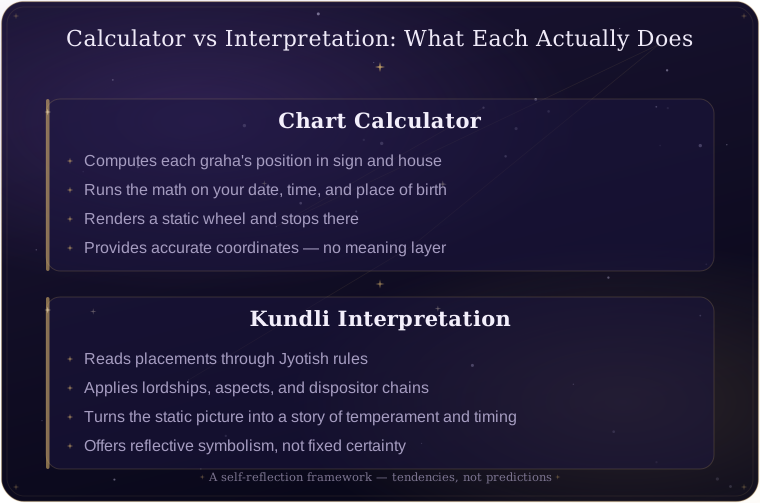
Beginners often treat a free chart calculator and birth chart interpretation as the same thing, but they do very different jobs. Mixing them up is the single most common reason people feel let down by their first chart.
What the calculator actually does
A calculator computes positions. It places each graha in a sign and house within seconds and draws the wheel. Here's how it works: it runs the math on your date, time, and place of birth, then renders a static image. What it cannot do is decide what any of the placements mean — it hands you accurate coordinates and stops there.
What interpretation adds on top
Interpretation is the layer that reads those same placements through Jyotish rules — lordships, aspects between planets, and dispositor chains that tie one placement to another. This is where a static picture becomes a short story about temperament and timing. To get the instant, exact chart from a free birth chart calculator tool, you sacrifice the interpretive read; to get the meaning, you sacrifice speed and lean on a framework that takes study to apply well. A calculator answers where the planets are. Interpretation asks what the pattern suggests about you — and it offers reflective symbolism, not certainty.
How to Read Kundli Placements in Your Chart
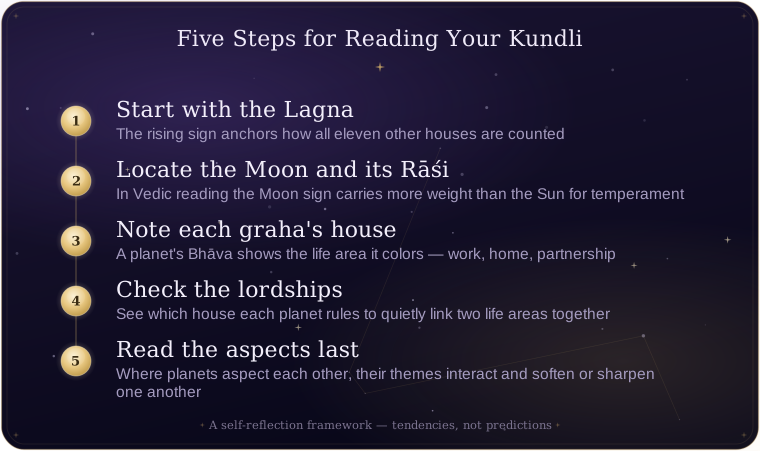
Reading a Kundli is less about memorizing meanings and more about following an order. Rushing straight to "what does Mars mean" is what overwhelms most beginners. These steps mirror how birth chart interpretation is usually approached, one layer at a time:
- Start with the Lagna. Find the rising sign; it sets the first house and fixes how the other eleven are counted.
- Locate the Moon and its Rāśi. In Vedic reading the Moon sign often carries more weight than the Sun for temperament and mood.
- Note each graha's house. A planet's Bhāva shows the life area it colors — work, home, partnership, and so on.
- Check the lordships. See which house each planet rules, since that quietly links two areas of your life together.
- Read the aspects last. Where planets aspect each other, their themes interact and either soften or sharpen one another.
Work through them in that sequence and the chart stops looking like noise and starts reading like a short, honest sketch of how you tend to operate.
Common Misreadings
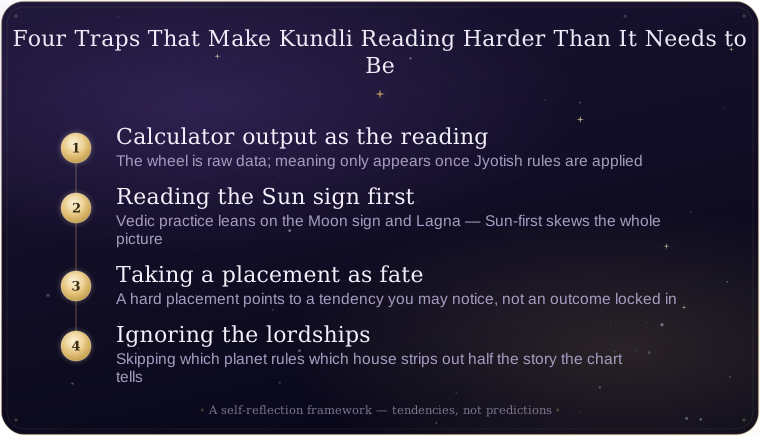
Most confusion around Kundli reading comes from a few predictable mistakes. Correcting them early makes birth chart interpretation far less intimidating:
- Treating the calculator's output as the reading. The wheel is raw data; the meaning only appears once Jyotish rules are applied to it.
- Reading the Sun sign first. Vedic practice leans on the Moon sign and Lagna, so leading with the Sun skews the whole picture from the start.
- Taking a placement as fate. A hard placement points to a tendency you may notice, not an outcome that is locked in.
- Ignoring the lordships. Skipping which planet rules which house strips out half the story the chart is actually telling.
Each of these traps sends readers hunting for drama where the chart is really offering a quieter, more useful pattern.
Kundli Interpretation at a Glance
| Layer | How It Works | Chart Anchor | How to Observe |
|---|---|---|---|
| Lagna (ascendant) | Sets house 1 and how all houses are counted | Rising sign at birth time | Note which sign was rising; it frames everything else |
| Graha placement | Each planet colors the house it sits in | Bhāva (house) position | See which life area each planet lands in |
| Lordship | Links the house a planet rules to where it sits | Ruling planet of each sign | Trace which planet governs which house |
| Aspect | Two placements modify each other's themes | Angle between grahas | Look for planets that face or influence one another |
Common Questions About Kundli Interpretation
Is Kundli Interpretation the same as a Western birth chart interpretation?
No. Both read planets in signs and houses, but Vedic reading uses the sidereal zodiac and weighs the Moon and Lagna heavily, while Western practice leans tropical and Sun-forward. The resulting placements can differ by roughly a sign.
Do I need my exact birth time?
Yes, ideally to the minute. The Lagna and house cusps shift quickly, so a wrong time reshuffles the whole chart — which is exactly why every calculator asks for it.
Can a Kundli predict my future?
It is better read as reflective symbolism than as a forecast. A placement points to tendencies and themes you may recognize, not fixed events you are bound to.
Where should a beginner start?
Begin with the Lagna and the Moon sign, then add one house at a time. Trying to read everything at once is the fastest way to feel lost.
Reflection Prompts
- Think of a recent decision where you led with duty; which house theme does that seem to match in your chart?
- Recall a moment you felt most yourself at home versus at work, and note the Bhāva contrast between them.
- Name one relationship pattern you keep repeating, then look for a lordship that might mirror it.
Related Reading
- guide to the twelve houses in a birth chart — maps what each Bhāva governs across the areas of life
- explainer on planetary aspects like trine and square — shows how placements modify one another
- overview of the lunar nodes Rahu and Ketu — covers the karmic axis central to Vedic reading
- Hindu astrology (Wikipedia)
Take Action
Want to see your own placements instead of reading about them in the abstract? Generate your free birth chart to get an accurate Kundli with every graha, sign, and house mapped from your birth details — then use this guide to read it as a mirror for the patterns you are already living rather than a script you are stuck with. This is not a clinical interpretation or mental health advice.
Generate Your Free Birth Chart
Sources
- Stephen Arroyo — advanced the practical craft of reading a whole birth chart rather than isolated placements
- Dane Rudhyar — shaped the reflective, person-centered approach to interpreting astrological charts