
What is Highly Sensitive Person vs Autism?
Highly sensitive person vs autism is a comparison between a temperament trait and a clinical condition that can look alike from the outside while working very differently underneath. The highly sensitive person, or HSP, describes someone with sensory processing sensitivity — a nervous system wired to notice subtlety and to feel input deeply. Autism is a neurodevelopmental condition that only a qualified professional can assess and name. In plain terms, this is a sensitivity trait set beside a diagnosable neurodevelopmental condition, not two stops on one line. If the trait side is new to you, the pillar guide to the highly sensitive person trait explains what HSP means before any comparison begins.
- HSP is a temperament trait; autism is a clinical diagnosis made by a professional
- Both can involve sensory overwhelm, which is the main reason they get mixed up
- Only one of them, autism, can be formally evaluated and confirmed
Why It Matters for Self-Awareness
Understanding HSP and autism matters because the surface similarity quietly steers people toward the wrong call. Someone reads that both traits flinch at bright lights and loud rooms, and decides one must be a softer version of the other. From there it splits two ways: a person assumes "I'm just sensitive, nothing more to look at," or swings the other direction and privately concludes they're autistic after a single online checklist. Both shortcuts skip the one step that actually settles it.
In years of sitting with deeply feeling people through somatic-informed work, I've watched how often these two ideas get tangled together at the kitchen-table level, long before anyone talks to a clinician. The cost of guessing isn't abstract. Calling deep sensitivity "autism" can send someone chasing an answer they may not need, while waving away real autistic traits as "just being an HSP" can delay support that would genuinely help. Getting clear on the trait and the condition is less about a label and more about knowing which question you're actually asking. This is not a clinical interpretation or mental-health advice, and it cannot confirm an autism diagnosis; only a qualified professional can assess that.
Highly Sensitive Person vs Autism vs Adjacent Concepts: How It Works + Trade-offs
HSP versus autism becomes clearer once you see how each idea works and what each framing trades away. Sensitivity, autism, introversion, and everyday sensory differences all live near each other, and each lens explains some things while missing others.
- HSP as a trait lens. It frames depth of processing and easy overstimulation as a normal temperament variation. To get a gentle, non-clinical way to understand yourself, you sacrifice diagnostic precision — the HSP label can't tell you whether something clinical is also present.
- Autism as a clinical lens. It accounts for differences in social communication, repetitive patterns, and sensory experience that are present across the lifespan and shape daily functioning. To get that explanatory depth and access to support, you accept a formal assessment process that only a professional can run.
- Introversion and ordinary sensory difference. Introversion is about where energy comes from, not how deeply you process input, so it explains the "need to recharge" piece but not the overwhelm. To use it as an explanation, you give up any account of why the world feels so loud in the first place.
The honest read on the two is that the frameworks overlap on sensory overwhelm and diverge almost everywhere else: social communication, the role of routine, and how early and how consistently the traits show up.
How to Read Highly Sensitive Person vs Autism in Yourself
Telling highly sensitive person vs autism apart starts with noticing patterns, not scoring yourself against a list. Use these as gentle observations to bring to a professional, never as a verdict.
- Notice whether overwhelm eases with rest and a calmer setting, or stays steady regardless of how much you recover.
- Watch how social situations feel: tiring but readable, or genuinely puzzling in ways that don't resolve with downtime.
- Pay attention to routine — a mild preference versus a deep need where change feels destabilizing.
- Track timing: traits that have been consistent since early childhood point somewhere different than ones that shifted later.
- Note whether deep empathy and quick emotional pickup feel central to who you are, which leans toward the sensitivity side.
None of these confirms anything. They're starting points for a conversation, and the signs of a highly sensitive person checklist can help you describe the sensitivity side in clearer language.
A few signs suggest the question is worth bringing to a professional rather than sitting with alone. If social situations feel genuinely confusing rather than simply tiring, if a change in routine is destabilizing rather than mildly unwelcome, or if the patterns have been steady since early childhood and shape how you work, learn, or connect day to day, those are reasons to seek a formal assessment. The same is true if the not-knowing itself is wearing on you. A qualified clinician — a psychologist, psychiatrist, or assessment specialist — can look at the full picture across your history, something no article or quiz can do. Seeking that input isn't a verdict on yourself; it's simply choosing the one route that can actually answer the question.
Common Misreadings
Most quick takes on HSP and autism get stuck on the same few errors, and readers usually arrive already caught in one of them.
- "HSP is just mild autism." Misread. They aren't the same thing on a sliding scale; one is a temperament trait and the other a distinct clinical condition that requires assessment.
- "An online quiz can tell me which I am." Misread. A quiz can prompt reflection, but it cannot confirm an autism diagnosis — only a qualified professional can do that.
- "If I'm sensitive, I can rule autism out." Misread. Being a highly sensitive person doesn't confirm or exclude anything clinical; the two can be discussed separately.
- "They never overlap, so it's obvious." Misread. They genuinely share sensory overwhelm, which is exactly why careful, professional input matters.
Highly Sensitive Person vs Autism at a Glance
| Feature | Highly Sensitive Person (trait) | Autism (clinical condition) | How to Observe |
|---|---|---|---|
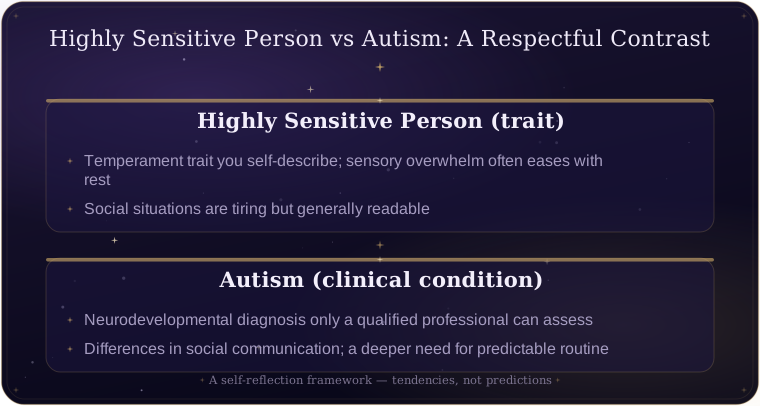
| Nature | Temperament trait | Neurodevelopmental diagnosis | Trait is self-described; diagnosis is professionally assessed |
| Sensory overwhelm | Common, often eases with rest | Common, often persistent | Watch whether downtime reliably resets it |
| Social experience | Tiring but generally readable | Differences in communication and connection | Notice if social cues feel puzzling, not just draining |
| Routine | Mild preference for calm | Often a deeper need for predictability | See how much change destabilizes the day |
| Who confirms it | No diagnosis needed | Qualified professional only | Seek a formal assessment for autism questions |
Common Questions About Highly Sensitive Person vs Autism
Is a highly sensitive person on the autism spectrum?
No. HSP describes a temperament trait, while autism is a separate clinical diagnosis, and being highly sensitive does not place someone on the spectrum. The overlap in sensory overwhelm is real, but it doesn't make one a version of the other.
Can you be both an HSP and autistic?
Yes, a person can be both, since a sensitivity trait and a clinical condition aren't mutually exclusive. A qualified professional is the only one who can determine whether autism is present alongside high sensitivity.
How do I know if I'm an HSP or autistic?
Self-observation can point you toward useful questions, but it can't answer this on its own. If autism is a genuine concern, a formal assessment with a trained professional is the honest next step.
Why do HSP and autism get confused so often?
They share visible sensory overwhelm, so casual comparisons lump them together as interchangeable. Underneath, they differ in social communication, the role of routine, and how they're identified.
Reflection Prompts
- Think of a recent moment of overwhelm — did rest and quiet reset you, or did the feeling stay?
- Recall a confusing social interaction this month; was it draining, genuinely puzzling, or both?
- Notice when a change to your routine threw off your whole day, and how much it took to recover.
Related Reading
- guide to tending an old inner wound — for the self-understanding angle, when sensitivity has been carrying old hurt that deserves its own gentle attention.
- Sensory processing sensitivity (Wikipedia)
Take Action
Start with the sensitivity side on its own terms before reaching for any comparison: read the full guide and write down two or three traits that sound like you. You'll come away with clearer language for how you actually experience the world, and that clarity is what lets you bring a calm, specific question to a professional if an autism assessment ever feels right. Want to understand the sensitive side on its own terms first? Read the full guide to the highly sensitive person.
Sources
- Sensory processing sensitivity — the psychological temperament concept that underpins the highly sensitive person trait, developed within research on individual differences in sensitivity.
- Clinical diagnostic frameworks for autism — the professional standards under which autism is formally assessed, which sit outside any self-test or trait description.