
What is Saturn (Shani) Mahadasha?
Saturn (Shani) Mahadasha is the second-longest major planetary period in Vedic astrology's Vimshottari cycle (only Venus, at twenty years, is longer), running nineteen years under Shani — the Sanskrit name for the planet Saturn. Because it only makes sense inside the larger count, define that system first through the pillar guide to mahadasha and the Vimshottari dasha system, then read Saturn's chapter within it. Recorded in the classical Brihat Parashara Hora Shastra of the Parashara lineage, it reads as the 19-year Vimshottari period ruled by Shani (Saturn).
- Second-longest of the nine Vimshottari periods (only Venus, at twenty years, is longer), so its lessons unfold slowly rather than all at once
- Linked with discipline, delay, and structure earned through patient effort
- Answers to both names at once, since Shani and Saturn are one graha in two languages
This period tends to reward steady, honest work over sudden luck, which is why the tradition treats its nineteen years as an apprenticeship in patience rather than a stretch of bad fortune.
Where Saturn's 19 Years Sit in the 120-Year Vimshottari Count
The reason the period runs nineteen years becomes clear once you see the whole count. The Vimshottari dasha system distributes a fixed total of 120 years — "Vimshottari" is Sanskrit for the number 120 — across nine planetary periods, and the classical lengths are Ketu 7, Venus 20, Sun 6, Moon 10, Mars 7, Rahu 18, Jupiter 16, Saturn 19, and Mercury 17 years, which sum to 120 (Dasha (astrology), Wikipedia). Saturn receives 19 of them; only Venus, at 20, receives more, while every other period is 18 years or fewer — which is what makes Saturn's the second-longest single allotment. These lengths are fixed by the Vimshottari count itself, so the only variable in your chart is which period you start in, set by the Moon's birth nakshatra. Each mahadasha is also subdivided into nine antardasha sub-periods, ruled by all nine planets in turn, and each antardasha divides again into pratyantardasha — so Saturn's nineteen years move through shifting sub-periods rather than staying flat (Dasha (astrology), Wikipedia).
Why It Matters for Self-Awareness
Understanding a Saturn mahadasha matters because most people meet the word with dread, bracing for nineteen years of loss when the tradition describes something closer to a long apprenticeship. In my years working across classical Sanskrit texts and birth charts as a second-generation Jyotish practitioner, this is the period clients most often fear and most often misread. The friction is real and specific: the long span gets read as a sentence to be served, so the patient, structured effort it actually asks for goes unnoticed, and people brace against the years instead of working with them.
It helps to set the long Shani period beside a shorter, sharper one like the companion page on the Ketu mahadasha period, where the lessons tend to arrive fast and end quickly; Saturn's run does the opposite, asking for endurance over reaction. Modern Jyotish teachers in the Parashara lineage, including B. V. Raman and K. N. Rao, kept reading the dasha as timing and tendency rather than fixed fate — a framing that turns the period from something happening to you into something you can read and work through.
Saturn (Shani) Mahadasha vs Adjacent Concepts: How It Works + Trade-offs
A Saturn mahadasha differs from the better-known Saturn return of Western astrology, and telling them apart is where the comparison of Vedic and Western astrology systems earns its keep. Read against its neighbors, the period works like this:
- Saturn mahadasha vs the Western Saturn return. The mahadasha is a nineteen-year dasha drawn from the Vimshottari count; the return is a roughly twenty-nine-year transit cycle that recurs a few times in a life. To get the mahadasha's long, slow arc of maturation, you give up the return's sharp, datable turning point.
- Saturn mahadasha vs a Venus or Jupiter period. Benefic periods tend to bring ease and expansion; Saturn's brings weight and structure. To gain Saturn's durable, earned foundation, you trade away the quicker comfort a benefic dasha tends to offer.
- The long dasha vs Sade Sati. Sade Sati is a separate seven-and-a-half-year Saturn transit over the natal moon. To read the dasha as a whole-life chapter, you set aside the transit's tighter, moon-focused window and its faster emotional swings.
The way it functions is cumulative rather than sudden: Saturn asks for the same disciplined effort, repeated, until it compounds. That is the trade at the center of the period — you give up the thrill of a fast win to gain something that holds.
How to Read Saturn (Shani) Mahadasha in Your Timing
To spot Saturn's dasha in your own timing, you read the dasha sequence from your birth chart rather than your mood. A few concrete signals stand out:
- Check your dasha dates first: if Saturn rules the current major period, you are inside the nineteen-year window.
- Notice themes of delay, responsibility, and slow-building work showing up across career and home at the same time.
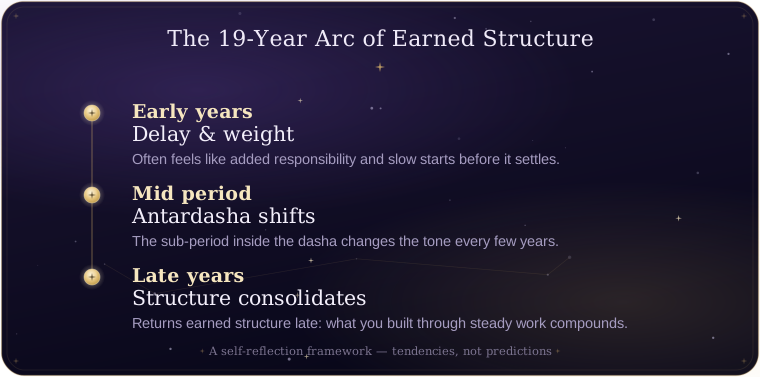
- Watch the antardasha — the sub-period inside the dasha — since it shifts the tone every few years rather than staying flat.
- Look at Saturn's natal house and sign, which tend to mark where the lessons land hardest and feel most personal.
- Track what you build through effort instead of luck; that thread often defines the texture of the whole period.
The classical texts add one more layer worth checking: Saturn's dignity by sign. The Brihat Parashara Hora Shastra treats Saturn as exalted in Libra and debilitated in Aries, with Capricorn and Aquarius as its own signs. A dignified Saturn tends to deliver its rewards more cleanly, while a debilitated one asks for more patience before the structure holds. Reading the dasha well means weighing this placement alongside the dates, not in place of them — dignity colors the tone, but the nineteen-year span and its antardasha order stay fixed by the Vimshottari count itself.
Common Misreadings
The most common misreading of the Saturn mahadasha is treating it as a verdict instead of a season of work. The same mistakes show up again and again:
- "Nineteen years of suffering." The tradition frames the period as disciplined maturation, not punishment; the hardship is the texture of the work, not a sentence handed down.
- "Nothing good can happen now." Saturn tends to reward patient, honest effort, so gains are real here — they simply arrive earned and slow rather than quick and free.
- "Saturn and Shani are two different things." They are one graha named in two languages, so both search terms point to the same nineteen-year period.
- "It is fixed and cannot change." A dasha describes tendencies and timing, not a fated outcome, and the choices you make still shape how the season is actually lived.
Saturn (Shani) Mahadasha at a Glance
| Property | How It Works | Energy Center | How to Observe |
|---|---|---|---|
| Length | Runs nineteen years, the second-longest of the Vimshottari periods (only Venus, at twenty, is longer) | Tied to Saturn's natal house and sign | Map the dasha dates from your birth chart |
| Core theme | Rewards patient, structured effort that compounds over time | Strongest where Saturn sits by house | Notice where life asks for discipline, not luck |
| Early phase | Often feels like delay and added weight before it settles | Colored by Saturn's natal sign | Track the first two to three years for slow starts |
| Reward pattern | Returns earned structure late rather than quick wins | Shifted by each antardasha sub-period | Watch what consolidates by the period's end |
Saturn (Shani) Mahadasha FAQ
What happens during a Saturn mahadasha?
The tradition associates it with discipline, delay, responsibility, and structure built through patient work. Results tend to arrive slowly and feel earned rather than handed over, which is why the period reads as long maturation.
Is the Shani mahadasha always bad?
No — the classical reading treats it as demanding rather than ruinous. The weight it brings is the cost of building something durable, so the period tends to reward honest, sustained effort instead of punishing the person living it.
What is the difference between Shani mahadasha and Saturn mahadasha?
There is none; Shani is simply the Sanskrit name for the planet Saturn. Both terms describe the same nineteen-year Vimshottari period of the one graha.
How long does this 19-year dasha last?
It runs nineteen years, the second-longest of the nine planetary periods in the Vimshottari system (only Venus, at twenty years, is longer). Within it, shorter antardasha sub-periods change the tone every few years.
Is the Saturn mahadasha the same as Sade Sati?
No. Sade Sati — Sanskrit for "seven and a half" — is a separate Saturn transit of roughly seven and a half years, when Saturn passes over the sign before your natal Moon, the sign of your natal Moon, and the sign after it. The mahadasha is a nineteen-year dasha period drawn from the Vimshottari count, not a transit over the Moon (Sade Sati, Wikipedia; Dasha (astrology), Wikipedia).
What is an antardasha within the Saturn mahadasha?
An antardasha is a sub-period inside the major period. Each mahadasha contains nine antardashas, ruled by all nine planets in sequence, and each antardasha divides again into pratyantardasha — so Saturn's nineteen years move through shifting sub-periods rather than staying flat (Dasha (astrology), Wikipedia).
Which signs are strong or difficult for Saturn?
In the classical tradition Saturn is exalted, at its strongest dignity, in Libra and debilitated in Aries, and it owns the signs Capricorn and Aquarius. The Brihat Parashara Hora Shastra this page draws on treats Saturn this way; a dignified Saturn tends to deliver its lessons more cleanly, while a debilitated one asks for more patience before the structure holds.
How is the Saturn mahadasha calculated from a birth chart?
Whether the Saturn dasha runs first or later is set by the Moon's nakshatra (lunar mansion) at birth, which fixes the starting planet and how much of its period remains; from there the planets follow the fixed Vimshottari order and lengths. Saturn's nineteen-year length never changes — only when it begins (Dasha (astrology), Wikipedia).
Reflection Prompts
- Think of a recent goal that only moved forward through slow, repeated effort — what did that patience quietly build?
- Recall a delay you resented at the time; looking back, what structure did the waiting put in place?
- Name one responsibility you have been avoiding, and ask what steady work it would actually take to meet it.
Related Reading
The three internal links above place this period inside the wider system; for outside context, these references add depth without leaving the tradition:
- Dasha (astrology) (Wikipedia) — background on how the planetary periods are calculated and sequenced.
- Saturn — the physical body the tradition names as Shani.
Take Action
Want the full system first? Read the complete guide to mahadasha and the Vimshottari periods and trace where Saturn's nineteen years fall in your own dasha sequence. You come away able to place the period in context instead of reading it in isolation — and seeing the long Shani years as a chapter you help write through steady work, rather than a sentence you simply serve.
Disclaimer
The Saturn mahadasha is described here as a cultural and self-reflection tradition, not as medical, psychological, financial, legal, or relationship advice. Treat it as a lens for reflection rather than a basis for major life decisions.
Sources
- Parashara — sage credited with the Brihat Parashara Hora Shastra, the classical source for the Vimshottari dasha system used here
- B. V. Raman — twentieth-century astrologer who carried traditional Vedic dasha reading to a modern audience
- K. N. Rao — Jyotish researcher known for a systematic, timing-based reading of the mahadasha periods