What is Venus (Shukra) Mahadasha?
Venus (Shukra) Mahadasha is the twenty-year planetary period that the Vimshottari dasha system assigns to Venus, known in Sanskrit as Shukra — the longest single chapter in the whole cycle. A mahadasha is simply a major life period in Vedic astrology, and to read Venus's well you first need the broader frame, mapped in this pillar guide to the mahadasha system. In the tradition, venus mahadasha reads as a long benefic period inclined toward relationship, art, comfort and ease — and that word, inclined, matters, because it is a tendency rather than a promise.
- Runs for twenty years, the longest stretch in the Vimshottari sequence
- Tied to Venus's themes: love, beauty, pleasure, wealth, art and refinement
- Colored throughout by Venus's actual condition in the birth chart, so it is read as inclination, not fixed fate
Why It Matters for Self-Awareness
Understanding venus mahadasha matters because the most common assumption — twenty guaranteed good years — quietly sets readers up to misread their own lives. The tradition treats Shukra's long period as a benefic tendency, an inclination toward love, comfort and creative ease, yet that inclination still bends to Venus's real condition in the chart. A well-placed Venus can make the years feel genuinely abundant. A Venus that is weak, combust or poorly aspected can let the same period pass with strained relationships, overspending, or comfort that feels hollow.
In my own work with classical Sanskrit dasha texts, I have seen how often people arrive expecting two decades of luck and leave understanding the period as a long invitation that rewards attention, not a prize that lands on its own. This caution is not modern softening — it sits in the lineage descending from Parashara, and twentieth-century interpreters such as B. V. Raman and K. N. Rao kept reading the period through Venus's condition rather than its reputation.
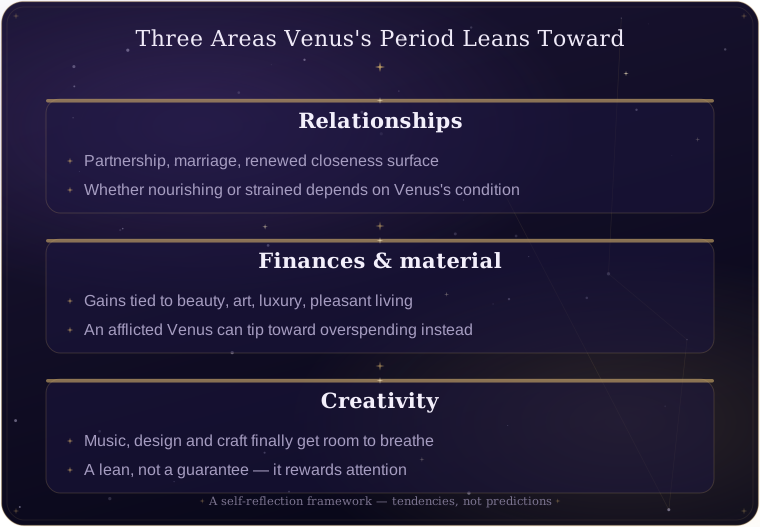
Across twenty years, the Brihat Parashara Hora Shastra frames Shukra's themes as touching three broad areas of life, and seeing them separately helps you read the period more honestly. In relationships, Venus's dasha tends to bring partnership, marriage or renewed closeness to the surface — though whether those bonds feel nourishing or strained depends on Venus's house and any aspects on it. In finances and material life, the same period often coincides with gains tied to beauty, art, luxury or pleasant living, yet a Venus afflicted by combustion or a difficult sign can just as easily pull the years toward overspending and comfort that never quite satisfies. In creativity, the tradition links Shukra to music, design and craft, and many people find this stretch is when artistic work finally gets room to breathe. None of these are guaranteed; each is a direction the period leans, and the lean only becomes lived experience when you actually attend to it.
Venus (Shukra) Mahadasha vs Adjacent Concepts: How It Works + Trade-offs
venus mahadasha differs most clearly from the other long stretch in the cycle, the Saturn mahadasha, and reading them side by side shows how each period works. Venus's period leans toward pleasure, connection and ease; Saturn's nineteen-year period — the contrasting long chapter explained in this companion explainer on the Saturn mahadasha period — leans toward effort, limitation and slow-built structure. The way each functions is a real trade-off: to get the relational warmth and material comfort Venus favors, you sacrifice some of the hard discipline that forges Saturn-built resilience. Leaning into Venus's ease can soften you; leaning into Saturn's restraint can harden you. Neither is better, and the tradition never ranks them.
A second contrast sits inside the period itself. The full twenty-year span sets the tone, but each antardasha — a sub-period, or bhukti, ruled by another planet — colors the texture from year to year. A Venus–Saturn sub-period reads very differently from a Venus–Jupiter one. Here the trade-off is about scale: to get the broad benefic backdrop of the whole period, you accept that individual sub-periods inside it can still feel difficult. This is also why the long Shukra mahadasha is never read as one flat mood, but as a long arc with shifting weather inside it. Reading Parashara's sequence carefully, the sub-period lords also explain why a single year of relational ease can sit right beside a year of financial pressure: the broad benefic tone holds, while the active bhukti decides which of Venus's themes — love, money or creative work — comes forward and in what mood.
How to Read Venus (Shukra) Mahadasha in Yourself
To recognize venus mahadasha in your own life, the tradition points less to mood and more to timing and placement. A few concrete checks help:
- Find when the period began in your dasha timeline; its onset is fixed by the Moon's nakshatra at birth, not by how you feel.
- Locate Venus by house and sign in your chart, since the house it rules shapes where the period's themes actually show up.
- Check Venus's dignity — exalted, debilitated or combust — because a strong Venus and an afflicted one read very differently.
- Note the current antardasha, the sub-period within the twenty years, as it tints each stretch with another planet's flavor.
- Watch for life markers the tradition links to Shukra: new relationships, creative work, vehicles, or a clear pull toward comfort and beauty.
Common Misreadings
- Twenty guaranteed good years. The most common misreading of venus mahadasha treats the period as automatic luck. The tradition reads it as a tendency that still depends on Venus's strength and placement.
- A strong Venus means an easy life. A well-placed Venus tilts the years toward comfort, but a debilitated or combust Venus can turn the same period toward indulgence, loss or strained bonds.
- It only touches romance. Venus also governs art, money, beauty and refinement, so the period often surfaces in creative work and material life, not only in relationships.
Venus (Shukra) Mahadasha at a Glance
| Property | How It Works | Energy Center | How to Observe |
|---|---|---|---|
| Length: 20 years | Longest benefic period; sets a long background tone | Onset age set by the Moon's nakshatra at birth | Note when the period began in your dasha timeline |
| Significations | Venus rules love, art, comfort, wealth and beauty | Strength tied to Venus's natal house and sign | Check which house Venus occupies in your chart |
| Quality | Benefic by nature, but always conditional | Venus's dignity — exalted, debilitated or combust | See whether Venus is well-placed or afflicted |
| Sub-periods | Each bhukti shifts the texture year to year | Antardasha lord modifies the twenty-year tone | Track the current sub-period within the period |
Venus (Shukra) Mahadasha FAQ
What are the typical venus mahadasha effects?
The tradition associates this twenty-year Venus period with relationships, marriage, art, comfort and material gain. These appear as tendencies shaped by Venus's placement, not as fixed outcomes.
Is the venus dasha always twenty years long?
Yes, the Vimshottari system fixes the period at twenty years, the longest of all the planetary dashas. The starting age varies because it depends on the Moon's nakshatra at birth.
Does a 20 year venus period guarantee a good time?
No. A benefic period is an inclination, not a promise; a weak or afflicted Venus can let the years pass with disappointment despite the favorable reputation.
How is this read differently in Western astrology?
Western astrology has no dasha system, so this long-period timing belongs specifically to the Vedic, sidereal tradition. The two frameworks read timing in fundamentally different ways.
Reflection Prompts
- Think of a recent stretch when relationships, comfort, or creative work felt unusually central — what did you do with that ease?
- Recall a moment when expecting good fortune to simply arrive left you passive; what changed when you engaged instead?
- Notice a time when beauty, art, or pleasure pulled your attention — how did you choose to spend it?
Related Reading
- explainer on Vedic versus Western astrology — clarifies why the dasha timing behind this period exists in the Vedic system but has no direct counterpart in the Western one.
Take Action
Map your own Venus by house, sign and dignity, then find where this twenty-year period sits in your dasha timeline. Doing this turns a vague reputation into a specific reading you can actually work with, and it tends to replace the wish for guaranteed luck with a clearer sense of where your attention pays off. Want the full system first? Read the complete guide to mahadasha and the Vimshottari periods in our pillar guide to the mahadasha system.
Sources
- Parashara — the classical sage credited with the Vimshottari dasha framework this reading rests on
- B. V. Raman — twentieth-century astrologer who brought classical dasha interpretation to a modern readership
- K. N. Rao — researcher known for case-based study of how the dasha periods actually play out