
What Is My Theme for This Year?
Three traditions answer "what is my theme for this year." Annual profections and its Lord of the Year activate one house and its ruling planet each year; numerology's personal-year cycle counts forward from your birthday; and the Solar Return chart maps the sky at your yearly Sun return. This article follows the Solar Return because it ties the theme to your actual placements rather than a single number or a fixed rotation — and once you can read a chart, a how to read a birth chart puts those yearly signals in context. In plain terms, your theme is an annual focus drawn from your solar return: the Sun's return weighed by its house, angles, ruler, and repeating patterns against the natal chart.
- It narrows a full yearly chart into one or two recurring subjects.
- It depends on natal placements, not a generic zodiac-sign forecast.
- It supports reflection on choices, timing, and changing priorities.
Why It Matters for Self-Awareness
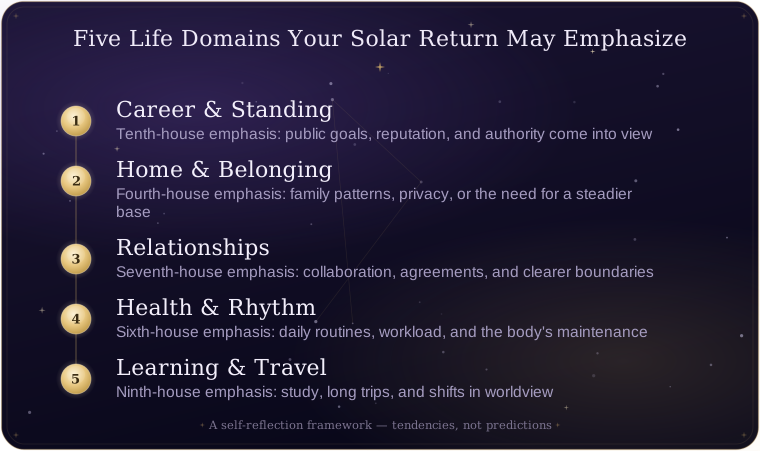
Understanding what is my theme for this year matters when several parts of life ask for attention at once and it is hard to tell which question deserves the closest look. A yearly theme gives language to a season without reducing you to one lesson. The fastest self-test is to ask which life domain the return's strongest house keeps pointing to:
- Career and standing — a tenth-house emphasis brings public goals, reputation, and authority into view. The prompt is how ambition is being handled, not whether success is guaranteed.
- Home and belonging — a fourth-house emphasis returns you to family patterns, privacy, or the need for a steadier base, making a move or a hard family conversation easier to interpret.
- Relationships — a seventh-house or heavily aspected return points toward collaboration, agreements, and clearer boundaries. The value is recognizing recurring relational choices, not treating the chart as a verdict about another person.
- Health and rhythm — a sixth-house emphasis surfaces daily routines, workload, and the body's maintenance.
- Learning and travel — a ninth-house emphasis raises study, long trips, and shifts in worldview.
A theme also separates reflection from panic. A quieter-than-expected year may center on preparation, private work, or sorting priorities rather than a lack of progress.
How an Annual Theme Differs From a Solar Return Chart
What is my theme for this year differs from a Solar Return Chart because the chart is the full symbolic map, while the theme is the one focused interpretation you draw from it. A Solar Return is calculated for the moment the Sun returns to its natal degree each year; its houses, planets, aspects, and angles supply the raw material, and the theme is the sentence that best summarizes what repeats across them. One practical choice shapes everything: cast the return for your birthplace or your current residence, because relocating changes the angles and house placements the whole method leans on — most readers use the city they will actually live in that year. A theme stays accountable to the chart: a return Sun near an angle, a strong chart ruler, and repeated emphasis on one house can carry it, while one isolated aspect cannot. The natal chart still supplies the baseline, including the role of the rising sign meaning. Transits and progressions add longer-term context, but the annual theme stays deliberately simple so it is easy to use.
How to Read Your Yearly Theme in Your Timing
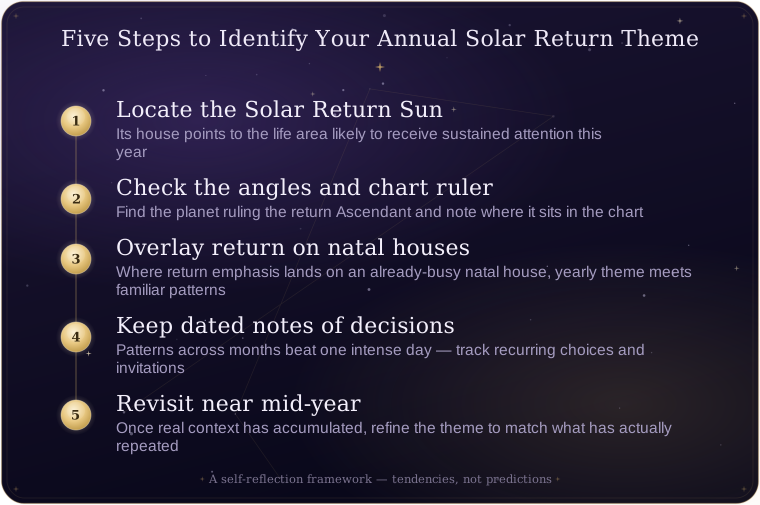
To read what is my theme for this year, start with repeatable chart evidence and compare it with choices and concerns that actually recur.
- Locate the Solar Return Sun. Its house points to the life area likely to receive sustained attention this year.
- Check the return angles and the chart ruler — the planet ruling the return Ascendant and where it sits. Repeated signs or houses beat one dramatic aspect.
- Overlay the return houses on your natal houses. Where a return emphasis lands on an already-busy natal house, the yearly theme meets familiar routines.
- Keep a dated note of major decisions and invitations; patterns across months beat one intense day.
- Revisit near the middle of the year, once real context has accumulated.
A worked example makes this concrete: a Solar Return Sun in the tenth house with the chart ruler in the sixth reads as career visibility earned through daily workload and responsibility — the theme is proving competence under new duties, not "a big year."
You can do a rough reading with no software at all. Note the house your birthday-return Sun falls in — loosely, the part of life most active around your birthday — and watch which single house collects the most planets. That dominant house is usually where the year's theme concentrates.
Common Misreadings
The phrase what is my theme for this year invites a few shortcuts that make the reading less useful.
- A theme is a prediction. A yearly theme describes symbolic emphasis and possible questions; it does not promise a specific outcome or require one event to happen.
- A theme is the same as a Sun-sign horoscope. Solar Return interpretation uses the return chart in relation to the natal chart, so people with the same Sun sign can have very different annual emphases.
- The loudest transit must be the theme. A fast-moving transit can be memorable, but a yearly focus is better supported by repeated return-chart factors and natal-chart connections.
- A vague word counts as a theme. Resist writing the year as "growth" or "transformation" — words that fit anyone. A usable theme lands on an observable life domain you could name to a friend: proving competence at work, rebuilding a home base, renegotiating a partnership.
- A difficult-sounding placement means a bad year. Tension can describe pressure, responsibility, limits, or a need for clearer choices. The question is how the pattern is showing up, not whether it sounds pleasant.
My Theme for This Year at a Glance
| Property | How It Works | Where to Look | How to Observe |
|---|---|---|---|
| Solar Return Sun | Marks the annual return point and its house emphasis | Return house (not the natal house) | Notice which life department keeps demanding decisions |
| Chart ruler | Connects the return Ascendant to a planet and its placement | Return Ascendant ruler placement | Track the topics ruled by that planet |
| Angular planets | Make particular concerns more visible in the yearly chart | Return angles | Watch for repeated public, private, relational, or home-focused situations |
| Repeated house emphasis | Strengthens a topic when several factors gather in one area | Return house, reinforced by natal overlay | Compare recurring events with that house's themes |
| Natal overlap | Links the yearly chart to long-standing personal patterns | Natal house sitting under the return house | Ask which familiar pattern is being revisited in a new setting |
Questions People Ask About My Theme for This Year
Is what is my theme for this year the same as a Solar Return reading?
No. A Solar Return reading can cover the whole annual chart, while a yearly theme is one focused takeaway supported by its strongest repeated patterns. The theme should point back to the chart rather than replace it.
Can I find my yearly theme from my zodiac sign alone?
A Sun-sign forecast offers a broad frame, but it cannot show the houses, angles, or natal connections that shape a personal Solar Return. A birth time and natal chart make the interpretation specific.
What if my Solar Return chart suggests more than one theme?
Two linked themes are common, especially when angular placements and house emphasis point in different but connected directions. Name one central focus and one supporting question instead of forcing every factor into a single label.
When should I start using a Solar Return theme?
Many astrologers begin at the birthday return and revisit the chart across the following twelve months. Reflection works best when it includes both the chart's symbolism and a record of what has actually repeated in daily life.
Reflection Prompts
- Think of a recent decision that kept returning to the same life area; what question sat underneath it?
- Recall a conversation that changed your priorities this year; which natal-house topic did it touch?
- List three repeated responsibilities from recent months; what shared thread do they suggest?
Related Reading
- guide to zodiac houses — Houses clarify which part of life a Solar Return emphasis is describing.
- north node meaning — North Node symbolism offers another way to consider long-term developmental questions in a natal chart.
Take Action
Start by generating your birth chart and Solar Return details with Explore Astrology Tools.
The result gives you the chart placements needed to identify repeated yearly patterns rather than relying on a generic forecast. Use the pattern as a question for clearer choices, not as a script for the year ahead.
Sources
- Mary Fortier Shea, Planets in Solar Returns: Yearly Cycles of Transformation and Growth — the standard modern reference for casting and interpreting solar return charts.