
What Is a Scorpio MBTI Type?
Scorpio MBTI type is a symbolic comparison between Scorpio traits and MBTI patterns.
- It compares archetypal Scorpio themes with likely MBTI resonances.
- It separates zodiac symbolism from formal typology results.
- It leaves room for the rest of a chart, lived context, and personal choice.
It places Scorpio’s familiar themes—privacy, intensity, loyalty, observation, and emotional depth—beside the preferences described by Myers-Briggs language, without treating either system as a verdict on a person. The comparison works best when Scorpio is read as one part of a larger how to read a birth chart, rather than as a stand-alone personality label. In plain terms, this lens asks which MBTI descriptions may sound familiar to someone who identifies strongly with Scorpio symbolism. It does not assign a single “correct” type to every Scorpio. Sun signs describe an astrological archetype; MBTI sorts reported preferences through a structured questionnaire. Those are different kinds of information, so any overlap is interpretive rather than factual proof.
Why It Matters for Self-Awareness
Scorpio MBTI type matters for self-awareness because it can put words to a common tension: wanting meaningful closeness while carefully deciding who gets access. A person may recognize the Scorpio side in how they read subtext, protect private feelings, or stay committed after others lose interest. The value is not a label; it is a more specific question about how someone handles trust, conflict, and attention in ordinary life. That question can matter after an awkward friendship conversation, a stalled work collaboration, or a dating situation where someone feels drawn to intensity but unsure how much to reveal. The lens encourages a pause between “this is who I am” and “this is a pattern I can notice.”
- Private processing and public roles. Someone may lead a lively presentation yet still need solitude before deciding what the exchange meant.
- Quietness and conviction. A person known as quiet may speak with unusual force when a core value is crossed.
- Different reasons for restraint. Becoming silent in a tense meeting can mean sorting information internally, protecting a boundary, or avoiding a rushed response.
Dane Rudhyar’s person-centered approach to astrology is useful here because it keeps the chart as material for reflection instead of reducing a person to a sign. A careful reading also makes room for a different picture in the rising sign meaning, where outward style may not resemble private motivations. This distinction can lower the urge to explain every reserved moment as “being a Scorpio” or every direct response as a permanent MBTI trait. It keeps attention on what happened, what mattered in that moment, and what someone might choose differently next time.
How Scorpio Themes Differ From the Lunar Nodes
Scorpio MBTI type and the lunar nodes can both be used for reflection, but they answer different questions. Scorpio symbolism describes a style of engaging with depth, secrecy, power, and emotional stakes; MBTI describes preference patterns in how people take in information and make decisions. The North and South Nodes are commonly read as a contrast between familiar habits and a developing direction in a birth chart. That is how the two lenses work together: one compares personality language, while the other frames a symbolic developmental axis. The node axis can be useful when a reader keeps repeating a familiar role in relationships or work and wants to consider that repetition in chart context. It still does not predict an outcome, assign a fixed character, or turn a difficult choice into a fate story. To get quick, relatable language from this comparison, you sacrifice the chart-specific context that the nodes can provide.
The reverse trade-off matters too. A node reading can show where a theme falls in the chart, but it does not supply a formal MBTI result or explain every interpersonal habit.
- Use nodes for recurring choices. The North Node meaning and South Node meaning offer a focused contrast when the question is about accepting support, taking initiative, or releasing an old script.
- Use the Scorpio lens for recognizable style. It is more useful when the question is whether guardedness, sustained attention, or selective disclosure feels familiar.
To get a chart-specific developmental contrast, you sacrifice the easy shorthand of a type description. Someone may recognize Scorpio-style guardedness and still find that the nodes point toward a separate issue. Keeping those questions apart makes the reading clearer and leaves room for evidence that does not fit either framework.
How to Read Scorpio Themes Alongside MBTI Results
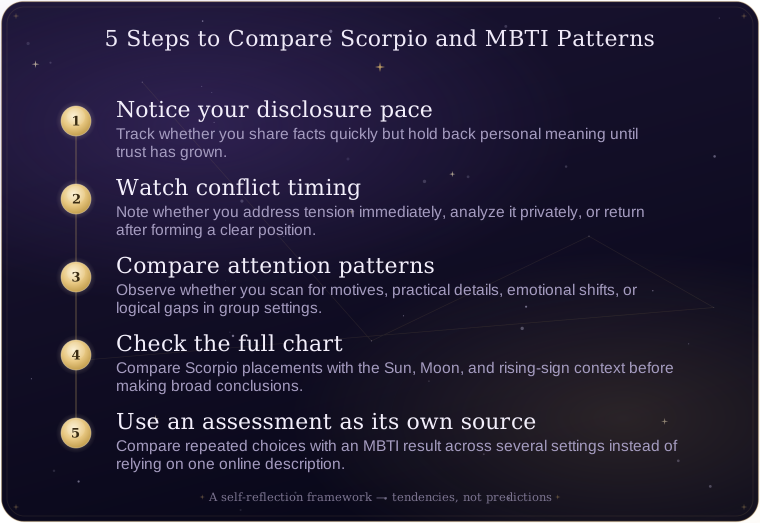
Read Scorpio MBTI type by looking for repeated choices, not by matching yourself to a dramatic stereotype.
- Notice your disclosure pace. Track whether you share facts quickly but hold back personal meaning until trust has grown.
- Watch conflict timing. Note whether you address tension immediately, analyze it privately, or return after forming a clear position.
- Compare attention patterns. Observe whether you scan for motives, practical details, emotional shifts, or logical gaps in group settings.
- Check the full chart. Compare Scorpio placements with the Sun, Moon, and rising-sign context before making broad conclusions.
- Use an assessment as its own source. Compare repeated choices with an MBTI result across several settings instead of relying on one online description.
These observations turn a vague comparison into something practical in daily life. A preference for privacy might resemble introversion, but it can also reflect values, culture, a particular situation, or a temporary need for space. A fast response in a group chat might look like extroversion, while a later need to consider the exchange privately points somewhere else. Likewise, a sharp instinct for inconsistency can resemble intuition, thinking, or simply careful attention learned through experience. A written note helps because memory tends to highlight the most dramatic instance and ignore quieter, repeated choices.
Common Misreadings
Scorpio MBTI type gets distorted when symbolic language is treated as a personality test. The most frequent mix-ups are easy to correct:
- “Every Scorpio is an INFJ.” Scorpio can resonate with INFJ descriptions for some people, but no zodiac sign owns one MBTI category. An actual MBTI result depends on the assessment and the respondent’s answers.
- “Private means introverted.” Privacy can be a boundary style, while introversion concerns where a person tends to direct attention and recharge. An outgoing person can still be selective about disclosure, especially when a subject feels personal.
- “Intense means emotionally reactive.” Scorpio symbolism often emphasizes sustained attention and emotional seriousness, not constant visible drama. Some people show that intensity through restraint, careful study, loyalty, or directness.
- “A birth chart can replace typology.” A chart gives symbolic context, while MBTI uses a separate framework with its own terms. Treating one as a substitute for the other blurs the distinction that makes comparison useful.
Another error is treating a favorite type description as a reason to ignore contradiction. A person may relate strongly to an inward, strategic profile yet be highly expressive with close friends; that does not mean either framework failed. It means a useful interpretation has to account for setting, roles, and the difference between private preference and public behavior. Symbolic language has more value when it makes room for that complexity instead of flattening it.
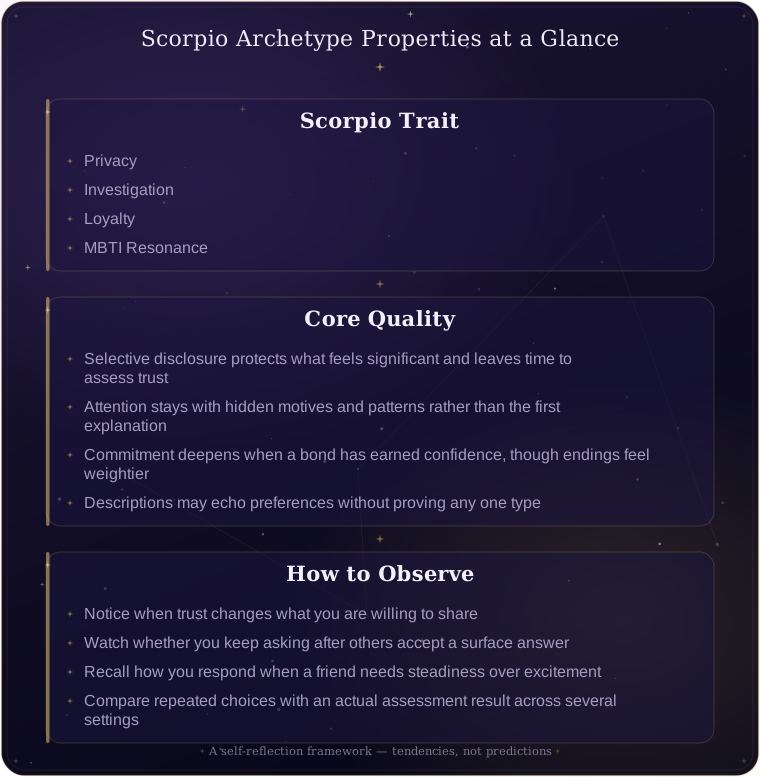
Scorpio Archetype Quick Reference
| Property | How It Works | Energy Center | How to Observe |
|---|---|---|---|
| Privacy | Selective disclosure protects what feels significant and leaves time to assess trust. | Water element and eighth-house associations | Notice when trust changes what you are willing to share. |
| Investigation | Attention stays with hidden motives, patterns, or unanswered questions rather than settling for the first explanation. | Mars and Pluto rulership traditions | Watch whether you keep asking after others accept a surface answer. |
| Loyalty | Commitment can deepen when a bond has earned confidence, though it may also make endings feel weightier. | Fixed-water sign quality | Recall how you respond when a friend needs steadiness over excitement. |
| MBTI resonance | Descriptions may echo introversion, intuition, feeling, or thinking preferences without proving any one type. | Birth-chart context, not a separate center | Compare repeated choices with an actual assessment result across several settings. |
Questions About Scorpio Archetypes and MBTI
Which MBTI type is most associated with Scorpio?
No single type belongs to Scorpio. INFJ, INTJ, INFP, and ISTP are often mentioned because their descriptions can echo privacy or intensity, but Scorpio MBTI type remains a symbolic comparison, not a typing rule.
Can an extrovert relate to Scorpio symbolism?
Yes. Extroversion describes a pattern of outward engagement, while Scorpio symbolism can describe selectivity, focus, and emotional seriousness. A socially active person may still prefer deep one-to-one conversations over broad self-disclosure.
Do Scorpio placements change an MBTI test result?
No. An MBTI result comes from responses to its own assessment, not from astrological placements. A chart may give someone another way to reflect on why certain descriptions feel familiar.
Should the Moon and rising sign be included in this comparison?
Usually, yes. The Moon is often used to consider emotional habits, and the rising sign is often used to consider presentation and first impressions. Including them can keep a Sun-sign comparison from becoming overly narrow.
Reflection Prompts
- Think of a recent disagreement: did this lens clarify a boundary, or did it become a story you told yourself?
- Recall a time you withheld information; what made trust feel earned, uncertain, or unnecessary?
- Think of a group decision: did you seek emotional truth, practical evidence, private reflection, or direct debate first?
Related Reading
- guide to astrological houses — Adds house context when a Scorpio placement feels especially important in a specific area of life.
- square aspect meaning — Explains how a tense aspect can add detail beyond a Sun-sign comparison.
Take Action
Write down one recent moment involving trust, conflict, or disclosure, then compare the choice you made with your MBTI result and Scorpio placements.
That small record gives you a concrete pattern to review instead of a borrowed stereotype.
Patterns become more useful when they lead to honest choices about boundaries, connection, and self-expression. Explore Astrology Tools
This is not a clinical interpretation or mental health advice.
Sources
- Dane Rudhyar — developed a person-centered approach to astrological interpretation that treats chart symbols as material for reflection.