
What Is a Descendant Shadow-Attraction Signature?
A Descendant Shadow-Attraction Signature is a symbolic reading of the seventh-house axis in a birth chart, used to describe a recurring pull toward partners who test your boundaries. It sits within the broader pillar guide to reading a birth chart, which maps how every placement is interpreted. When someone asks why do I attract toxic people, an astrologer using the chart as a reflective mirror reads it as a symbolic map of a chart's recurring pull toward boundary-testing partners.
- Reads the whole seventh-house axis as one pattern, not a single planet
- Highlights Pluto, Neptune, and Saturn contacts as symbolic markers to reflect on
- Names a relational tendency, never a fixed outcome or a diagnosis
The reading leans on the sign sitting on the Descendant and that sign's ruling planet, yet it stays interpretive throughout. The seventh house it centers on is one of the twelve houses commonly traced to Hellenistic astrology in the early centuries CE. Read in the person-centered spirit Dane Rudhyar established, it is a prompt for self-reflection rather than a claim about a specific person or an inevitable future.
Why It Matters for Self-Awareness
Understanding why do I attract toxic people through this lens matters because it turns a painful, blame-heavy question into something you can actually look at with some distance. Picture the reader who keeps ending up in the same argument with different people: over-giving, then feeling drained, then wondering what is wrong with them. The signature hands that person a neutral language for the pattern instead of another list of personal flaws, and that shift alone often changes how they treat themselves. It points to a few concrete places to reflect:
- Boundaries. The seventh house is the mirror of one-to-one relating, so it invites you to notice where your limits quietly blur under pressure.
- Self-worth. A tense Saturn contact can symbolize an old story that closeness must be earned, a story worth naming rather than obeying.
- Attachment history. Pluto and Neptune themes often echo early relational patterns you once learned to read as normal.
- Lived context. The chart never overrides your real circumstances; stress, timing, finances, and environment stay the operative drivers.
Read this way, the signature works as a reflective mirror. It helps you describe the pull in plain terms, then hands the actual change back to your boundaries, your sense of worth, and the choices you keep making in real life. That is the difference between a fatalistic label and a starting point for self-awareness.
Descendant Sign vs Seventh-House Planets: Where People Mix Them Up
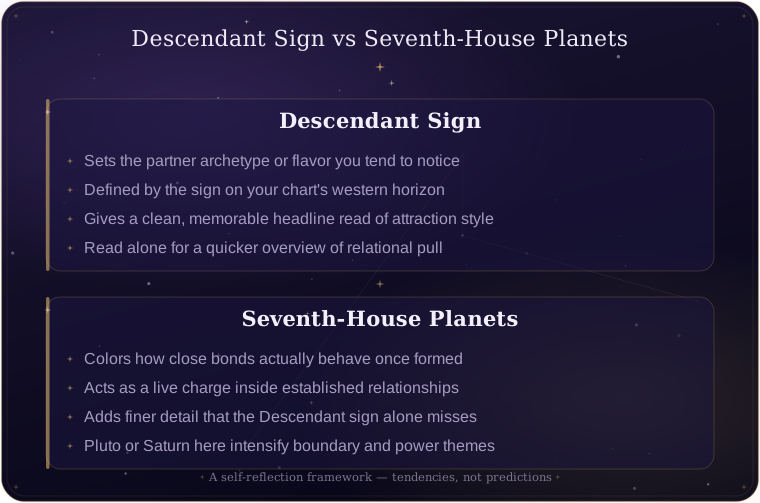
A common mix-up when people explore why do I attract toxic people is treating the Descendant sign and the planets inside the seventh house as the same thing. They work differently. The sign on the Descendant describes the flavor or style of partner you tend to notice — the archetype that catches your eye. Any planet actually tenanting the seventh house works more like a live charge inside relationships, coloring how those bonds behave once they form. The ruling planet of the Descendant then ties the two together, showing where in the chart that relational story draws its energy. This reading builds on the seventh-house tradition associated with Howard Sasportas and on Liz Greene's work on the shadow in close relationships.
For example, someone with Libra on the Descendant might keep noticing charming, harmony-seeking partners, while a seventh-house Pluto in that same chart symbolizes how those bonds can tip toward power struggles once the early charm settles. Read only the sign and you get the attraction; read the planet too and you catch the friction.
The trade-off is one of resolution. Reading only the Descendant sign gives you a clean, memorable headline, but the cost is missing the harder detail a seventh-house Pluto or Saturn adds. To get that finer read, you sacrifice the simplicity — you have to hold several factors at once instead of a single tidy label. A Descendant-only read is quicker; a full-signature read is slower but catches the tension a boundary-testing pattern usually hides in. Neither predicts a partner; each is a different depth of the same reflective picture. To see the axis itself in more detail, the meaning of the descendant and seventh house breaks it down.
How to Read Your Descendant Shadow-Attraction Signature in Your Chart
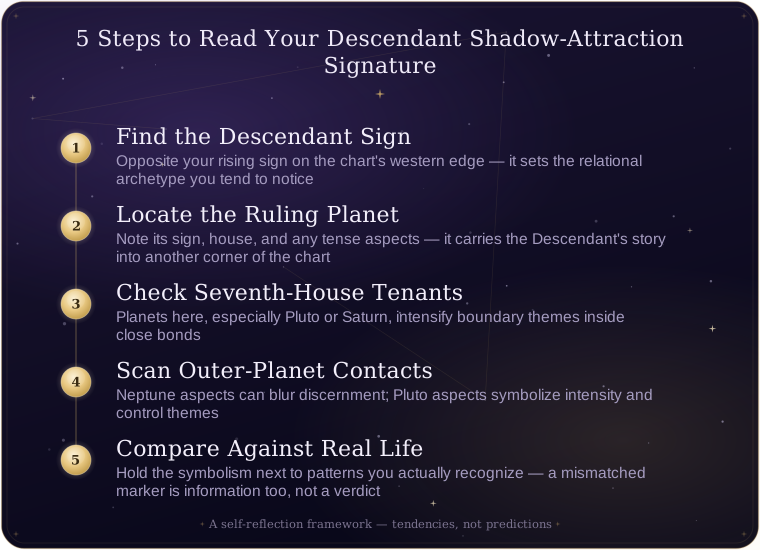
To read this signature in your chart, start from the western horizon point and work outward. These are the observable markers astrologers watch when someone asks why do I attract toxic people:
- Find the Descendant sign. It sits exactly opposite your rising sign, on the chart's western edge, and sets the relational archetype you tend to notice.
- Locate its ruling planet. Note its sign, house, and any tense aspects, since it carries the Descendant's story into another corner of the chart.
- Check for seventh-house tenants. Planets here, especially Pluto or Saturn, tend to intensify boundary themes inside close bonds.
- Scan for outer-planet contacts. Neptune aspects can blur discernment; Pluto aspects can symbolize intensity and control themes.
- Compare against real life. Hold the symbolism next to patterns you actually recognize, not the ones the chart merely suggests you should.
The last step matters most. The chart is a mirror to check your own experience against, so a marker that does not match your lived pattern is information too, not a verdict you have to accept.
Common Misreadings
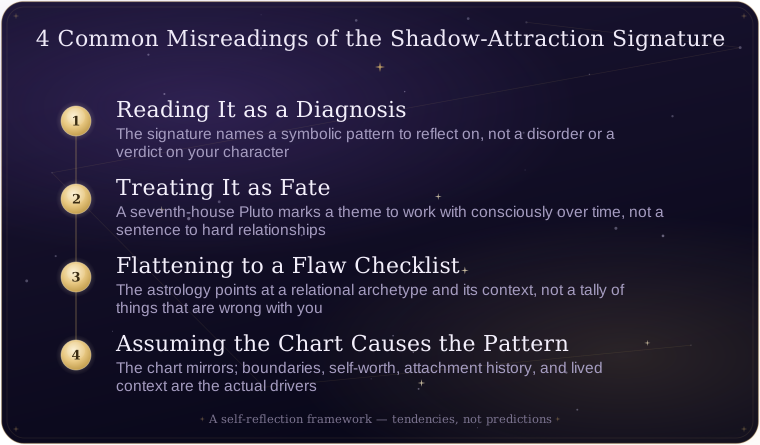
The most common errors come from flattening the signature into something it isn't. When people search why do I attract toxic people and land on quick, listicle-style answers, a few misreadings tend to stick:
- Misreading it as a diagnosis. The signature names a symbolic pattern, not a disorder or a ruling on your character. It describes a tendency to reflect on, nothing more.
- Treating it as fate. A seventh-house Pluto does not sentence you to hard relationships; it marks a theme you can work with consciously over time.
- Confusing it with a personality-flaw checklist. The astrology points at a relational archetype and its context, not at a tally of things that are "wrong" with you.
- Assuming the chart causes the pattern. The chart mirrors; boundaries, self-worth, attachment history, and lived context are what actually keep a pattern going or let it fade.
Descendant Shadow-Attraction Signature at a Glance
| Property | How It Works | Energy Center | How to Observe |
|---|---|---|---|
| Descendant sign | Sets the partner archetype you tend to notice | Seventh-house cusp | Find the point directly opposite your rising sign |
| Ruling planet | Carries the relational story into another house | Its own sign and house | Note its placement and any tense aspects |
| Seventh-house planets | Color how close bonds behave once formed | The seventh house | Look for Pluto or Saturn tenants inside it |
| Outer-planet contacts | Shape discernment and intensity | Aspects to the axis | Scan for Neptune and Pluto aspects to the angle |
Common Questions About the Descendant Shadow-Attraction Signature
Does the Descendant Shadow-Attraction Signature explain why do I attract toxic people?
It offers a symbolic framework for reflecting on the question, not a definitive cause. The real drivers stay your boundaries, self-worth, attachment history, and current circumstances.
Can a birth chart predict a toxic relationship?
No; astrologers using it this way treat the chart as a mirror, not a forecast. It can describe a tendency you may recognize, but it cannot name a person or guarantee an outcome.
Which planets matter most in this signature?
Pluto, Neptune, and Saturn contacts to the seventh-house axis draw the most attention. They are read as symbols of intensity, blurred discernment, and boundary pressure.
Is this the same as a compatibility reading?
No; compatibility reads two charts together, while this looks at one chart's own relational pattern. They answer different questions.
Reflection Prompts
- Think of a recent moment when you ignored a boundary to keep someone close — what were you afraid of losing?
- Recall a relationship that turned intense quickly; which early signals did you notice but explain away at the time?
- Name one time this week you honored a limit in a close bond — what made that possible?
Related Reading
- ascendant and rising sign meaning — the rising sign sits opposite the Descendant and frames the whole axis.
- Saturn aspects in the natal chart — Saturn's tension is a key symbol in boundary-testing patterns.
- square aspect meaning in astrology — squares often carry the friction this signature reflects on.
- House (astrology) (Wikipedia) — background on how houses like the seventh are defined.
Take Action
Map your own seventh-house axis instead of guessing at the pattern. Generate Your Free Birth Chart, and you'll see the Descendant sign, its ruling planet, and any seventh-house contacts laid out in one place. From there, the pattern stops being a mystery you carry and becomes something you can name, reflect on, and slowly rewrite through the choices you make.
This is not a clinical interpretation or mental health advice.
Sources
- Dane Rudhyar — pioneered the person-centered, psychological reading of astrological symbolism
- Howard Sasportas — developed the modern interpretation of the astrological houses, including the seventh
- Liz Greene — shaped the psychological reading of the shadow within relationship astrology